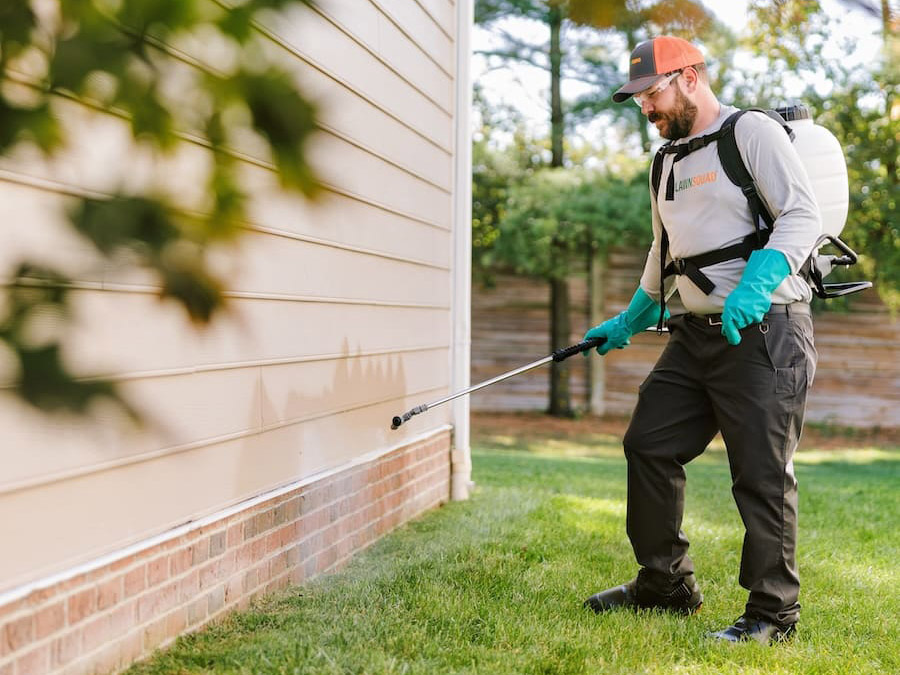
Short Answer: A realistic Rutherford County family-property pest program combines a mosquito barrier spray every 21 to 30 days through the May-to-October season and a targeted tick perimeter treatment on the same visit schedule, both applied to the high-pressure habitat zones (lower foliage, shaded edges, leaf litter, mulched beds). A typical Murfreesboro family yard runs $500 to $800 per year for the combined program. Expect a 75 to 90 percent reduction in mosquito and tick activity in the treated yard, not a sterile zone. Add In2Care stations on properties with hidden water sources for stronger mosquito results.
If you have hosted a Friday evening get-together in Blackman, Walter Hill, or out toward Eagleville lately, you already know the situation. The mosquitoes come out around 6:30, the kids are scratching by 7:00, and by the time the burgers are done somebody has spotted a tick on the dog. Rutherford County summers are beautiful, the cedar glades and Stones River frontage make it one of the prettier parts of Middle Tennessee, and the same wet, wooded landscape that makes it beautiful makes it heaven for biting insects.
Families ask us the same question every June: which programs actually work, and which are selling a marketing line? Here is the honest breakdown for Rutherford County properties, what each treatment does, what it costs, and how to choose.
Mosquito Programs in Murfreesboro: The Three Buckets
Almost every mosquito service in Middle Tennessee falls into one of three categories. The marketing differs, but the underlying treatments are similar across reputable providers.
Barrier spray. A licensed applicator visits every 21 to 30 days through mosquito season, applying a synthetic pyrethroid (commonly bifenthrin or lambda-cyhalothrin) to the lower foliage, the shaded underside of leaves, the perimeter of the lawn, the underside of decks and porch furniture, and any known harborage areas. Adult mosquitoes that land on treated surfaces die within hours, and the residual carries for 21 to 30 days. This is the workhorse program for Rutherford County families.
In2Care stations. Small stations baited with a water-and-larvicide mixture. Female mosquitoes enter to lay eggs, pick up larvicide, and carry it back out to other breeding sites in the yard. The stations themselves also kill the larvae inside them. Best on properties with hidden breeding sites the spray cannot reach: a leaf-clogged downspout, a French drain, a tree hole, the low corner of the back yard that holds water after a Cedar Hill storm.
Misting systems. Permanent nozzles mounted along the eaves and fence line, connected to a central reservoir of insecticide, triggered to mist at dusk and dawn. This is the most thorough and most expensive option, typically reserved for properties on heavy creek frontage or in the woods where the family is outside every evening.
Tick Programs: Where to Spray, Where Not To
Tick treatment is different from mosquito treatment in an important way. Ticks do not live evenly across a yard. They live in the transition zones where the lawn meets something else: woodland edges, fence lines that have not been mowed, mulched perennial beds, stone walls, leaf litter, brush piles, stacked firewood. They dry out and die in direct sun on an open mowed lawn.
This means an effective tick treatment is targeted, not broadcast. A properly applied perimeter treatment uses a pyrethroid product (bifenthrin or permethrin) directed at the zones described above. The active ingredient binds to leaf litter, mulch, and lower foliage. Ticks that come into contact die within hours.
One application reduces tick populations in the treated area by 70 to 90 percent for four to six weeks. Stack four to six applications across the May-through-October season and you have meaningful protection.
The ticks that matter in Middle Tennessee:
- American dog tick. Large, brown with light markings, common across Rutherford County since long before most of us moved here. Active April through July. Can transmit Rocky Mountain spotted fever, though Tennessee cases are rare.
- Lone star tick. Distinctive white spot on the back, aggressive biters at all life stages, increasingly common across Middle Tennessee. Associated with ehrlichiosis and alpha-gal syndrome (the red meat allergy). Prefers brushy wooded edges, exactly the habitat behind many Rutherford County subdivisions.
- Blacklegged tick (deer tick). Smaller, dark brown, less common here than the other two but established in pockets. Carries Lyme disease. Active in leaf litter in May and June (nymph stage) and again in October (adults).
What a Combined Program Costs
A standard mosquito and tick barrier program on a typical Rutherford County family yard, quarter to half acre, runs about $90 to $130 per visit. Six to seven visits across the May-through-October season puts the total annual cost in the $540 to $910 range.
Larger one-acre plus properties with significant wooded edge run $150 to $200 per visit, or $900 to $1,400 for the season. Smaller in-town properties in Murfreesboro proper often come in under $500.
This is the value benchmark. Materially below that range is either skimping on product, cutting visit frequency, or pitching a hose-end DIY in a different wrapper. Significantly above usually means add-ons (In2Care stations, misting systems, fly control) or premium markup.
What These Programs Do Not Do
A few honest points we share with every Murfreesboro family asking about pest programs.
First, no program eliminates mosquitoes or ticks. Mosquitoes fly. Ticks ride in on deer, raccoons, mice, and birds. New ones arrive every week. A treated yard is a low-pressure yard, not a sterile zone. Anyone promising zero pests is selling a feeling, not a service.
Second, weather affects performance. Heavy rain within 12 hours of an application washes off some product. Reputable providers re-treat at no charge if rain hits in that window. Ask before you sign.
Third, timing matters. The first treatment should go down before populations build, which in Rutherford County is late April or early May. Starting in July, after populations are established, gives you a much weaker first round.
Fourth, pollinators are a consideration. Pyrethroids kill bees on contact. Reputable applicators time visits for early morning or evening when bee activity is low, avoid blooming plants, and skip designated pollinator beds. Communicate up front if you have a vegetable garden, fruit trees, or a pollinator zone you want protected.
What You Can Do for Free
Before any paid program, do the free things. They make every paid treatment work better.
For mosquitoes: walk the yard and dump every container holding water. Mosquitoes breed in a bottle cap of water. The common culprits in Rutherford County yards are clogged gutters, tarps holding pools after rain, bird baths not refreshed in a week, kids’ toys upside down, plant saucers, and wheelbarrows. Drill drainage holes in anything that has to stay outside. Refresh bird baths twice a week. If you have a koi pond or rain garden, use larvicide tablets (mosquito dunks).
For ticks: create a three-foot mulch or gravel buffer between any mowed lawn and the woods, fence line, or untended natural area. Rake leaf litter back from the lawn edge in spring and fall. Keep grass mowed short along fences and natural area edges. Stack firewood off the ground, in the sun, away from the house. Mice nest in firewood piles and mice are the primary host for blacklegged tick nymphs.
What to Expect From a Real Season
Customers who stick with us through the season generally report the same arc. The first application knocks the population back. The second extends the protection. By the third or fourth, the family is back to using the porch and the back yard like they did in May, and the tick checks find very little.
The honest measure is not zero pests. It is “we can have dinner outside without DEET” and “the dog comes in clean from the back yard.” That is the bar a good combined program clears for most Rutherford County yards.
When to Pair With In2Care or Misting
For most Murfreesboro family yards, the barrier program is the right answer. The exceptions:
- If you have hidden water sources (a French drain that holds water, a low corner that puddles for days after rain, a basement window well), add In2Care stations to the program. Three to five stations at $60 to $80 each per season closes a real gap.
- If you live on heavy creek frontage or in true woods, host outdoors daily, and have tried barrier spray without enough impact, consider a misting system. Installation runs $2,500 to $4,500 and refills $400 to $800 per year, but for the right property it pays off in usability.
What to Do Next
If you are heading into a Murfreesboro summer with kids home, family visiting, or weekend cookouts on the calendar, June is the right month to get a program in place. The first treatment hits populations before they peak, residual carries through July, and the cumulative effect across the season is far better than a single panic treatment in August.
Lawn Squad of Murfreesboro serves homeowners across Murfreesboro and Middle Tennessee.
Call us at 615-622-6918 or request a free quote at lawnsquad.com. We will walk the yard with you, identify the high-pressure zones, and recommend the program that fits your property and your honest expectations. Our pest program pairs with our VitaminLawn lawn care service, both built for Rutherford County conditions, transition-zone properties, and the brushy wooded edges that define so many Middle Tennessee yards.
Use up and down arrow keys to resize the meta box pane.