Short Answer: Spring cleanup on Cleveland lawns works best as a sequence of tasks across 4 to 6 weeks rather than a single weekend project. The right order is: clear debris and leaves once soil firms up, light raking on matted areas, salt damage flushing on driveway edges, soil testing before fertility decisions, pre-emergent crabgrass control on the soil-temperature window, equipment service before the first mow, first feeding once active growth is visible, and bed cleanup as the season progresses. Properties that try to do everything in one weekend typically miss correct timing on at least one item. Properties that follow the sequence set up healthy summer performance. Here is the practical guide for properties across Cleveland, Cleveland Heights, Shaker Heights, Lakewood, and the surrounding area.
If you are standing in your Cleveland yard in late March looking at a lawn that came through winter rougher than you remembered, the impulse is to do everything at once. Clear the debris, rake the matted patches, throw down fertilizer, fire up the mower. Most homeowners who try this discover that the timing is wrong for at least half of the tasks they rushed.
Spring cleanup works better as a sequence across 4 to 6 weeks. Across Cleveland, Cleveland Heights, Shaker Heights, Lakewood, Westlake, and our broader service area, here is the practical order that produces the best results.
Step 1: Wait for the Soil to Firm Up
Before any work, the soil needs to be walkable without leaving deep footprints. Working on saturated soil compacts and damages it. Equipment ruts saturated soil. Foot traffic flattens healthy grass crowns.
Most Cleveland properties are ready to walk on by early to mid April depending on snow melt and rainfall. Some shaded or low-lying areas take longer. Wait for the worst spots before starting cleanup work.
The test is simple. Walk a representative area. If footprints stay deep and visible for hours, wait. If footprints are shallow and disappear quickly, the soil is ready.
Step 2: Clear Debris and Leaves
The first physical work is clearing accumulated debris: sticks from winter storms, leaves that did not get cleared in fall, miscellaneous yard debris that surfaced as snow melted.
Use a leaf rake or blower for this pass. The goal is removal, not aggressive surface disturbance. Heavy raking at this stage damages dormant grass crowns. Light passes that lift debris off the surface work better.
This is also when problems become visible: branches that broke off trees, areas where animals dug, drainage issues where water concentrated, damage from snow plows on lawn edges. Note what you see for later attention.
Step 3: Light Raking on Matted Areas
Areas that show snow mold, vole damage, or other matted appearance need light raking to lift the crusty surface and improve air circulation. The grass underneath is usually still alive at the crown level and benefits from being uncovered.
Use light pressure. The goal is to break the matted layer, not to pull up healthy grass with the damaged tissue. A leaf rake or hand cultivator with gentle pulling motion works better than aggressive scraping.
This single step often produces dramatic visible improvement within 2 to 3 weeks as the underlying grass green up takes hold.
Step 4: Salt Damage Flushing
Areas along driveways, sidewalks, and street edges that received de-icer through winter need flushing irrigation to leach accumulated salt out of the root zone. The salt damaged grass through winter, and if it stays in the soil, it continues damaging growth into spring.
Multiple deep waterings on affected zones work best. Gypsum applied to severely affected areas accelerates the leaching process by displacing sodium with calcium in the soil chemistry.
Severely damaged zones where crowns died need replanting after the soil chemistry is corrected. Light damage areas often recover within 6 to 10 weeks of flushing.
Step 5: Soil Testing
Soil test results take 2 to 3 weeks to come back from OSU Extension or private labs. Pulling the test early gives you information when you need it for fertility decisions.
Most useful information comes from pH, organic matter, and major nutrient levels. Cleveland area soils run anywhere from acidic to slightly alkaline depending on neighborhood and history. Adjusting fertility decisions based on actual soil chemistry produces better results than guessing.
The test costs $20 to $40 and the information lasts for 3 years. It is one of the highest-information-per-dollar moves in lawn care.
Step 6: Pre-Emergent Crabgrass Control
Pre-emergent timing is determined by soil temperature rather than calendar date. The window opens when soil temperatures at 4-inch depth cross 55 degrees Fahrenheit consistently. In Cleveland, that typically happens between late March and mid-April depending on the year.
Apply too early and the chemical barrier degrades before late-summer crabgrass germination flushes. Apply too late and crabgrass has already sprouted. The window is roughly 2 to 3 weeks of correct timing.
Soil thermometers cost $10 to $20 and let you track your specific property. University and weather service data provides regional readings. Forsythia in full bloom in our area is often a signal that the timing window is open or about to open.
This is one of the highest-leverage spring tasks. Get it right and crabgrass control for the rest of the year is substantially easier.
Step 7: Equipment Service Before the First Mow
The first mow of the season sets up the rest of the year. Before it happens, the mower should have sharp blades, fresh oil if it has been a year, a clean air filter, new spark plug if more than 100 hours of use since the last one, and proper deck height adjustment for the target cutting height.
Dull blades tear grass rather than cut it. Torn blade tips brown out, look ragged, and create entry points for disease. A lawn cut with dull blades looks worse the day after mowing than the day of.
Total prep time runs 60 to 90 minutes for most walk-behind mowers, 2 to 4 hours for riding mowers. Cost in supplies: $20 to $80 depending on what needs replacing.
Step 8: First Feeding (When Active Growth Is Visible)
The first fertilization should wait until the lawn is actively growing. Visible new blade growth, regular mowing needs, and uniform color across the canopy all indicate active growth. Premature feeding wastes product and can damage barely-active grass.
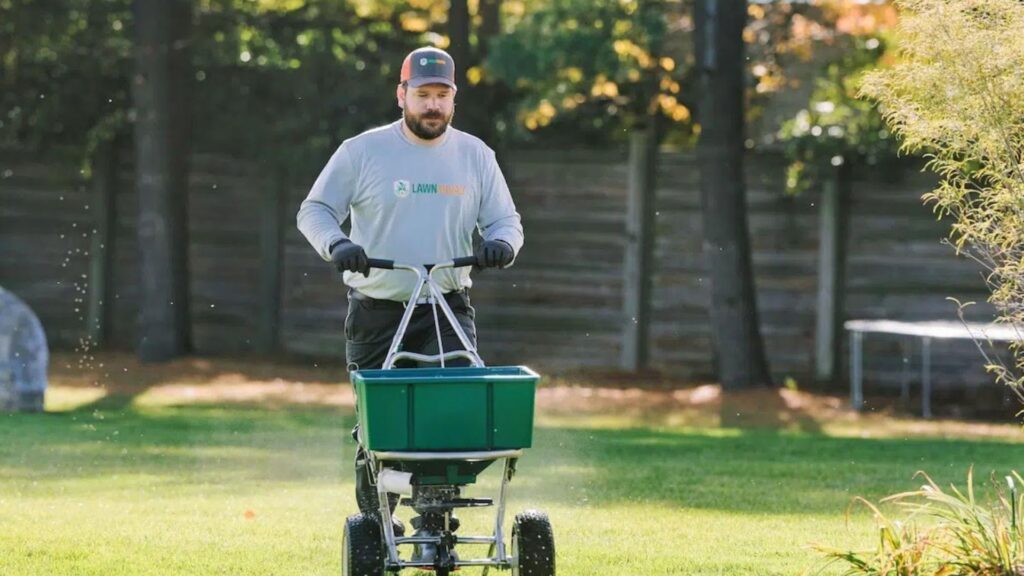
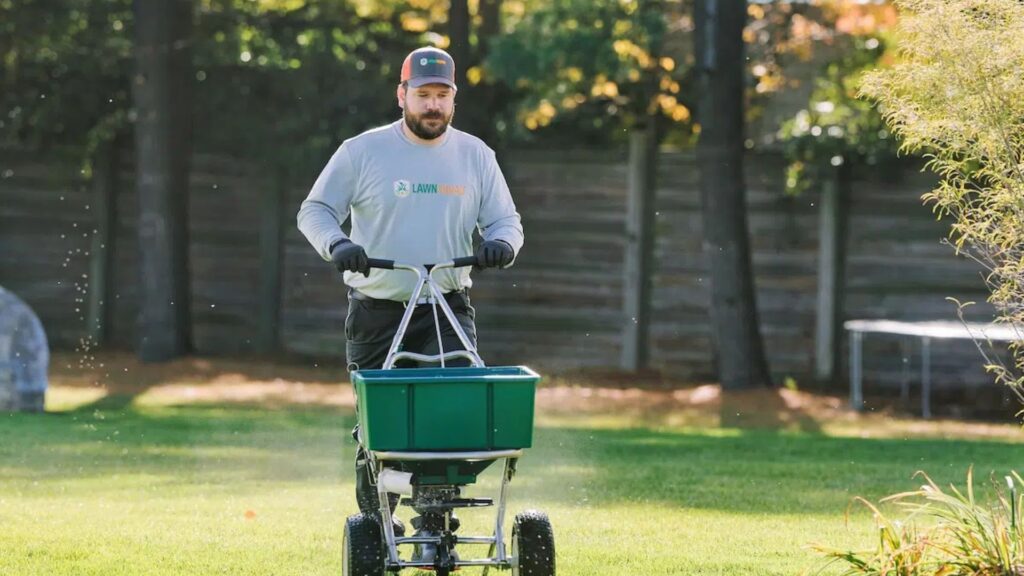
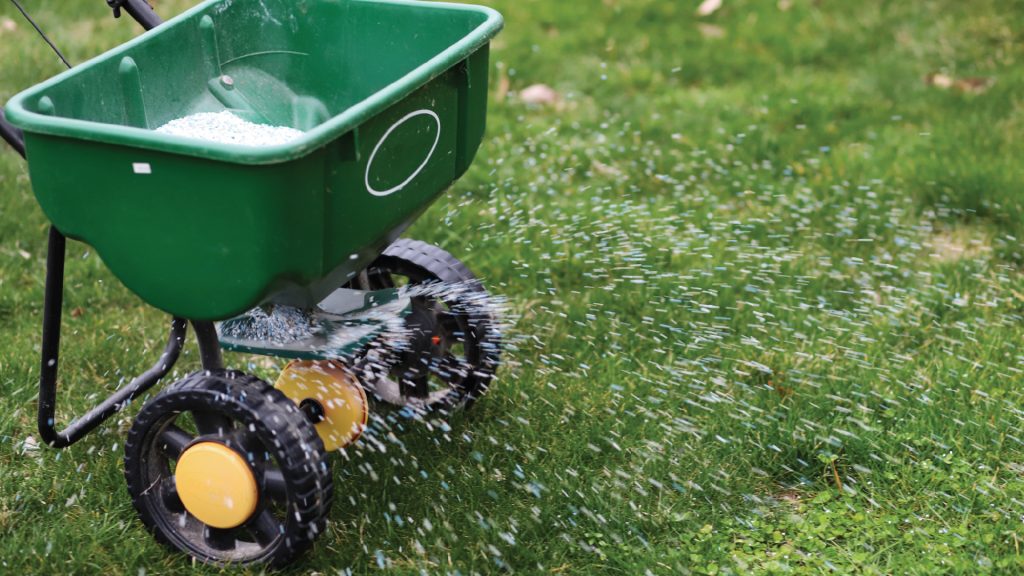
For most Cleveland cool-season lawns, the right first feeding is a balanced slow-release fertilizer applied at roughly 0.75 to 1 pound of actual nitrogen per 1,000 square feet. Common analyses that work well: 24-0-6, 22-0-8, 20-0-10.
The timing typically lands in late April to early May for most properties. Soil test results, if pulled in March, are available by now to guide product selection.
Step 9: Bed Cleanup and Edge Definition
Bed cleanup and edge work fit at the end of the sequence once lawn priorities are handled. Mulching beds, defining edges between lawn and beds, and other aesthetic work do not have to happen on a strict timeline.
The exception is when edge work involves significant soil disturbance near pre-emergent zones. Heavy digging or edging after pre-emergent has been applied breaks the chemical barrier locally. Plan edge work for after pre-emergent activates or before it goes down.
What This Sequence Accomplishes
Properly sequenced spring cleanup produces a lawn that enters summer in strong condition. The visible benefits compound: cleaner appearance, denser growth, fewer weed escapes, less disease pressure, and faster response to summer stresses.
Properties that follow the sequence year over year typically see progressive improvement. Compaction relieves through consistent aeration. Soil chemistry corrects with informed fertility. Weed pressure drops with proper pre-emergent timing.
Time Investment
For a typical Cleveland suburban property (8,000 to 12,000 square feet):
Debris clearing: 1 to 2 hours
Light raking: 1 to 3 hours depending on damage extent
Salt damage flushing: minimal time, mostly equipment running
Soil testing: 30 minutes to pull samples, results come by mail
Pre-emergent application: 30 to 60 minutes
Equipment service: 1 to 2 hours
First feeding: 30 to 60 minutes
Bed cleanup: variable, 2 to 6 hours typical
Spread across 4 to 6 weeks, the total time is manageable. Cramming into one weekend produces compromised results and the rush typically introduces mistakes.
Common Cleveland Mistakes
Aggressive raking too early. Damages dormant crowns. Light raking only.
Heavy fertilization before the lawn is awake. Wastes product and can burn dormant grass.
Pre-emergent on the same calendar date every year regardless of weather. Misses correct timing in roughly one year out of three.
Skipping the soil test because results take time. The 3-week wait fits into the spring sequence if you start in March.
Aerating in spring instead of waiting for fall. For most Cleveland lawns, fall aeration produces meaningfully better results.
Cleaning beds before lawn priorities are handled. The order matters. Lawn first, beds second.
What to Do Next
If you would rather have someone else handle the timing decisions, product selection, and application for your Cleveland lawn, we are here for that.
Lawn Squad of Cleveland serves Amherst, Avon, Avon Lake, Bay Village, Beachwood, Berea, Brecksville, Brook Park, Broadview Heights, Brunswick, Cleveland, Columbia Station, and surrounding areas.
Call us at 440-271-3113 or request a free quote at lawnsquad.com. Our VitaminLawn program is built specifically for the grass types, soils, and weather patterns in our service area. Most homeowners see noticeable improvement within the first two applications.