
Short Answer: Coastal lawns across the Grand Strand face challenges that inland lawns do not: salt-laden ocean air that desiccates grass and accumulates in soil, fast-draining sandy soils that struggle to hold water and nutrients, frequent storms that bring saltwater incursion to low-lying properties, and humidity that drives heavy disease pressure. The realistic approach involves salt-tolerant grass selection, frequent but light fertilization adapted to sandy soils, irrigation practices that flush salts, and disease-aware care through humid summer months. Properties closer to the ocean face heavier challenges than inland properties. Here is the practical guide.
If you have moved to the Myrtle Beach area from inland or are managing a coastal property here, you have probably noticed that the lawn care advice that works in most of the country does not always translate to our climate. Salt air, sandy soils, frequent storms, and constant humidity create challenges that require coastal-specific approaches.
Across our service area covering Myrtle Beach, North Myrtle Beach, Conway, Surfside Beach, and the broader Grand Strand, here are the most common coastal lawn challenges and what actually works.
Challenge 1: Salt-Laden Ocean Air
Properties within roughly a mile of the ocean experience continuous salt deposition from sea breezes. The salt accumulates on grass blades, on hardscape surfaces, and in the upper soil layer over time.
Effects on lawns include:
Edge burn on grass blades, especially on windward sides of the property.
Slowly accumulating soil sodium that can affect grass health if not managed.
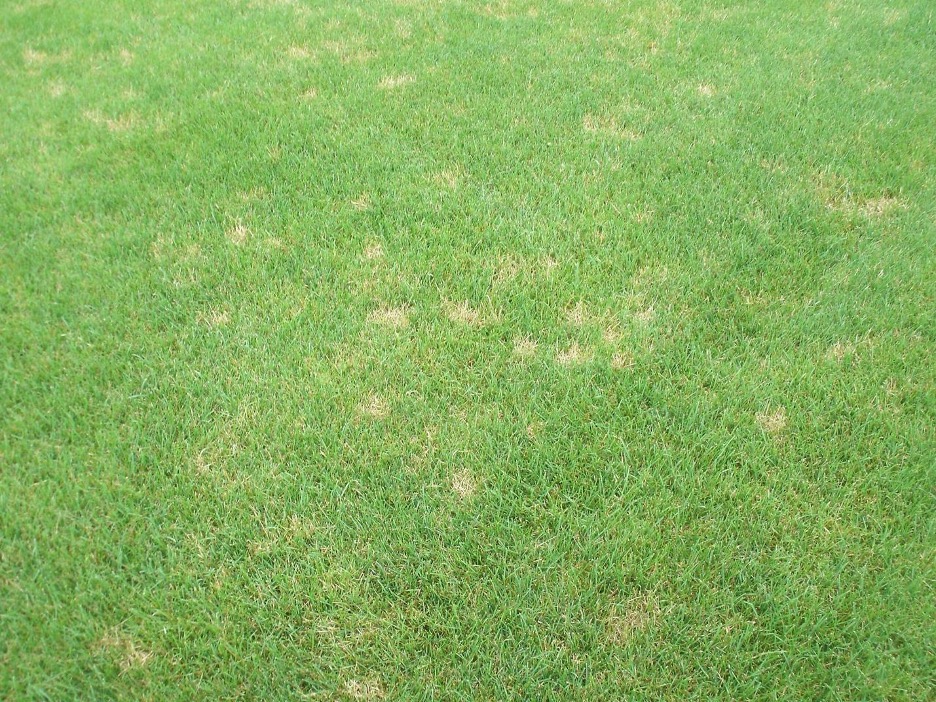
Discoloration and thinning that responds to flushing irrigation.
The fix is regular flushing irrigation: deep watering that pushes accumulated salt below the root zone. Properties closest to the ocean often need a heavy flushing irrigation cycle once or twice a month during dry weather to keep salt levels manageable.
Challenge 2: Sandy Soils That Drain Too Fast
Most Grand Strand soils are sandy or sandy-loam. This drains quickly (a feature for storm runoff but a problem for irrigation efficiency), holds nutrients poorly, and warms quickly in spring.
Effects on lawn care practices:
Frequency of irrigation matters more than in clay-soil markets. Sandy soils may need watering every 3 to 4 days during heat versus 5 to 7 days for clay.
Fertilizer leaches faster. Slow-release sources work better than quick-release. Multiple smaller applications work better than fewer large ones.
Drought stress shows up faster. Sandy lawns can move from “adequate moisture” to “drought stress” within 48 hours during summer heat.
Soil amendments that build organic matter (compost topdressing) help slow drainage and increase nutrient retention. This is an annual practice on coastal sandy soils for best results.
Challenge 3: Salt Water From Storms
Properties on low-lying lots or with proximity to tidal creeks can experience saltwater incursion during storms. The salt damage from a single significant flooding event can be more severe than years of accumulated salt air.
Recovery from salt water damage:
Heavy flushing irrigation as soon as the water has receded. The goal is to dilute and move salts before they damage roots.
Gypsum applications help displace sodium from soil if salt levels are high.
Severely affected areas often need replacement (sodding or sprigging) since sustained salt exposure kills grass crowns entirely.
Properties with regular saltwater exposure benefit from elevated salt-tolerant grass selection and accept that complete recovery may not be possible without long-term soil management.
Challenge 4: Humidity-Driven Disease Pressure
The combination of warm temperatures, high humidity, and consistent moisture from coastal proximity creates conditions that favor multiple lawn diseases. Brown patch, dollar spot, gray leaf spot, and Pythium all show up regularly on Grand Strand lawns.
Disease management practices:
Morning irrigation only. Never evening or night.
Air circulation matters. Properties surrounded by tall fences and dense plantings struggle more with disease than open properties with breeze.
Preventative fungicide applications are sometimes worth the cost on properties with consistent disease history.
Resistant grass varieties help. Modern Bermuda and Zoysia varieties have varying disease resistance; choose accordingly during sodding decisions.
Challenge 5: High-Use Summer Properties
Many Grand Strand properties experience peak use during summer when extended families gather, kids play in the yard, and outdoor entertaining is constant. This wear-and-tear can stress lawns already dealing with heat and salt.
Strategies for high-use coastal lawns:
Choose grass varieties with strong wear tolerance (Bermuda hybrids, Zoysia varieties bred for sports turf).
Reinforce high-traffic areas with stepping stones, paths, or hardscape rather than expecting grass to survive constant foot traffic.
Schedule major lawn services for shoulder seasons (spring and fall) rather than summer when the lawn cannot afford the disturbance.
Plan for active recovery in fall, when peak season has ended and the lawn can rest.
Properties Closer to the Ocean Face More Challenges
The intensity of coastal challenges varies dramatically with distance from the water. Properties on the oceanfront face heavy salt air, frequent storm exposure, and challenging conditions year-round. Properties a few blocks inland face moderate challenges. Properties further inland (Conway, Carolina Forest, Aynor) face conditions closer to standard southeastern lawn care.
Match your care approach to your specific exposure. Oceanfront properties cannot be managed like inland properties without significant struggle.
What Most Grand Strand Lawns Need
For most properties on or near the coast, the right approach combines:
Salt-tolerant warm-season grass (Bermuda, Zoysia, or Centipede depending on situation).
Slow-release fertilizer applied in 4 to 6 lighter applications through the year rather than 2 or 3 heavy ones.
Deep irrigation in early morning, with periodic heavy flushing cycles to manage salt.
Disease prevention practices including proper watering timing and resistant grass selection.
Annual soil testing to track salt buildup and adjust as needed.
Active recovery work each fall to prepare for the next summer.
What to Do Next
If your Myrtle Beach area lawn faces coastal challenges and you want help with management, we walk Grand Strand properties regularly to assess specific exposure conditions and put together appropriate care programs. If you would rather have someone else handle the timing decisions, product selection, and application for your Myrtle Beach lawn, we are here for that.
Visit lawnsquad.com to find Lawn Squad of Myrtle Beach and request a free quote. Our VitaminLawn program is built specifically for the grass types, soils, and weather patterns in our service area. Most homeowners see noticeable improvement within the first two applications.