10 Real Questions, Answered Honestly
Not all lawn treatment companies are the same. And if you live anywhere from Hingham to Fall River, from Duxbury to Taunton, you already know that Southeastern Massachusetts lawns have their own set of headaches — ones that a generic spray-and-go service won’t fix. This Q&A article breaks down what to look for, what to ask, and what to do right now while the spring window is still open.
Q1. What do lawn treatment companies actually do — and do I really need one?
Fair question. A lot of homeowners assume their lawn just needs mowing and water. But there’s a lot more going on beneath the surface — literally.
Lawn treatment companies handle the chemistry and biology of your grass: soil pH, nutrient balance, weed pressure, insect activity, and root health. These aren’t things you can reliably fix with a bag of fertilizer from the hardware store.
If your lawn looks decent in May but burns out by August or gets overrun with crabgrass every summer — that’s not a mowing problem. That’s a treatment problem. Honestly, most homeowners who go the DIY route end up spending more — more time, more money, more frustration — than if they’d just called someone like Lawn Squad of Southeastern Massachusetts from the start.

Q2. Why does a Southeastern Massachusetts lawn need different care than lawns in other parts of the country?
Your neighbor who moved up from Virginia? Their lawn tips don’t apply here. SE Massachusetts properties have soil and climate quirks that make generic advice unreliable.
The heavy clay soils common here compact and harden over winter. By Spring, your lawn is sitting on dense, cold ground that roots struggle to push through — before you factor in salt and sand runoff near coastal towns like Marshfield, Scituate, and Cohasset.
Spring also comes slowly here. A warm week in March can fool grass into early growth, then a late frost knocks it back. Cool, damp air off Cape Cod Bay favors fungal patches that generic “one size fits all” programs aren’t built to address.
If you’re comparing lawn treatment companies, pick one that knows the area. Programs designed for mid-Atlantic or Midwest climates don’t account for what New England soil does from November through Spring.
Read more @ How Does New England Lawn Care Differ From That In Other Parts Of The Country?
Q3. It’s Spring — what should I be doing to my lawn right now?
Right now, is the most important window of the lawn care year. Not summer. Spring.
Heads up: soil temps across the South Shore and South Coast are hitting 50°F, and once that happens, crabgrass seeds wake up. Fast. Pre-emergent must go down before those seeds germinate. Miss that window and you’ve lost your shot until next year.
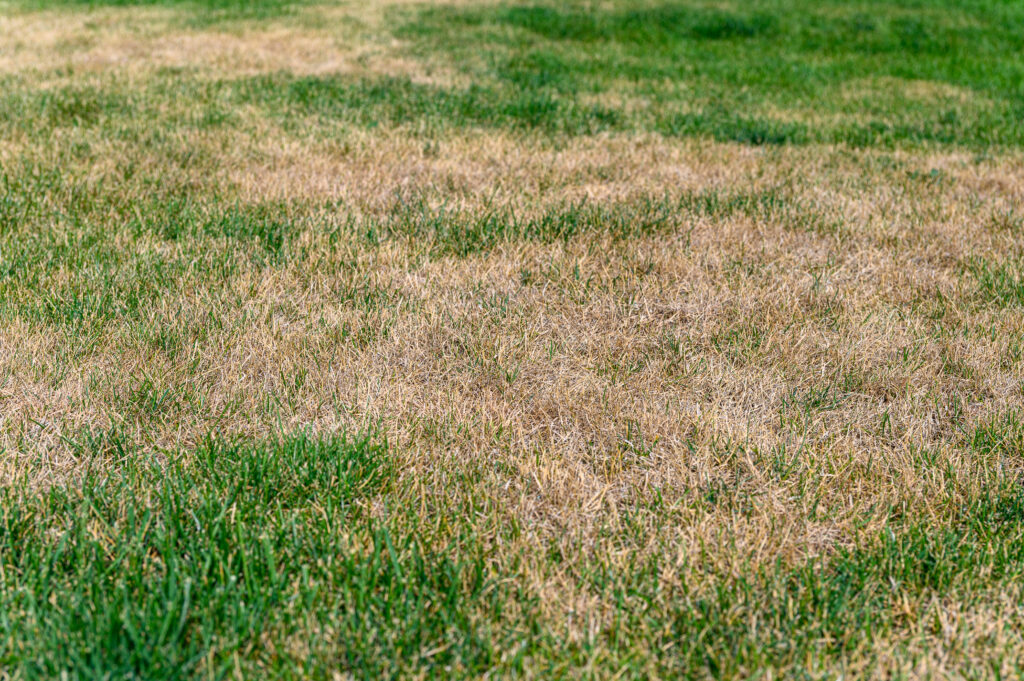
Spring’s also when you need to face the damage winter left behind — and trust me, it usually left some. Walk your yard and look near the street — right where the plow salt and sand pile up. You’ll probably find matted, gray-brown patches that look like the lawn just gave up. Those spots are usually compacted and acidic. They need pH correction to balance the soil, and aeration to let it breathe again — skip either one and you’re just treating the surface. Skip this step and by July you’ll be staring at thin, weedy turf while your neighbor’s lawn looks like it belongs at a golf course. Not a great feeling.

Q4. What is pre-emergent crabgrass control, and have I already missed the window?
Pre-emergent basically lays down a barrier just under the soil surface — crabgrass seeds try to sprout, hit the barrier, and can’t push through. If the crabgrass is already up? Pre-emergent won’t touch it. That ship has sailed. You’re in post-emergent territory — harder, more expensive, less effective.
In Southeastern Massachusetts, soil temps typically cross 50°F somewhere between late Spring and mid-May. The window is short. A warm stretch of Spring rains off the Atlantic can accelerate germination faster than anyone expects.
So — have you missed it? If it’s still early Spring and the soil is cold, probably not. The best lawn treatment companies in the area start booking spring applications in March for exactly this reason. Lawn Squad includes pre-emergent crabgrass control in every plan — you don’t have to ask for it separately.
Q5. What is the VitaminLawn Program and how is it different from a basic spray-and-go service?
Most lawn treatment companies run a simple model: show up, spray, leave, bill you. It handles surface problems but doesn’t address what’s limiting your lawn’s health.
Lawn Squad’s VitaminLawn Program is built differently. Think of it less like a treatment and more like a regimen — a multi-step approach targeting soil conditions, root development, weed pressure, insect activity, and seasonal nutrition together.
It includes fertilization and broadleaf weed control, pre-emergent crabgrass control, grub prevention, surface insect control, root stimulant, and fall winterization. That’s the Essential program — not a list of add-ons. The Pro and Elite plans layer in limestone applications, spring liquid aeration, fall core aeration, overseeding, and seed enhancement for lawns that either need a quick green up or a real rebuild.
Q6. My lawn has bare patches and dead spots from winter. What’s the fix?
Bare patches after a New England winter are normal — especially along driveways and sidewalks where salt and sand pile up. If you’ve got a coastal property in Duxbury, or Green Harbor, you’ve probably seen it yourself — that dead, salt-burned fringe along the edges of the lawn every spring.
What fixes it depends entirely on what caused it — and that part matters. Salt damage throws off your soil’s pH, so limestone goes down first to get things balanced again. New grass won’t grow properly in acidic soil — it just won’t take. Compacted areas need aeration. Bare spots need overseeding at the right time, which is fall, when soil temps and weed competition favor germination.
A good lawn care service will be honest about timing. Spring is for soil chemistry and aeration. Fall is when heavy overseeding pays off. Lawn Squad’s Pro and Elite plans sequence these properly — no guessing.

Q7. What is core aeration and why does everyone keep talking about it?
Core aeration is just punching small holes in the ground so the soil can loosen up and breathe— you can do it mechanically with a core aerator (which pulls out little plugs of soil) or through liquid aeration. Once those openings are there, water, oxygen, and nutrients can get down to the roots instead of just running off the top like the lawn’s wearing a raincoat.
Core aeration is included in the Elite plan, timed for fall when it pairs with overseeding. It’s not glamorous, but it’s one of the highest-ROI treatments you can do for a struggling lawn — and something basic lawn treatment companies often skip.
Learn more @ When Is Best Time To Overseed In Massachusetts?
Q8. How do I know which lawn treatment plan is right for my yard?
We have three plans, each with real differences.
The Essential Plan is the right starting point for most homeowners: crabgrass control, fertilization, weed control, grub prevention, surface insect control, root stimulant, and fall winterizer. Pricing starts at $50 per application for a 3,000 sq ft lawn.
The Pro Plan includes all the aspects of the Essential Plan but includes spring limestone and spring liquid aeration applications.
The Elite Plan is for lawns that need more than maintenance. It brings in fall core aeration and overseeding — if your lawn has thin spots, or you honestly can’t remember the last time it was aerated, this is probably the one you want. If your lawn has been struggling for a couple of seasons and basic care isn’t cutting it anymore, that’s who this is for.
Not sure which to choose? Start with Essential. Lawn Squad’s team will tell you honestly if your lawn needs more — or if it doesn’t. Our goal is to make professional recommendations for what your particular turf needs.
Q9. Grubs ruined my lawn last summer. How do I stop that from happening again?
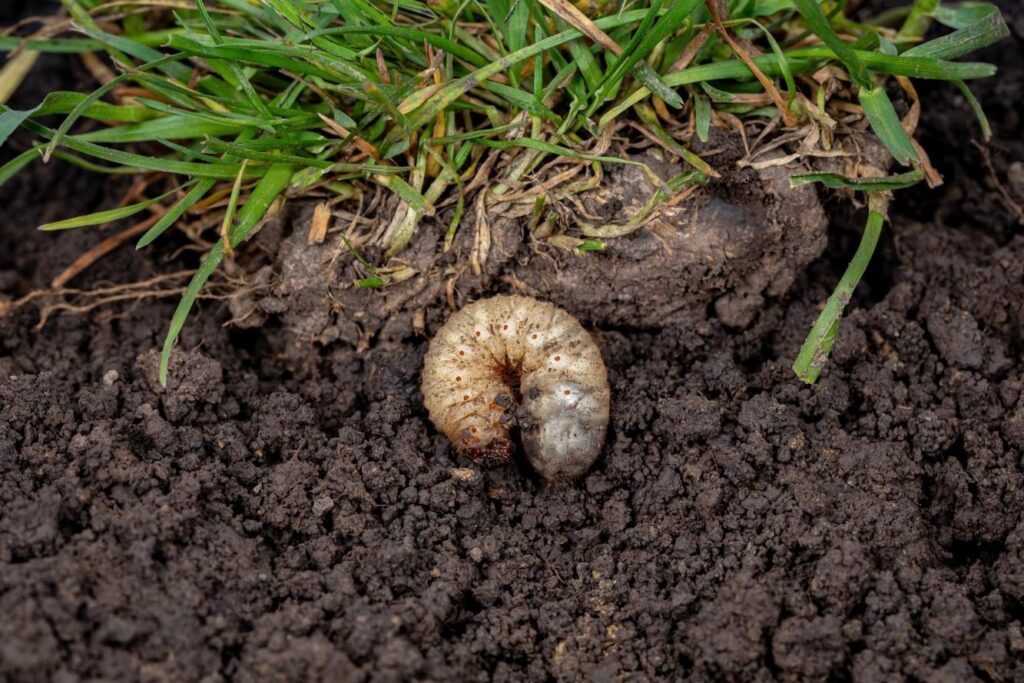
You’ve seen it: irregular brown patches that lift like a rug, spongy ground, maybe some skunk or crow damage, tearing up your turf looking for a meal. That’s grubs — and Japanese beetle grubs are the most common culprit across Southeastern Massachusetts.
Here’s what most lawn treatment companies won’t tell you: prevention is far more effective — and cheaper — than treatment after the damage is done. The window is late spring to early summer, before eggs hatch and larvae move into the root zone.
Grub prevention is standard in every Lawn Squad plan — it goes down at the right time, every season. If last year’s damage left bare patches, fall overseeding and core aeration through the Elite plan is the right path back.
Q10. What makes Lawn Squad of Southeastern Massachusetts different from other lawn treatment companies in the area?
A few things worth knowing.
The Laferrieres aren’t franchise operators who showed up last year. They live and work in Southeastern Massachusetts — running Mosquito Squad Plus pest control across the south coast and south shore, where they have built a reputation for reliability and community presence over the last fifteen years. They know Cohasset. They know Middleborough. They know what a South Shore spring does to a lawn. And beyond the lawn itself, Lawn Squad gives back locally: they support local charities, local youth sports teams and PTAs.
If you’re not satisfied, they don’t just apologize — they come back, reassess, and fix it. You’re not left wondering if anyone’s going to follow through.
Learn more @ Lawn Squad Is The Trusted Source For Massachusetts Lawn Care
Get Started Today!
Spring in Southeastern Massachusetts doesn’t wait. Soil temps are rising, the crabgrass window is opening, and the best lawn treatment companies on the South Shore and South Coast are already filling their spring schedules. If your lawn came through winter looking rough — or last year’s results were disappointing — this is the moment to act.
Get a free quote from Lawn Squad of Southeastern Massachusetts and find out which plan fits your yard. No pressure, no surprises, and a team that knows this region.