
Short Answer: Both granular and liquid treatments have a place in a Northern Kentucky lawn care program. Granular works well for slow-release fertilization and pre-emergent applications when you have irrigation or rain to water it in. Liquid is better for post-emergent weed control, iron greening, and penetration on our clay soils when irrigation timing is uncertain. A professional program uses both strategically across the year, matched to the job. Below is the practical breakdown for Florence, Covington, Newport, Fort Thomas, and Boone County lawns.
Granular or liquid? Most articles treat this like a binary choice. It is not. Both application forms have real strengths. The real question is which one is right for what you are trying to do, at what time of year, and in what conditions. Here is the honest breakdown.
What Granular Actually Does Well
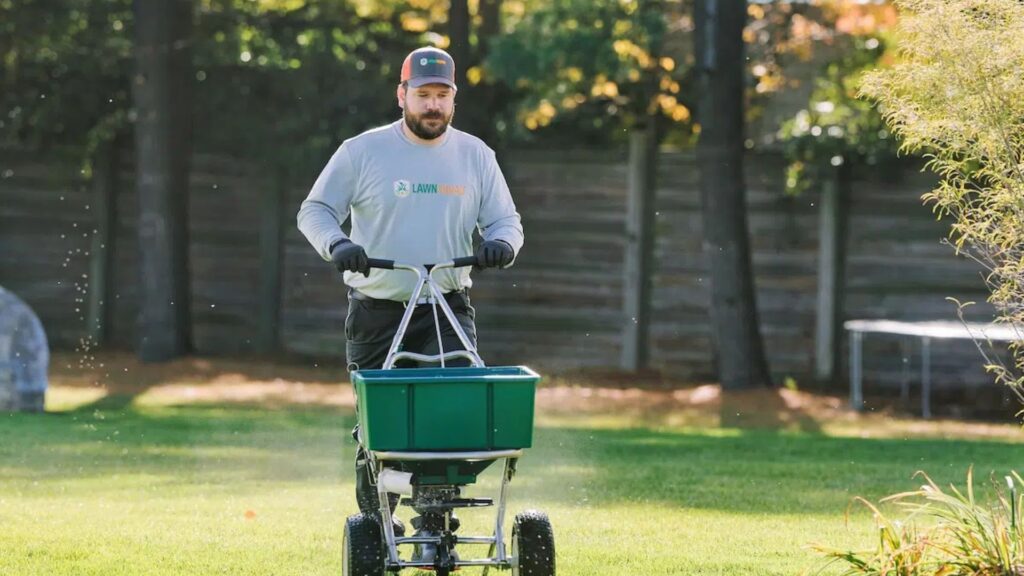
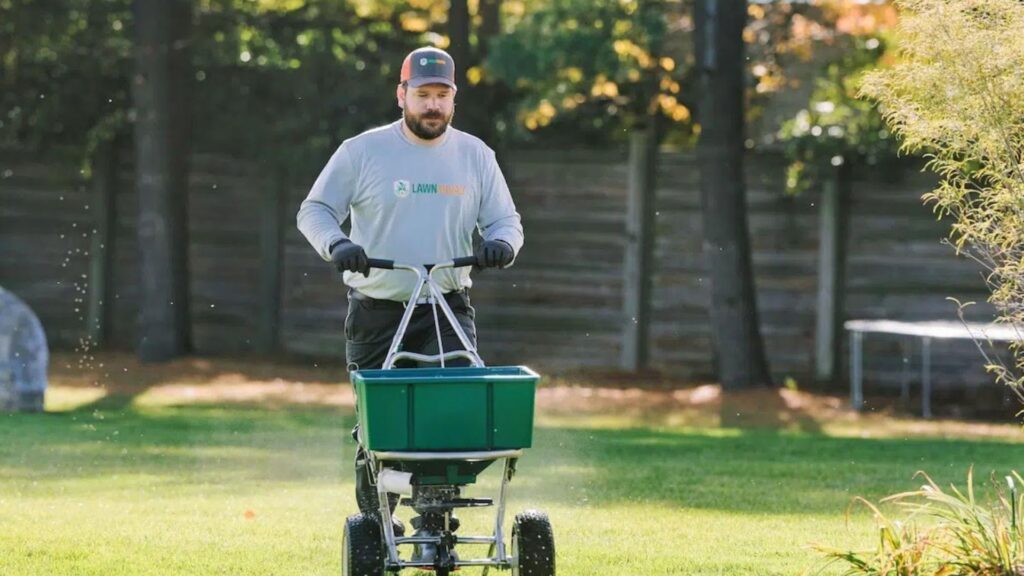
Granular products are solid prills or pellets, spread with a rotary or drop spreader. They are best for:
- Slow-release nutrition. Polymer-coated or sulfur-coated nitrogen granules release over 8 to 12 weeks, providing consistent feeding without growth surges.
- Pre-emergent applications. Many pre-emergent products (prodiamine, pendimethalin) come in granular form and work well when watered in.
- Coverage on large open lawns. Calibrated spreaders deliver very even coverage across wide areas.
- Less drift risk. Near gardens, beds, or water features, granular avoids the potential for drift that liquid has on windy days.
Where granular struggles: it sits on top of the canopy until watered in. If you do not irrigate and rain does not come within 24 to 48 hours, the product loses effectiveness. On our clay soils, without timely water, granular can underperform.
What Liquid Actually Does Well
Liquid applications are made with a backpack sprayer, tank sprayer, or hose-end applicator. They are best for:
- Post-emergent weed control. Liquid 2,4-D, quinclorac, and similar products coat the weed leaf and absorb systemically. That is how you actually kill dandelion, clover, ground ivy, and other broadleaf weeds.
- Fast green-up. Liquid iron or chelated micronutrients green a lawn up within 2 to 3 days. Granular iron may take 2 weeks.
- Clay soil penetration. Properly applied liquid nutrition can move into the top inch of clay soil faster than granular that has not been watered in.
- Irregular or small lawns. On slopes, small urban lots, or lawns with lots of obstacles, liquid often provides better coverage than granular.
Where liquid struggles: shorter residual than coated granular. A liquid feed typically gives 3 to 4 weeks of benefit. A good coated granular gives 8 to 12. Also, liquid can drift in wind and evaporate in heat, which limits application windows.
What Works Best on Northern Kentucky Clay Soils
Three local conditions shape our recommendations:
- Ohio River Valley clay soils. Drainage is variable. Heavy rain events are common. Timing granular applications to water-in windows matters.
- Humid summers. High humidity slows drying of liquid applications and increases disease pressure, which sometimes argues for precision spot treatment rather than blanket applications.
- Mixed irrigation setups. Some Union and Hebron homes have in-ground irrigation that makes granular applications easy. Many older Covington and Newport homes do not, which tilts us toward liquid for reliable coverage.
How a Professional Northern Kentucky Season Uses Both
- April: granular pre-emergent with starter fertilizer (watered in for activation)
- Late May: liquid broadleaf weed control plus iron and nutrition boost for quick green-up
- June: granular grub preventative (watered in)
- July to August: liquid micronutrient applications and spot weed treatment, modest granular slow-release
- September: granular fall fertilizer (the most important feeding of the year for cool-season grass)
- October to November: granular winterizer
Product form is a tool, not a philosophy. We match it to the job and the conditions.
Common DIY Mistakes
- Granular applied and left unwatered. Waiting two weeks for rain means most of the product’s effectiveness is lost. If applying granular, water within 48 hours.
- Liquid applied in wind or heat. Drift in wind above 10 mph is real, as is evaporation above 85 degrees. Apply early morning or evening in suitable conditions.
- Using one form only. Homeowners who commit to granular-only miss the post-emergent weed control that only liquid does well. Homeowners who commit to liquid-only miss the slow-release nutrition that granular provides.
- Wrong rate calculation. Both forms require you to measure your lawn and calibrate your equipment. Guessing usually leads to under- or over-application.
What to Do Next
If you want a program that uses both granular and liquid strategically across the year, built around your specific Northern Kentucky lawn, we are here.
Lawn Squad of Northern KY serves Alexandria, Bellevue, Burlington, California, Covington, Crittenden, Dayton, Dry Ridge, Erlanger, Florence, Fort Thomas, Fort Mitchell, Hebron, Independence, Kenton, Latonia, Melbourne, Morning View, Newport, Petersburg, Silver Grove, Union, Verona, and Walton.
Call us at 859-222-7335 or request a free quote at lawnsquad.com. Our VitaminLawn program uses both application forms strategically throughout the year, matched to the right job at the right time.