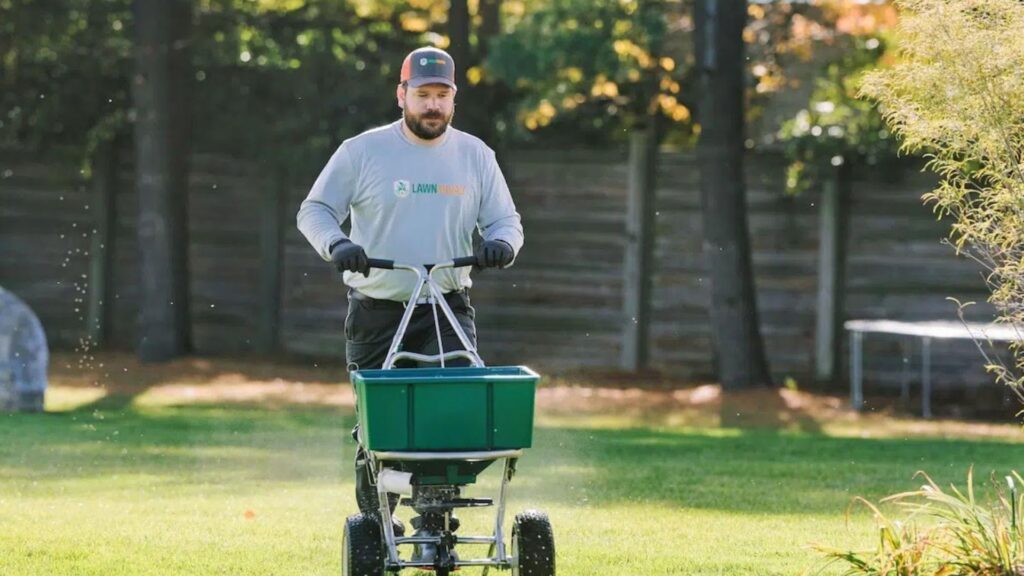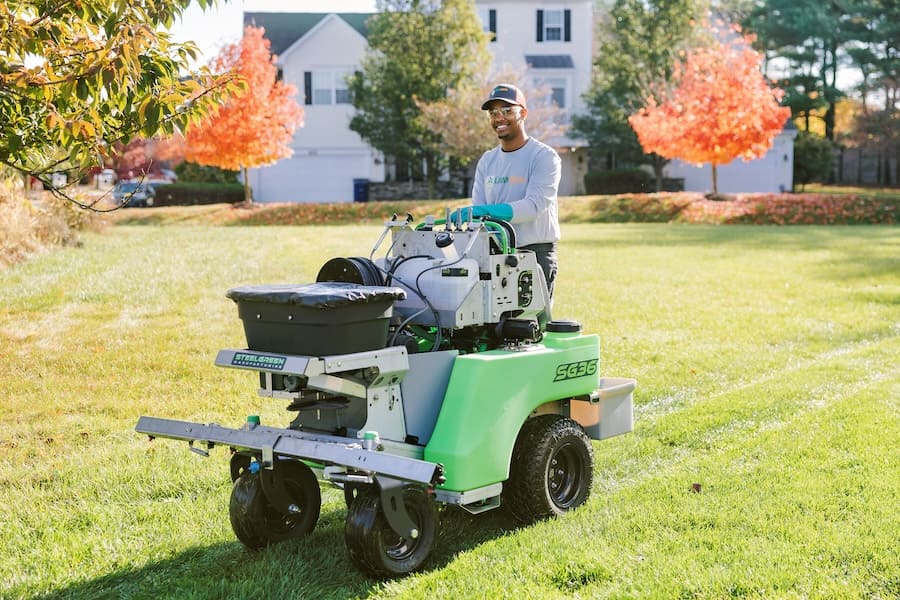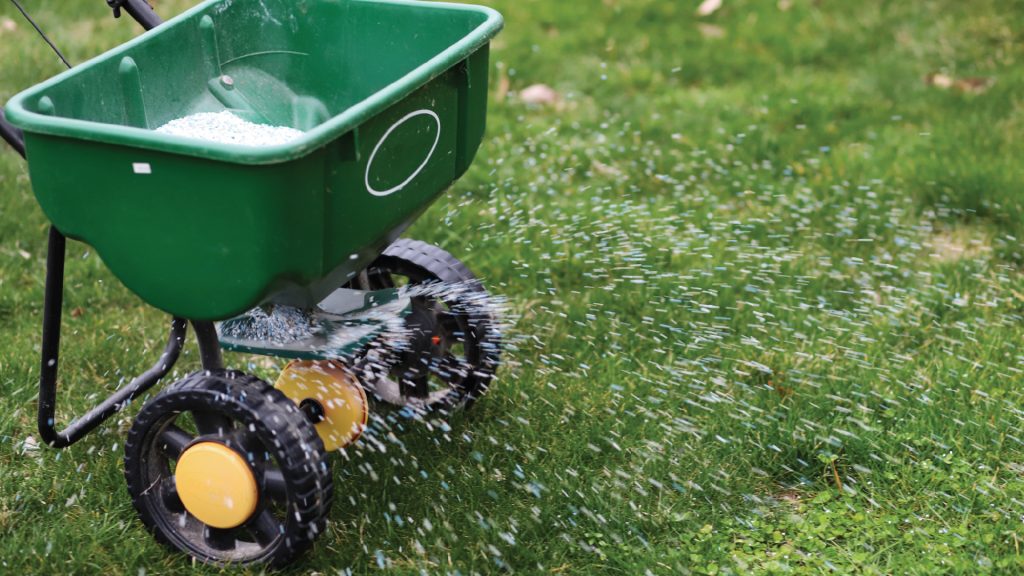

Short Answer: A real full-service lawn care program for Bucks and Montgomery Counties includes pre-emergent crabgrass control in April, 3 to 4 rounds of fertilization and broadleaf weed control timed to our cool-season grasses, grub prevention in early summer, surface insect control through the warm months, disease control for brown patch and dollar spot, fall aeration for our clay-loam soils, and a soil test to set everything up correctly. At Lawn Squad, that is our VitaminLawn program. Here is exactly what goes into it, why each piece matters for a Pennsylvania lawn, and how to tell if the program you have is actually full-service or only partial.
If you have shopped lawn care services in Bucks or Montgomery County, you have probably heard the same pitch from three different companies. “We offer a complete lawn care program.” Great. But what does “complete” actually mean, and does their version match yours?
This question matters more in our area than most. We sit in the transition zone, with cool-season grasses doing their best in a climate that gets hot and humid by June. That means a Pennsylvania lawn faces a longer list of pressures than a lawn in Maine or a lawn in Georgia. A program that is “complete” in New England might be missing key pieces for Horsham, Ambler, or Newtown.
Here is our honest breakdown of what actually belongs in a full-service program for Bucks and Montgomery Counties.
1. Pre-Emergent Crabgrass Control (Mid-April)
This is the first and most timing-sensitive piece. Applied when soil temperatures hit 55 degrees, pre-emergent stops crabgrass and other summer annual grasses from germinating in the first place. In our area, the window typically opens between April 5 and April 20.
What to look for in a program: the application should happen based on actual soil conditions, not a fixed date. Good programs adjust timing each year. Cheap ones apply on the same day every April whether the soil is ready or not.
2. Spring Fertilization and Broadleaf Weed Control (Late April to Early May)
Once the lawn is actively growing, a light, balanced fertilizer plus targeted broadleaf weed control goes down. This is when you knock out dandelions, clover, ground ivy (creeping Charlie), plantain, and wild violet before they go to seed.
For Bucks and Montgomery County lawns, this application should be measured, not heavy. Too much nitrogen now sets up disease problems later in the summer.
3. Early Summer Feeding and Insect Watch (Late May to Early June)
A second fertilizer round, typically with a slow-release component, supports the grass as soil temperatures rise. This is also when our technicians are scanning for early signs of insect activity: sod webworm, cinch bug, and bill bug all show up in June in Pennsylvania.
4. Grub Prevention (June to Early July)
Grub damage is one of the most expensive problems Pennsylvania homeowners face, and it is almost entirely preventable. A single application of a preventive grub control product in June or early July stops the damage that would otherwise show up in September and October.
What to look for in a program: preventive grub control should be standard, not an upsell. If a “full” program does not include it, that is a partial program with a marketing label.
5. Summer Fertilization and Disease Watch (July to August)
Summer fertility is about maintenance, not aggressive growth. Product selection matters here because heavy nitrogen in July triggers brown patch and dollar spot in our humid weather.
Disease control, when needed, is usually a spot treatment in Bucks and Montgomery County rather than a blanket application. We see the most pressure on fescue lawns in shaded Main Line yards and on older properties with poor drainage.
6. Surface Insect Control (Throughout Summer)
Surface-feeding insects (cinch bugs, sod webworm) do most of their damage in July and August. A program that includes surface insect control as part of regular visits catches the damage early, before you need to replace sections of turf.
7. Fall Fertilization (September to October)
This is the single most important application of the year for a Pennsylvania cool-season lawn. Fall is when bluegrass and fescue build root reserves. A strong fall feeding program is what separates a lawn that explodes with color in April from one that limps into spring.
8. Core Aeration and Overseeding (Early Fall)
Our clay-loam soils compact over the course of a season, especially in Montgomery County. Core aeration pulls plugs of soil to relieve compaction, and overseeding introduces improved grass varieties to thicken the stand. On shaded lawns, overseeding with shade-tolerant fescue varieties is the single best thing we can do for long-term health.
9. Late-Fall Winterizing Feed (November)
One more feed in late fall sets the grass up for winter and ensures strong green-up in April. This is often skipped in basic programs and is the reason some lawns always look tired in early spring.
10. Soil Test and Customized Adjustments
A soil test is a one-time, inexpensive investment that shapes everything else. Our VitaminLawn Elite program includes one as part of the service. It tells us your pH, phosphorus and potassium baseline, and organic matter. From there, we adjust fertilizer selection, lime applications, and overseeding recommendations.
Across Bucks and Montgomery Counties, soil pH is highly variable. We routinely find acidic soils in Doylestown, Newtown, and other wooded areas that need lime to correct. We occasionally find alkaline soils in newer developments where construction crews overapplied lime. Neither problem shows up until you test.
How to Compare Programs Apples-to-Apples
When comparing lawn service quotes for your Bucks or Montgomery County home, ask these questions:
- How many visits are included? (Our Essential is 5, Pro is 6, Elite is 10)
- Is grub prevention included or a separate upsell?
- Is surface insect control included, or only if you call to report damage?
- Is disease control offered if brown patch or dollar spot appears?
- Is aeration included in fall, and if so, is it actual core aeration (not spike aeration)?
- What happens if a weed or brown spot shows up between visits?
A truly full-service program answers “yes” or “included” to all of these without upcharges that show up later.
What to Do Next
If you want to see what a full program looks like on your specific lawn, we will build a customized plan at no cost. Our team walks the property, measures the turf, identifies grass type and shade conditions, and sends back a clear plan.
Lawn Squad of Bucks and Montgomery Counties serves Abington, Ambler, Ardmore, Audubon, Berwyn, Blue Bell, Bridgeport, Bryn Mawr, Buckingham, Chalfont, Colmar, Conshohocken, Devon, Doylestown, Dresher, Eagleville, Flourtown, Fort Washington, Furlong, Gladwyne, Glenside, Gwynedd, Hatboro, Hatfield, Haverford, Horsham, Jamison, King of Prussia, Lafayette Hill, Lansdale, Merion Station, Montgomeryville, Narberth, New Hope, Newtown, Norristown, North Wales, Oreland, Philadelphia, Plymouth Meeting, Solebury, Spring House, Valley Forge, Villanova, Warminster, Warrington, Washington Crossing, Wayne, West Point, Willow Grove, Worcester, and Wynnewood.
Call 610-750-9768 or visit lawnsquad.com to request a quote. Most homeowners see a clear difference by the second VitaminLawn application, with the full payoff showing up by midsummer.