The short answer: Keeping a Knoxville lawn healthy through summer requires adjusting your watering, mowing, and fertilization practices to match the stress your grass faces. Cool season lawns need protection and survival strategies. Warm season lawns need support during their peak growth period.
Most summer lawn damage in Knoxville comes from homeowners continuing spring practices into summer instead of adapting to heat stress.
Quick overview:
- Watering: Deep and infrequent, early morning only, about one inch per week
- Mowing: Raise the height, mow less often, keep blades sharp
- Fertilization: Light nitrogen with iron for cool season grass, regular feeding for warm season grass
- Pest and disease control: Stay ahead of grubs, fungus, and surface insects
Keep reading to learn exactly how to adjust your lawn care for Knoxville’s June through August heat.
The Complete Summer Care Approach: Our Mid-Season Program
At Lawn Squad of Knoxville, our summer rounds (4, 5, and 6) are specifically designed for the challenges East Tennessee lawns face during the hottest months.
Round 4 in early June prepares your lawn for incoming heat with disease control, grub prevention, and iron treatment. Round 5 in mid-July focuses on survival with root stimulant and careful weed management. Round 6 in late August begins the transition back to active growth as temperatures cool.
Whether you handle summer lawn care yourself or hire professionals, understanding what your grass needs during heat stress will help you avoid the mistakes that turn struggling lawns into dead ones.
Why Summer Is So Hard on Knoxville Lawns
Knoxville summers combine several factors that stress lawns beyond what grass experiences in most other regions.
First, there’s the heat itself. July and August temperatures regularly exceed 90 degrees, with some days pushing past 95. The ground absorbs this heat and radiates it back, making conditions at grass level even hotter than air temperature suggests.
Second, there’s the humidity. Knoxville’s summer humidity often exceeds 70%, creating conditions where fungal diseases thrive. Morning dew sits on grass blades for hours, giving fungal spores the moisture they need to germinate.
Third, there’s the transition zone reality. Most Knoxville lawns contain cool season grasses like fescue that evolved for temperatures between 60 and 75 degrees. When temperatures exceed 85 degrees, these grasses stop growing and enter survival mode. Pushing them to grow during this period causes damage, not improvement.
Here’s the key principle: summer lawn care in Knoxville is about helping your grass survive stress, not about achieving peak performance. The lawns that look best in September are the ones that were protected in July, not pushed.
Lawn Squad has helped homeowners across Knox, Blount, Anderson, and Jefferson counties navigate summer stress for over two decades. We’ve learned that the biggest summer lawn problems come from doing too much, not too little.
Summer Watering Strategies for Knoxville Lawns
Watering mistakes cause more summer lawn damage in Knoxville than any other factor. Here’s how to water correctly during the hot months.
Water Deep and Infrequent
Shallow, frequent watering trains grass roots to stay near the surface where they’re vulnerable to heat. Deep, infrequent watering encourages roots to grow down where soil stays cooler and moisture lasts longer.
What to do:
- Apply about one inch of water per week total (including rainfall)
- Water once or twice per week rather than daily
- Run sprinklers long enough for water to penetrate six inches into soil
- Use a screwdriver or soil probe to check moisture depth
Why this matters: Roots follow water. If you only wet the top inch of soil, roots stay in that top inch. When a heat wave dries out that shallow zone, your grass has nowhere to find moisture.
Water Early Morning Only
The timing of your watering matters as much as the amount in Knoxville’s humid summers.
What to do:
- Water between 4 AM and 9 AM
- Never water in the evening or at night
- Avoid midday watering when evaporation wastes most of your water
Why this matters: Evening watering leaves grass blades wet all night, creating perfect conditions for brown patch and other fungal diseases. Morning watering lets blades dry before nightfall while still getting water to roots before afternoon heat.
Critical warning: Evening irrigation is the number one cause of summer fungal outbreaks in Knoxville lawns. If you have an automatic sprinkler system running at night, reprogram it immediately.
Adjust for Rainfall
Knoxville summers bring afternoon thunderstorms that can drop significant rain in short periods. Adjust your watering accordingly.
What to do:
- Track weekly rainfall with a rain gauge
- Subtract rainfall from your irrigation target
- Skip watering entirely during rainy weeks
- Resume normal watering after dry spells of five or more days
Know When to Let Grass Go Dormant
During extreme heat or drought, cool season grass may go dormant despite your best efforts. This is a survival mechanism, not a death sentence.
What to do:
- If water restrictions limit irrigation, let the lawn go dormant rather than watering insufficiently
- Dormant grass turns brown but usually recovers when temperatures cool
- Water dormant lawns lightly every two to three weeks to keep crowns alive
- Don’t try to force dormant grass back to green with heavy watering
Summer Mowing Strategies for Knoxville Lawns
How you mow during summer directly affects whether your lawn survives the heat or succumbs to stress.
Raise Your Mowing Height
Taller grass shades the soil, keeps roots cooler, and reduces water evaporation. This is the simplest and most effective summer lawn protection strategy.
What to do:
- Cool season lawns (fescue, bluegrass): Maintain 3.5 to 4 inches
- Warm season lawns (bermuda, zoysia): Maintain 2 to 2.5 inches
- Raise your mower one or two notches from spring settings
Why this matters: Each inch of grass blade shades about an inch of soil. A lawn mowed at 4 inches has dramatically cooler soil than one mowed at 2 inches. Cooler soil means less water evaporation and less root stress.
Mow Less Frequently
Summer heat slows cool season grass growth significantly. Mowing on your spring schedule removes too much blade at once, stressing the plant.
What to do:
- Mow only when grass has grown about one-third taller than your target height
- During heat waves, this might mean mowing every 10 to 14 days instead of weekly
- Never remove more than one-third of the blade in a single mowing
Why this matters: Every time you mow, you wound the grass plant. That wound requires energy to heal. During heat stress, grass has limited energy reserves. Removing too much blade too often can exhaust the plant.
Keep Blades Sharp
Dull mower blades tear grass rather than cutting it cleanly. Torn edges turn brown, lose moisture faster, and provide entry points for disease.
What to do:
- Sharpen mower blades every 8 to 10 mowing sessions
- Sharpen more often if you hit rocks, sticks, or debris
- Consider keeping a spare sharpened blade to swap mid-season
- Look at cut grass tips. Clean cuts appear smooth. Dull blade damage appears ragged and brown.
Mow When Grass Is Dry
Wet grass clumps, cuts unevenly, and spreads disease. Morning dew in Knoxville can keep grass wet until mid-morning.
What to do:
- Wait until grass blades are completely dry before mowing
- Late morning or early evening (after heat breaks) are ideal times
- Avoid mowing during the hottest part of the day when grass is heat-stressed
Summer Fertilization Strategies for Knoxville Lawns
Summer fertilization in Knoxville requires a completely different approach depending on your grass type.
Cool Season Lawns: Less Is More
Fescue and bluegrass slow their growth dramatically when temperatures exceed 85 degrees. Heavy nitrogen during this period forces growth the plant can’t sustain, weakening it against heat and disease.
What to do:
- Apply no more than 0.25 to 0.5 pounds of nitrogen per 1,000 square feet in summer
- Use slow-release nitrogen sources only
- Consider iron supplements for green color without growth stimulation
- Skip nitrogen entirely during extreme heat waves
Why this matters: Nitrogen pushes leaf growth. Leaf growth requires energy and water. During heat stress, cool season grass doesn’t have extra energy or water to spare. Forcing growth with nitrogen is like making a marathon runner sprint. It causes collapse, not improvement.
Lawn Squad’s Round 4 includes iron treatment that keeps Knoxville lawns green through summer without the risks of heavy nitrogen application.
Warm Season Lawns: Regular Feeding
Bermuda, zoysia, and other warm season grasses thrive in summer heat. This is their peak growth period, and they need regular fertilization.
What to do:
- Apply 0.5 to 1 pound of nitrogen per 1,000 square feet every four to six weeks
- Continue regular fertilization through August
- Begin reducing in September as growth slows
Root Stimulants Help Both Grass Types
Root stimulant products contain compounds that encourage root growth and stress tolerance without pushing top growth.
What to do:
- Apply root stimulant in mid-summer (July)
- Look for products containing humic acid, kelp extract, or similar ingredients
- Root stimulants complement but don’t replace appropriate fertilization
Lawn Squad’s ELITE program includes root stimulant in Round 5 specifically to help Knoxville lawns strengthen their root systems during peak summer stress.
Summer Pest Control for Knoxville Lawns
Summer brings increased insect pressure to Knoxville lawns. Staying ahead of pests prevents damage that weakens grass already struggling with heat.
Grub Prevention
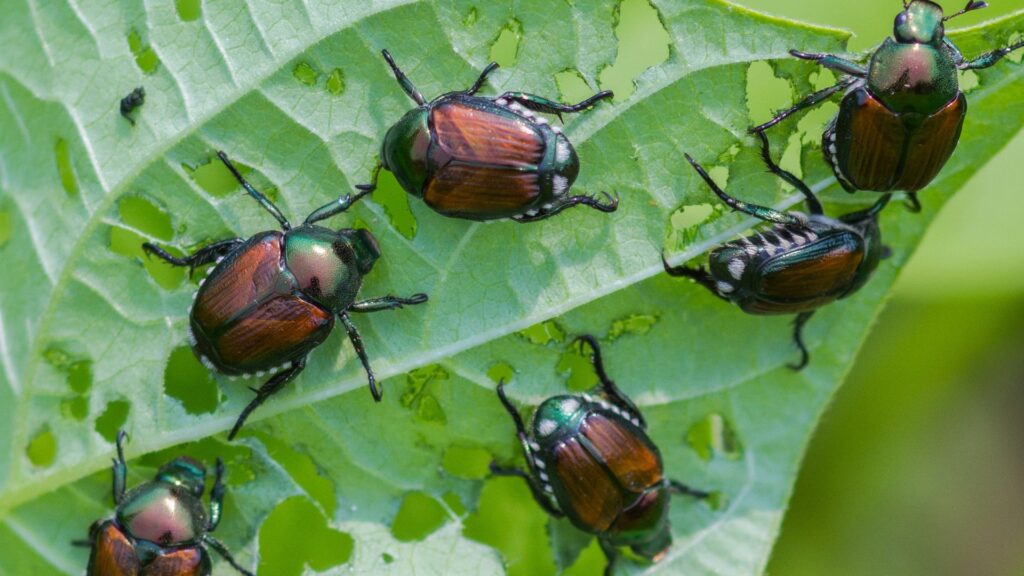
Grubs are the larvae of beetles that feed on grass roots. By the time you see damage above ground, grubs have already destroyed the root system below.
What to do:
- Apply preventative grub control in late spring or early summer (May through June)
- Products containing imidacloprid or chlorantraniliprole work best as preventatives
- If you missed prevention and see damage, curative products with trichlorfon can help but won’t restore dead grass
Why this matters: Grub damage appears in late summer when grass pulls up like loose carpet. The damage happened weeks earlier when grubs were feeding. Prevention in early summer stops the problem before it starts.
Lawn Squad’s programs include grub prevention in Rounds 3 and 4, covering the critical window for Knoxville lawns.
Surface Insect Control
Chinch bugs, sod webworms, and armyworms all damage Knoxville lawns during summer. These surface-feeding insects can devastate a lawn quickly.
What to do:
- Watch for irregular brown patches that spread rapidly
- Look for insects by parting grass blades near damage edges
- Treat promptly when populations appear. Surface insects multiply fast in warm weather.
- Preventative surface insect treatments reduce outbreak severity
Flea and Tick Control
If you use your lawn for recreation, summer flea and tick populations can make outdoor time miserable.
What to do:
- Perimeter spray treatments reduce populations significantly
- Focus on shady areas, lawn edges, and transition zones between lawn and landscaping
- Reapply every four to six weeks during peak season
Summer Disease Control for Knoxville Lawns
Knoxville’s humid summers create ideal conditions for fungal diseases, especially in cool season lawns already stressed by heat.
Brown Patch Prevention and Treatment
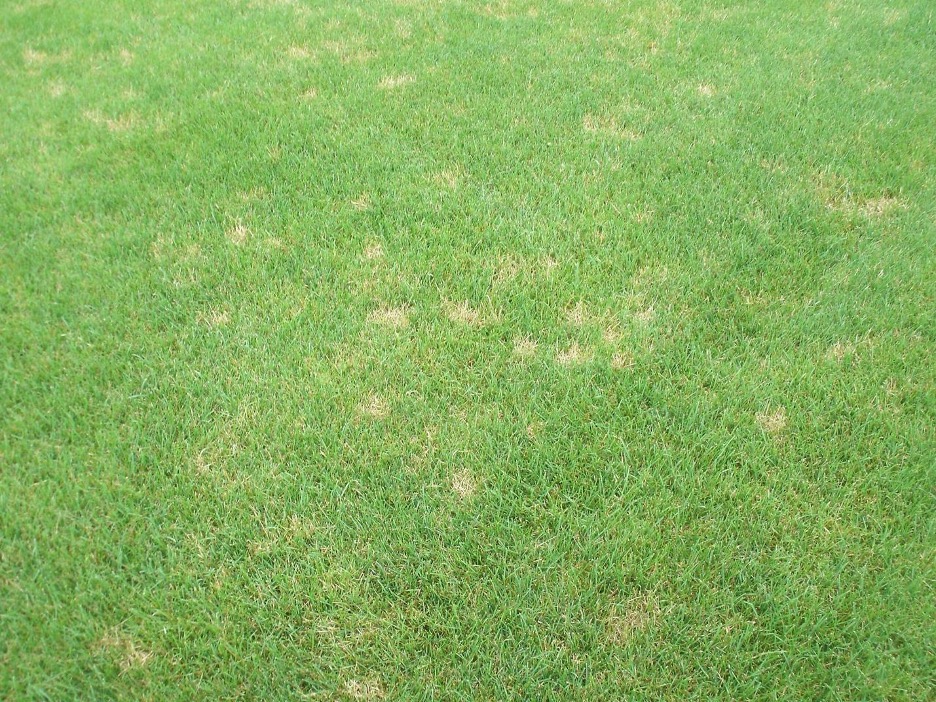
Brown patch is the most common summer lawn disease in the Knoxville area. It attacks fescue and other cool season grasses when nighttime temperatures stay above 65 degrees and humidity is high.
Signs to watch for:
- Circular brown patches ranging from inches to several feet across
- “Smoke ring” of gray or dark brown at patch edges in early morning
- Grass blades with tan lesions bordered by dark brown
What to do:
- Water only in early morning
- Avoid evening irrigation completely
- Reduce nitrogen fertilization
- Apply fungicide at first sign of symptoms
- Preventative fungicide programs protect lawns with brown patch history
Why this matters: Brown patch can spread several feet per week in favorable conditions. Early treatment limits damage. Waiting to see “if it gets worse” allows the disease to destroy large sections of lawn.
Lawn Squad’s ELITE program includes disease control in Rounds 2, 4, 6, and 7, covering the entire brown patch risk season in Knoxville.
Dollar Spot
Dollar spot creates small, silver-dollar-sized dead spots that can merge into larger damaged areas.
Signs to watch for:
- Small tan or straw-colored spots two to six inches across
- Grass blades with hourglass-shaped lesions
- White fungal threads visible in morning dew
What to do:
- Increase nitrogen slightly (dollar spot thrives on nitrogen-deficient lawns)
- Reduce leaf wetness duration by improving airflow and watering properly
- Apply fungicide if spots are spreading
Large Patch (Zoysia and Bermuda)
Warm season grasses face large patch primarily in spring and fall, but stressed lawns can show symptoms in summer too.
Signs to watch for:
- Large circular patches of orange or brown grass
- Grass that pulls up easily at patch edges
What to do:
- Avoid overwatering
- Reduce thatch through aeration
- Apply fungicide if symptoms appear
Summer Weed Control for Knoxville Lawns
Weeds don’t take summer off, but your approach to controlling them should change during heat stress.
Crabgrass
If crabgrass is already growing in your lawn, summer curative treatments can help, but prevention in spring is more effective.
What to do:
- Post-emergent crabgrass herbicides work on young plants
- Mature crabgrass is harder to kill without damaging lawn grass
- Mark problem areas for pre-emergent treatment next spring
Nutsedge
That bright green, fast-growing grass that sticks up a day after mowing isn’t grass at all. It’s nutsedge, and it thrives in Knoxville’s summer conditions.
What to do:
- Specific nutsedge herbicides (containing halosulfuron or sulfentrazone) are required
- Standard broadleaf herbicides won’t control nutsedge
- Multiple applications may be needed as nutlets continue sprouting
- Address drainage issues where nutsedge thrives
Lawn Squad’s programs include sedge suppression in Rounds 4, 5, and 6 because nutsedge is a persistent summer problem in Knox County and surrounding areas.
Broadleaf Weeds
Dandelions, clover, and other broadleaf weeds can be treated in summer, but carefully.
What to do:
- Apply herbicides when temperatures are below 85 degrees
- Early morning or evening applications reduce turf stress
- Spot treat rather than broadcast spray during extreme heat
- Some weeds are better addressed in fall when temperatures moderate
Critical warning: Herbicide applications when temperatures exceed 90 degrees can damage lawn grass more than weeds. On extremely hot days, let weeds wait until conditions improve.
Summer Aeration for Knoxville Lawns
Aeration during summer can help struggling lawns if done correctly, but timing and grass type matter.
Cool Season Lawns
Summer aeration of fescue and bluegrass comes with risks. Disturbing soil during heat stress can damage grass further.
What to do:
- Aerate in early summer (June) before peak heat if needed
- Better option: Wait for fall aeration when grass recovers actively
- If you must aerate in summer, water deeply before and after
Warm Season Lawns
Bermuda and zoysia can handle summer aeration well since they’re actively growing.
What to do:
- Aerate when grass is growing vigorously (June through August)
- Water thoroughly after aeration
- This is also good timing for overseeding warm season lawns
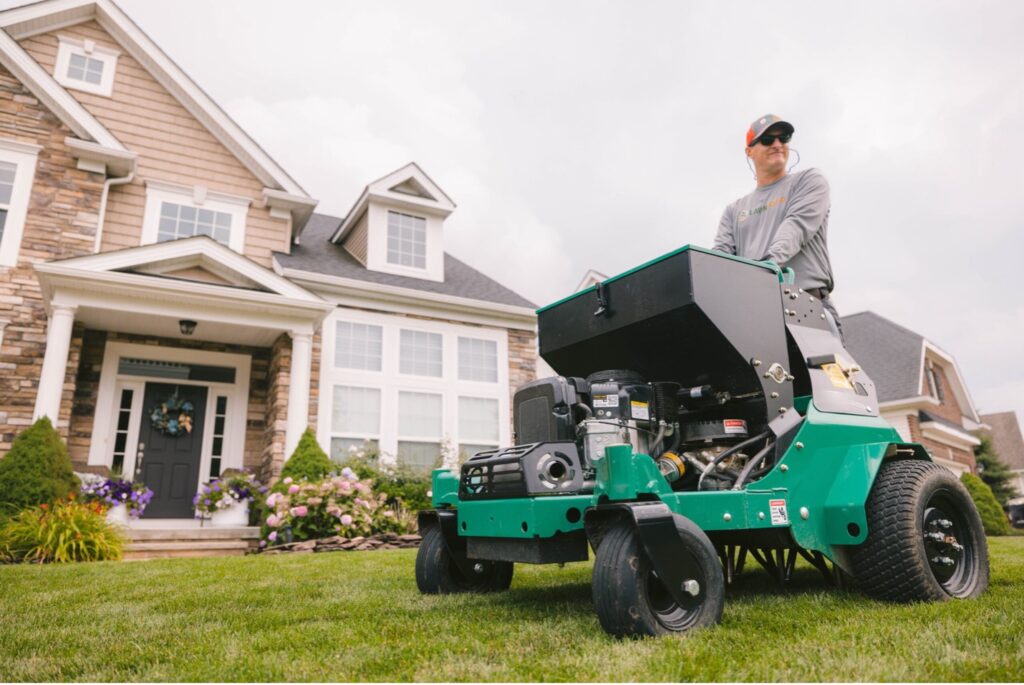
Lawn Squad’s ELITE program includes aeration in Rounds 4 through 8, with summer aeration specifically timed for when Knoxville lawns can handle and benefit from the process.
Common Summer Lawn Care Mistakes Knoxville Homeowners Make
After serving the Knoxville area since 2001, we see the same summer mistakes cause lawn damage year after year.
Mistake #1: Evening Watering This single mistake causes more summer lawn disease than any other factor. Water sitting on grass blades overnight creates perfect conditions for brown patch and other fungal diseases. Switch to morning watering only.
Mistake #2: Mowing Too Short Scalping the lawn in summer removes the shade that keeps soil and roots cool. Grass mowed at 2 inches in July suffers far more heat stress than grass maintained at 4 inches.
Mistake #3: Fertilizing Like It’s Spring Heavy nitrogen in July pushes growth that cool season grass can’t sustain. The result is weak, disease-prone turf. Cut back to light applications or iron treatments instead.
Mistake #4: Watering Every Day for Short Periods Daily shallow watering trains roots to stay at the surface where they’re most vulnerable. Deep weekly watering encourages deep roots that find moisture even during dry spells.
Mistake #5: Ignoring Early Disease Signs Small brown patches in June become major lawn damage by August if ignored. Early treatment when spots first appear prevents widespread destruction.
Professional Summer Care vs. DIY: Which Should You Choose?
DIY summer lawn care gives you control and saves money if you have time, equipment, and willingness to monitor conditions closely. Best for: Homeowners who can adjust practices weekly based on weather, have smaller lawns, and enjoy hands-on lawn work.
Professional summer care ensures correct timing of treatments, proper product selection, and consistent monitoring even when you’re busy or traveling. Best for: Homeowners with larger lawns, summer travel plans, history of lawn problems, or preference for guaranteed results without the learning curve.
Summer is when lawn care mistakes cause the most damage. Professional programs provide insurance against costly errors during the most stressful season.
Your Knoxville Summer Lawn Care Calendar at a Glance
June
| Task | Cool Season Lawns | Warm Season Lawns |
|---|---|---|
| Watering | 1 inch weekly, morning only | 1 to 1.5 inches weekly |
| Mowing | 3.5 to 4 inches | 2 to 2.5 inches |
| Fertilizing | Light nitrogen plus iron | Regular feeding |
| Pest Control | Grub prevention, surface insects | Grub prevention, surface insects |
| Disease Control | Begin preventative fungicide | Monitor only |
July
| Task | Cool Season Lawns | Warm Season Lawns |
|---|---|---|
| Watering | 1 inch weekly, reduce if dormant | 1 to 1.5 inches weekly |
| Mowing | 4 inches, less frequent | 2 to 2.5 inches, frequent |
| Fertilizing | Root stimulant, skip heavy nitrogen | Continue regular feeding |
| Pest Control | Monitor for surface insects | Monitor for surface insects |
| Disease Control | Continue fungicide if needed | Monitor only |
August
| Task | Cool Season Lawns | Warm Season Lawns |
|---|---|---|
| Watering | 1 inch weekly, prepare for fall | 1 to 1.5 inches weekly |
| Mowing | Begin lowering gradually late month | 2 to 2.5 inches |
| Fertilizing | Light feeding late month | Continue feeding, begin reducing |
| Pest Control | Monitor, treat as needed | Monitor, treat as needed |
| Disease Control | Continue prevention, watch for dollar spot | Monitor for large patch |
The Bottom Line
Summer is the most challenging season for Knoxville lawns, especially those containing cool season grasses like fescue. The combination of heat, humidity, and common care mistakes can turn a healthy lawn into a brown, patchy mess in just a few weeks.
Key principles to remember:
- Water deep and infrequent, early morning only, never in the evening
- Raise mowing height and mow less frequently during heat stress
- Reduce nitrogen on cool season lawns while warm season lawns need regular feeding
- Stay ahead of grubs with preventative treatment in early summer
- Watch for disease and treat immediately when symptoms appear
- Accept that some dormancy during extreme heat is normal, not failure
Follow these strategies, and your lawn will emerge from summer ready for strong fall recovery instead of needing major repairs.

Let Lawn Squad Handle It For You
Summer lawn care in Knoxville demands constant attention and quick adjustments based on changing conditions. Heat waves, thunderstorms, disease outbreaks, and pest pressure can shift weekly, requiring different responses each time.
Lawn Squad’s summer program is built specifically for the challenges lawns face in Knox, Blount, Anderson, and Jefferson counties.
Our Summer Rounds (4, 5, and 6) include:
- Disease control to prevent and treat brown patch and other fungal problems
- Grub prevention before larvae damage roots
- Surface insect control for chinch bugs, sod webworms, and armyworms
- Sedge suppression for persistent nutsedge
- Iron treatment for summer color without risky nitrogen
- Root stimulant to strengthen grass through peak heat
- Aeration to reduce compaction and thatch
Our ELITE Program adds:
- Unlimited service calls if problems appear between treatments
- Soil testing to identify underlying issues
- Complete coverage from January through November
Don’t spend your summer worrying about whether your lawn will survive. Don’t lose weekends to watering schedules and disease scouting.
Contact Lawn Squad of Knoxville today at 865-876-0065 or visit lawnsquad.com/contact-us to get a free quote and protect your lawn through the toughest season of the year.