The short answer: Knoxville lawns need fertilizer throughout the growing season, but timing and type depend on your grass. Cool season grasses like fescue need most of their fertilizer in fall and early spring. Warm season grasses like bermuda and zoysia need fertilizer during summer when they’re actively growing.
Most Knoxville lawns benefit from six to eight fertilizer applications spread across the year, with specific nutrients matched to what the grass needs in each season.
Quick overview:
- Cool season lawns: Heavy fertilization in fall, moderate in spring, light or none in summer
- Warm season lawns: Heavy fertilization in summer, light in late spring and early fall
- All lawns: Soil testing determines if you need lime, iron, or other amendments
Keep reading to learn exactly when to fertilize your Knoxville lawn and what nutrients to apply in each round.

The Complete Fertilization Approach: Our 8 Round Program
At Lawn Squad of Knoxville, we’ve developed a fertilization schedule that matches the specific needs of turfgrass in our transition zone climate.
Our programs include fertilizer in every round from late January through mid-November, but the formulation changes throughout the year. Early season applications focus on root development. Summer applications provide nutrients without pushing excessive growth. Fall applications build reserves for winter survival and spring green-up.
Whether you fertilize your own lawn or hire professionals, understanding why timing matters will help you get better results from every application.
Why Fertilization Timing Matters More in Knoxville
Knoxville sits in the transition zone, where neither cool season nor warm season grasses are perfectly suited to the climate. This makes fertilization timing more critical here than in regions with simpler growing conditions.
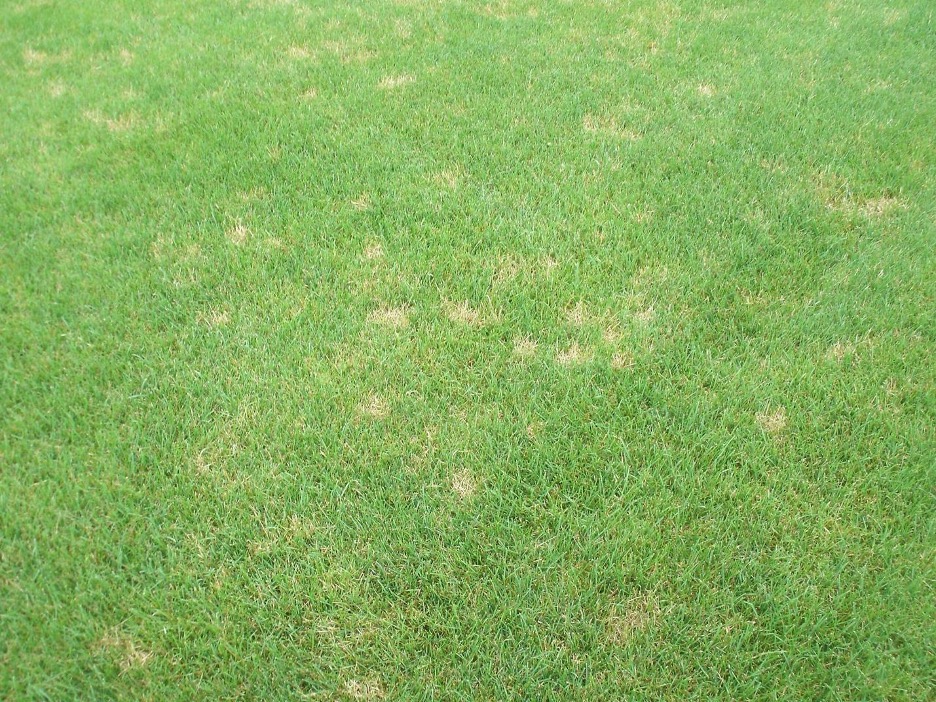
Here’s what happens when you get it wrong. Fertilize cool season grass heavily in June, and you push tender growth right when heat stress peaks. That stressed grass becomes a target for brown patch fungus. Fertilize too late in fall, and nutrients wash away before roots can absorb them.
The key principle is this: fertilizer should support the grass during its natural growth periods, not force growth when the plant is trying to rest or survive stress.
Knoxville’s climate creates distinct seasons that your fertilization schedule should follow. Cool season grasses grow most actively when temperatures are between 60 and 75 degrees, which means spring and fall in our area. Warm season grasses thrive when temperatures exceed 80 degrees, making summer their peak growth time.
Lawn Squad has refined our fertilization timing over two decades of serving Knox, Blount, Anderson, and Jefferson counties. We’ve learned exactly when Knoxville lawns respond best to each type of nutrient.
Understanding Fertilizer Numbers and What They Mean
Before diving into timing, you need to understand what the numbers on fertilizer bags represent.
Every fertilizer displays three numbers, like 24-0-11 or 10-10-10. These represent the percentage of three essential nutrients:
Nitrogen (N): The first number. Nitrogen drives leaf growth and gives grass its green color. It’s the nutrient lawns need most, but too much causes problems.
Phosphorus (P): The second number. Phosphorus supports root development and helps grass establish. Many Knoxville soils already contain adequate phosphorus, so you’ll often see a zero in this position.
Potassium (K): The third number. Potassium strengthens cell walls, improves drought tolerance, and helps grass survive stress. It’s especially important for Knoxville lawns facing our hot summers and cold winters.
A fertilizer labeled 24-0-11 contains 24% nitrogen, 0% phosphorus, and 11% potassium. The remaining percentage consists of filler material that helps distribute the nutrients evenly.
Cool Season Lawn Fertilization Guide for Knoxville
Most Knoxville lawns contain cool season grasses, primarily tall fescue with some Kentucky bluegrass. Here’s how to fertilize these grasses throughout the year.
Round 1: Late January to Early February
Start the year with a balanced fertilizer as the lawn begins waking from winter dormancy.
What to apply:
- Slow-release nitrogen fertilizer at 0.5 to 0.75 pounds of nitrogen per 1,000 square feet
- This is also the ideal time for a soil test to guide the rest of your year
Why this matters: Early fertilization supports root growth as soil temperatures rise. Roots grow actively even when top growth is minimal, building the foundation for spring green-up.
Lawn Squad’s Round 1 includes fertilizer and a soil test to identify any pH or nutrient deficiencies specific to your lawn.
Round 2: Early March
Spring growth accelerates in March. Support it with another fertilizer application.
What to apply:
- Balanced fertilizer at 0.75 to 1 pound of nitrogen per 1,000 square feet
- Slow-release formulations prevent surge growth that attracts disease
Why this matters: March temperatures in Knoxville typically range from 45 to 65 degrees, which is the sweet spot for cool season grass growth. Fertilizer applied now gets used efficiently.
Round 3: Late April
This is your last significant nitrogen application before summer stress begins.
What to apply:
- Moderate nitrogen at 0.5 to 0.75 pounds per 1,000 square feet
- Consider adding iron for color without pushing excessive growth
Why this matters: By late April, Knoxville temperatures start climbing toward the 80s. Heavy nitrogen now would push tender growth right into summer stress.
Round 4: Early June
Summer approaches, and your fertilization strategy shifts.
What to apply:
- Light nitrogen at 0.25 to 0.5 pounds per 1,000 square feet
- Iron treatment maintains green color without stimulating growth
- Potassium helps grass handle heat stress
Why this matters: Cool season grass naturally slows growth in summer heat. Forcing growth with heavy nitrogen weakens the plant and invites fungal disease.
Lawn Squad’s ELITE program includes iron treatment in Round 4 to keep Knoxville lawns green through summer without the risks of over-fertilization.
Round 5: Mid-July
The hottest part of summer requires careful fertilization.
What to apply:
- Very light nitrogen or none at all
- Root stimulant to strengthen the plant below ground
- Continue potassium for stress tolerance
Why this matters: July in Knoxville often brings temperatures above 90 degrees. Cool season grass is in survival mode. Pushing growth now damages the plant.
Critical warning: Never apply heavy nitrogen to cool season grass when temperatures exceed 85 degrees. This is the fastest way to trigger brown patch fungus in Knoxville lawns.
Round 6: Late August
As the worst heat passes, begin transitioning back to active fertilization.
What to apply:
- Moderate nitrogen at 0.5 to 0.75 pounds per 1,000 square feet
- Balanced fertilizer to support fall recovery
Why this matters: Late August nights start cooling in Knoxville, signaling cool season grass to resume active growth. Fertilizer now helps the lawn recover from summer stress.
Round 7: Early October
Fall is prime fertilization season for Knoxville’s cool season lawns.
What to apply:
- Full nitrogen application at 1 pound per 1,000 square feet
- This is the most important fertilizer application of the year
Why this matters: Cool season grasses grow most actively in fall. Nitrogen applied now builds root reserves, thickens the lawn, and prepares grass for winter. Fall fertilization has more impact on spring green-up than spring fertilization does.
Round 8: Mid-November
The final application sets your lawn up for winter and next spring.
What to apply:
- Winterizer fertilizer with moderate nitrogen and high potassium
- Apply before the ground freezes but after top growth has slowed
Why this matters: Winterizer fertilizer feeds roots that continue growing even as top growth stops. Potassium strengthens cell walls against freeze damage. Nitrogen gets stored in roots and fuels early spring green-up.
Warm Season Lawn Fertilization Guide for Knoxville
If you have bermuda, zoysia, or other warm season grasses, your fertilization calendar looks very different.
Early Spring: Hold Off
Warm season grasses are still dormant or just emerging in March and April. Don’t fertilize until you see active green growth.
What to apply:
- Nothing until the lawn is at least 50% green
- Premature fertilization feeds weeds, not dormant grass
Late Spring: Wake-Up Application (May)
Once your bermuda or zoysia is actively growing, begin fertilization.
What to apply:
- Balanced fertilizer at 0.5 to 1 pound of nitrogen per 1,000 square feet
- Start when soil temperatures consistently exceed 65 degrees
Why this matters: Warm season grass can’t use fertilizer until it’s actively growing. Applying too early wastes product and encourages weeds.
Summer: Peak Fertilization (June through August)
Summer is prime time for warm season lawns. Fertilize regularly during this period.
What to apply:
- 0.5 to 1 pound of nitrogen per 1,000 square feet every four to six weeks
- Total summer nitrogen should reach 2 to 4 pounds per 1,000 square feet
Why this matters: Warm season grasses thrive in heat that stresses cool season varieties. They grow rapidly and need regular feeding to maintain density and color.
Early Fall: Transition (September)
As temperatures cool, begin reducing fertilization.
What to apply:
- Light nitrogen at 0.5 pounds per 1,000 square feet
- Increase potassium to prepare for dormancy
Why this matters: Heavy fall nitrogen on warm season grass delays dormancy and can cause winter damage.
Late Fall and Winter: Stop Fertilizing
Once warm season grass begins turning brown, stop all fertilization until spring.
What to apply:
- Nothing from October through April
- The grass is dormant and cannot use nutrients
How to Calculate Fertilizer Amounts for Your Lawn
Fertilizer labels show percentages, but you need to apply specific pounds of nitrogen. Here’s how to calculate the right amount.
Step-by-step process:
- Determine your target nitrogen rate (example: 1 pound per 1,000 square feet)
- Check the first number on your fertilizer bag (example: 24-0-11 means 24% nitrogen)
- Divide 100 by the nitrogen percentage (100 divided by 24 equals 4.17)
- Multiply by your target nitrogen rate (4.17 times 1 pound equals 4.17 pounds of product per 1,000 square feet)
Example calculation: You want to apply 1 pound of nitrogen per 1,000 square feet using a 24-0-11 fertilizer on your 8,000 square foot Farragut lawn.
- 100 divided by 24 equals 4.17 pounds of product per 1,000 square feet
- 8,000 divided by 1,000 equals 8
- 8 times 4.17 equals 33.36 pounds of fertilizer total
Under-applying leaves your lawn hungry. Over-applying wastes money, can burn grass, and pollutes waterways. Getting the math right matters.
What About Soil Testing and Amendments?
Fertilizer works best when soil conditions support nutrient uptake. That’s why soil testing is essential for Knoxville lawns.
Knoxville area soils often have specific issues that affect fertilization success:
Soil pH: Many East Tennessee soils are acidic, with pH below 6.0. Acidic soil locks up nutrients so grass can’t absorb them. Even perfect fertilization won’t help if pH is wrong.
Solution: Lime applications raise pH to the ideal range of 6.0 to 7.0. Lawn Squad’s soil test in Round 1 identifies whether your lawn needs lime.
Iron deficiency: Some Knoxville lawns show yellowing even with adequate nitrogen. This often indicates iron deficiency or high pH preventing iron uptake.
Solution: Iron supplements or iron-containing fertilizers green up the lawn without adding more nitrogen.
Phosphorus levels: Many established lawns in Knox County have adequate or excessive phosphorus from years of fertilization. Adding more is unnecessary and can harm local waterways.
Solution: Use fertilizers with low or zero phosphorus unless a soil test shows deficiency.
We recommend soil testing every two to three years for Knoxville lawns, or immediately if your lawn isn’t responding to fertilization.
Common Fertilization Mistakes Knoxville Homeowners Make
After serving the Knoxville area since 2001, we’ve seen these fertilization errors cause problems year after year.
Mistake #1: Fertilizing on a Calendar Instead of by Conditions
Applying fertilizer on fixed dates ignores weather variations. A cold, wet spring delays when grass can use nutrients. A mild fall extends the fertilization window. Watch your lawn and local conditions, not just the calendar.
Mistake #2: Heavy Summer Nitrogen on Cool Season Grass
This is the most damaging fertilization mistake in Knoxville. Pushing cool season grass growth during July heat creates weak, disease-prone turf. Light nitrogen and iron are appropriate. Heavy nitrogen is not.
Mistake #3: Using Fast-Release Fertilizer Exclusively
Fast-release fertilizer creates surge growth followed by crash. The lawn looks great for two weeks, then fades. Slow-release formulations feed grass steadily over six to eight weeks, producing consistent results.
Mistake #4: Ignoring Soil pH
Fertilizing acidic soil is like filling a leaky bucket. The nutrients are there but grass can’t access them. Test your soil and correct pH before investing heavily in fertilizer.
Mistake #5: Fertilizing Before Rain Storms
Light rain after fertilizing helps nutrients reach roots. Heavy rain washes fertilizer off your lawn and into storm drains. Check the forecast and avoid application before major storms.
Granular vs. Liquid Fertilizer: Which Should You Choose?
Granular fertilizer releases slowly as moisture breaks down the particles. It’s easier for homeowners to apply evenly and provides longer-lasting feeding. Best for: General lawn fertilization, DIY application, slow-release programs
Liquid fertilizer absorbs quickly through grass blades and roots. It provides faster green-up but requires more frequent application. Best for: Quick results, professional application with calibrated equipment, targeted treatments
For most Knoxville homeowners handling their own fertilization, granular products in a broadcast spreader provide the most consistent results with the least room for error.
Lawn Squad uses professional-grade products applied with calibrated equipment, ensuring precise coverage whether using granular or liquid formulations.
Your Knoxville Fertilization Calendar at a Glance
Cool Season Lawns (Fescue, Bluegrass)
| Round | Timing | Nitrogen Rate | Key Notes |
|---|---|---|---|
| 1 | Late January | 0.5 to 0.75 lbs/1,000 sq ft | Soil test recommended |
| 2 | Early March | 0.75 to 1 lb/1,000 sq ft | Support spring growth |
| 3 | Late April | 0.5 to 0.75 lbs/1,000 sq ft | Last heavy app before summer |
| 4 | Early June | 0.25 to 0.5 lbs/1,000 sq ft | Add iron for color |
| 5 | Mid-July | Light or none | Root stimulant instead |
| 6 | Late August | 0.5 to 0.75 lbs/1,000 sq ft | Begin fall recovery |
| 7 | Early October | 1 lb/1,000 sq ft | Most important application |
| 8 | Mid-November | 0.75 to 1 lb/1,000 sq ft | Winterizer formula |
Warm Season Lawns (Bermuda, Zoysia)
| Timing | Nitrogen Rate | Key Notes |
|---|---|---|
| May | 0.5 to 1 lb/1,000 sq ft | After grass is 50% green |
| June | 0.5 to 1 lb/1,000 sq ft | Peak growth begins |
| July | 0.5 to 1 lb/1,000 sq ft | Continue regular feeding |
| August | 0.5 to 1 lb/1,000 sq ft | Maintain summer program |
| September | 0.5 lbs/1,000 sq ft | Begin reducing |
| October through April | None | Dormant season |
The Bottom Line
Fertilization is the foundation of a healthy Knoxville lawn, but timing and technique matter as much as the product you use. Our transition zone climate requires a different approach than regions where grass grows predictably all season.
Key principles to remember:
- Cool season grass needs most nitrogen in fall, not summer
- Warm season grass needs most nitrogen in summer, not fall
- Light summer fertilization with iron keeps cool season lawns green safely
- Soil testing identifies pH and nutrient issues that fertilizer alone won’t fix
- Slow-release products outperform fast-release for most homeowners
- Calculate application rates correctly to avoid waste and damage
Follow these principles, and your lawn will have the nutrients it needs when it needs them, without the risks of over-fertilization.
Let Lawn Squad Handle It For You
Every Knoxville lawn has different soil conditions, sun exposure, and grass varieties. Generic fertilization schedules from national retailers don’t account for the specific challenges of East Tennessee turf.
Lawn Squad’s programs are built around the unique needs of lawns in Knox, Blount, Anderson, and Jefferson counties.
Our ELITE Program includes:
- Fertilizer applications in all eight rounds with seasonally appropriate formulations
- Soil testing in Round 1 to identify your lawn’s specific needs
- Iron treatment in Round 4 for summer color without excess nitrogen
- Root stimulant in Round 5 to strengthen grass through peak heat
- Slow-release products that feed steadily instead of surge and crash
We also offer organic fertilizer options for homeowners who prefer a natural approach.
Tired of yellowing grass despite regular fertilizing? Confused about which product to use and when? Don’t want to risk brown patch from summer over-fertilization?
Contact Lawn Squad of Knoxville today at 865-876-0065 or visit lawnsquad.com/contact-us to get a free quote and give your lawn the precise nutrition it needs all year long.