The short answer: Birmingham’s hot, humid summers and mild winters create unique challenges for lawn care, but with the right timing and techniques, you can have a beautiful yard year round.
The key is understanding that Birmingham sits in a transition zone where both warm season and cool season grasses can grow. Most Birmingham lawns do best with warm season grasses like Bermuda or Zoysia because they thrive in our summer heat.
Quick overview:
Warm season grasses (Bermuda, Zoysia, St. Augustine): Best for most Birmingham yards because they love heat and handle humidity well
Cool season grasses (Fescue, Ryegrass): Work in shaded areas but struggle during our hot summers
Lawn maintenance timing: Different from northern states because our growing season starts earlier and lasts longer
Keep reading to learn exactly what your Birmingham lawn needs throughout the year.

The Complete Lawn Care Approach: Our Seasonal Treatment Program
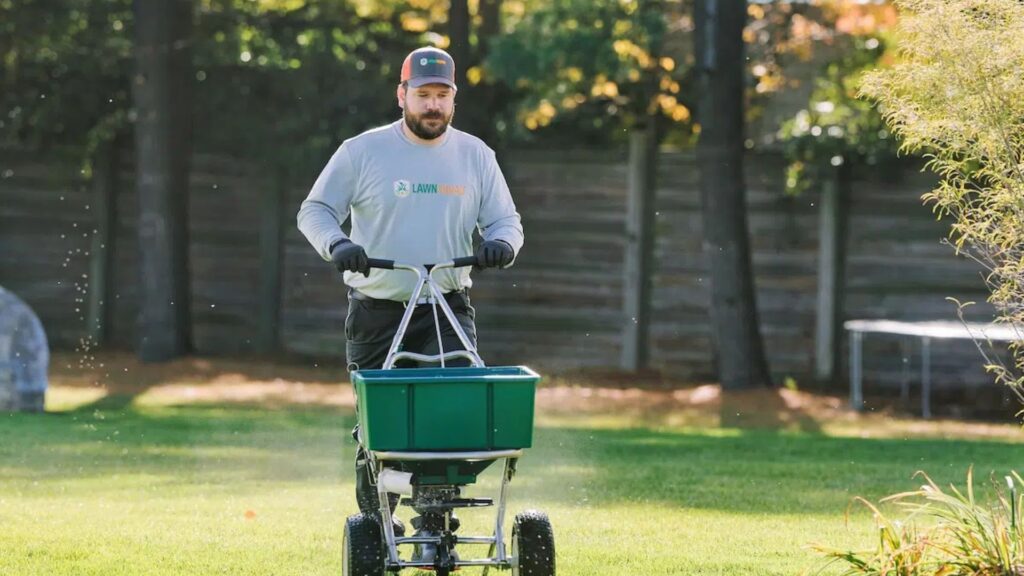
A professional lawn care program designed for Birmingham’s specific climate takes the guesswork out of lawn maintenance. These programs account for our unpredictable spring weather, intense summer heat, and the diseases that thrive in our humidity.
What makes a good Birmingham lawn program effective is timing. Our soil temperatures, rainfall patterns, and pest cycles are different from other parts of the country. Generic advice from national websites often misses these local details.
Whether you handle your lawn yourself or hire a professional, understanding Birmingham’s unique conditions helps you make better decisions about your yard.
Why Lawn Care Matters More Than Most Birmingham Homeowners Realize
Getting lawn care wrong in Birmingham doesn’t just mean a less attractive yard. It can mean spending hundreds of dollars on grass seed or sod that dies, fighting the same weeds year after year, or dealing with disease outbreaks that spread quickly in our humid climate.
Here’s what can go wrong: Fertilizing at the wrong time encourages weeds instead of grass. Watering incorrectly during our humid summers creates fungus problems. Mowing too short during heat waves stresses grass and invites crabgrass to take over.
The key principle Birmingham homeowners need to understand is that our climate is a transition zone. We get cold enough in winter to stress warm season grasses but hot enough in summer to kill cool season grasses. This makes lawn care here more complicated than in places with more extreme climates.
Birmingham also has unique soil conditions. Much of Jefferson County has heavy clay soil that drains poorly and compacts easily. This affects everything from watering schedules to fertilizer choices.
Warm Season Lawn Care Guide for Birmingham
Most Birmingham lawns have warm season grasses, which grow actively from late spring through early fall. Here’s how to care for them throughout the year.
Phase 1: Spring Green Up (March through May)
Spring is when your warm season lawn wakes up from winter dormancy. In Birmingham, this usually happens in late March or early April when soil temperatures reach 65 degrees.
What to do:
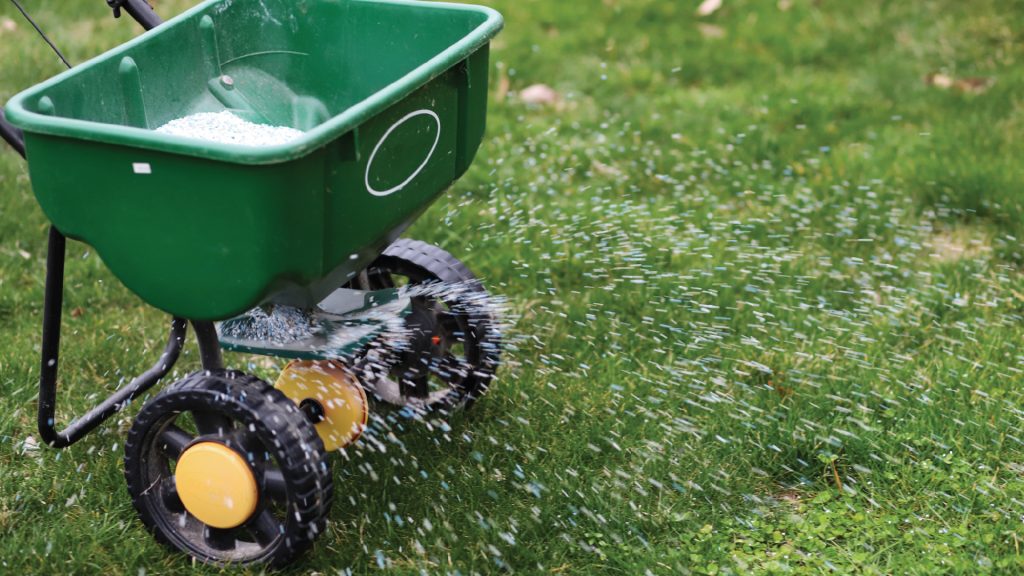
Apply a pre emergent herbicide in early March before soil hits 55 degrees. This stops crabgrass seeds from sprouting. You need to get the timing right because once you see crabgrass growing, pre emergent won’t help.
Wait to fertilize until your grass is fully green and actively growing, usually mid April in Birmingham. Fertilizing too early feeds weeds more than grass.
Begin mowing when grass reaches about 3 inches, cutting it back to 2 inches for Bermuda or 2.5 inches for Zoysia.
Why this matters: Applying pre emergent too late is the number one reason Birmingham homeowners battle crabgrass all summer. The window is short, usually just two to three weeks in early March.
Phase 2: Summer Maintenance (June through August)
Birmingham summers are tough on lawns. Temperatures regularly hit the 90s, humidity stays high, and afternoon thunderstorms can drop several inches of rain in an hour.
What to do:
Mow frequently, at least once a week, and never remove more than one third of the grass blade at a time. Raise your mowing height by half an inch during the hottest weeks.
Water deeply but infrequently. Birmingham lawns need about 1 inch of water per week total, including rain. Water in the early morning to reduce disease risk.
Apply a slow release fertilizer in June. Avoid fertilizing in July and August when heat stress is highest.
Watch for signs of fungal disease like brown patch, which thrives in our humid conditions. Look for circular brown areas that spread quickly.
Why this matters: Overwatering and evening watering are the main causes of summer fungus in Birmingham. Our humidity already creates perfect conditions for disease, and wet grass overnight makes it worse.
Phase 3: Fall Preparation (September through November)
Fall is the best time to improve your Birmingham lawn. Temperatures cool down, but warm season grasses are still growing and can recover from treatments.
What to do:
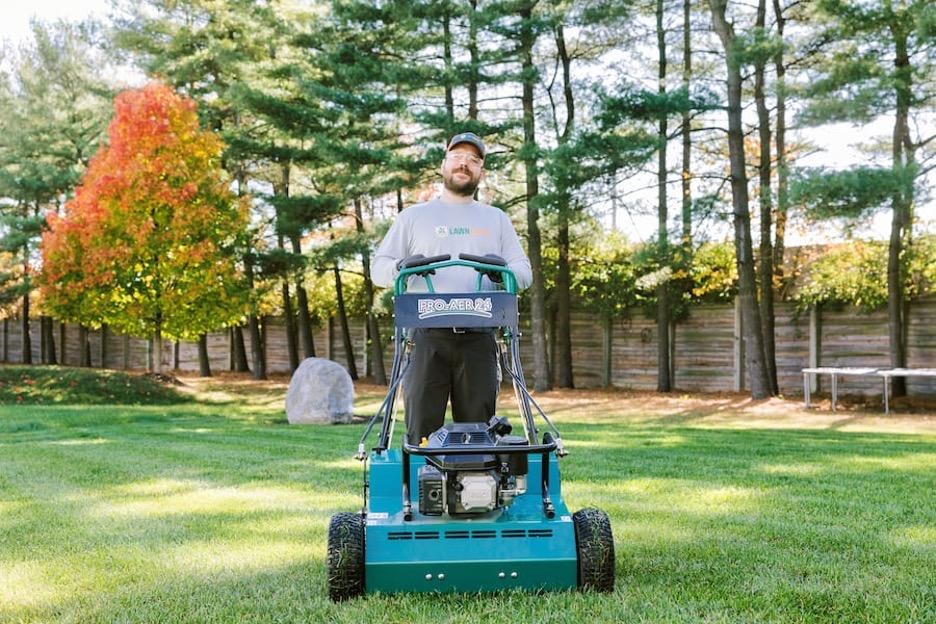
Aerate your lawn in September or early October. Birmingham’s clay soil compacts easily, and aeration helps water and nutrients reach grass roots.
Apply a fall fertilizer with higher potassium to help grass store energy for winter.
Treat any remaining weeds with post emergent herbicide while grass is still actively growing.
Apply a second round of pre emergent in late September to prevent winter annual weeds like annual bluegrass.
Why this matters: Skipping fall aeration means your lawn enters winter with compacted soil that holds water and encourages disease. This is especially important in neighborhoods with newer construction where heavy equipment compacted the soil.
Phase 4: Winter Dormancy (December through February)
Warm season grasses go dormant and turn brown in Birmingham winters. This is normal and doesn’t mean your lawn is dead.
What to do:
Avoid walking on frozen grass, which can damage the crowns and create dead spots in spring.
Keep leaves cleared to prevent smothering.
Avoid fertilizing dormant grass.
Stay off the lawn during wet, cold periods when soil compacts easily.
Critical warning: Do not scalp your lawn in winter thinking it will green up faster in spring. This damages the grass and exposes soil to winter weeds. Wait until late February or early March for spring scalping.
A professional lawn care program handles all this timing for you, applying the right products at exactly the right time for Birmingham’s conditions.
Cool Season Lawn Care Guide for Birmingham
Some Birmingham homeowners have cool season grasses like fescue, especially in shaded areas where warm season grasses struggle. These lawns need different care.
Phase 1: Spring Caution (March through May)
Cool season grasses grow actively in spring but face stress as temperatures rise.
What to do:
Apply pre emergent herbicide in early March, just like with warm season lawns.
Fertilize lightly in March with a slow release nitrogen fertilizer. Do not fertilize after April because this pushes growth when the grass should be conserving energy for summer.
Mow at 3 to 3.5 inches to shade the soil and keep roots cool.
Why this matters: Heavy spring fertilization of fescue is a common Birmingham mistake. It makes the grass grow fast in spring but weakens it going into summer stress.
Phase 2: Summer Survival (June through August)
This is the hardest time for cool season lawns in Birmingham. The goal is survival, not growth.
What to do:
Water regularly to keep grass from going dormant. Fescue needs about 1.5 inches of water per week during hot weather.
Mow high, at least 3.5 to 4 inches. Taller grass shades roots and reduces heat stress.
Do not fertilize during summer stress periods.
Accept that some thinning is normal. Fescue will thicken back up in fall.
Shade Considerations: Important for Birmingham Fescue Lawns
If you have fescue because your yard is shaded, understand that our heavy summer rains combined with shade create ideal conditions for fungal disease.
Improve air circulation by pruning low tree branches.
Water in early morning only, never in the evening.
Consider switching very shaded areas to ground cover instead of struggling with grass that won’t thrive.
Phase 3: Fall Recovery (September through November)
Fall is when cool season lawns shine in Birmingham. This is the time for major lawn improvement work.
What to do:
Overseed thin areas in September when temperatures drop below 85 degrees. This is the single most important thing you can do for a fescue lawn.
Aerate before overseeding to improve seed to soil contact.
Fertilize in September and again in November to encourage root growth.
How to Calculate Watering Amounts for Birmingham Lawns
You’ve heard that lawns need 1 inch of water per week, but how do you actually measure that?
Step by step process:
Place several empty tuna cans or similar containers around your yard in different sprinkler zones.
Run your sprinklers for 15 minutes.
Measure the water in each can with a ruler.
Multiply by 4 to get your hourly watering rate.
Practical example: If your cans collected 0.25 inches in 15 minutes, you’re putting down 1 inch per hour. To apply 1 inch of water, you’d run that zone for one hour.
Remember to subtract rainfall from your watering. Birmingham averages 4 to 5 inches of rain per month in summer, so you often need less irrigation than you think.
What About Soil Testing?
A soil test tells you exactly what your Birmingham lawn needs instead of guessing. Our local soil conditions vary widely, from red clay in some areas to sandy soil in others.
A soil test shows your soil pH, which affects how well grass can absorb nutrients. Birmingham soil is often acidic and may need lime applications.
The Alabama Cooperative Extension System offers soil testing for a small fee. The results tell you exactly what fertilizer to use and whether you need amendments like lime or sulfur.
Professional lawn programs typically include soil testing and adjust treatments based on results. This prevents wasting money on fertilizers your soil doesn’t need.
We recommend testing your soil every two to three years because conditions change over time.
Common Lawn Care Mistakes Birmingham Homeowners Make
After years of working on Birmingham lawns, certain mistakes come up again and again.
Mistake 1: Watering Every Day for Short Periods
Daily light watering encourages shallow roots that can’t survive heat and drought. It also keeps grass wet constantly, inviting disease. Water deeply two to three times per week instead.
Mistake 2: Cutting Grass Too Short
Scalping your lawn might seem efficient, but it stresses grass and exposes soil to weeds. Most Birmingham grasses should stay at least 2 inches tall, and fescue needs 3 to 4 inches.
Mistake 3: Fertilizing at the Wrong Time
Fertilizing warm season grass before it greens up feeds weeds. Fertilizing fescue in late spring stresses it before summer. Timing matters more than the product you choose.
Mistake 4: Ignoring Soil Compaction
Birmingham clay compacts into a hard layer that grass roots can’t penetrate. Annual aeration is essential here, not optional like in areas with sandy soil.
Mistake 5: Using the Wrong Grass Type
Planting fescue in full sun or Bermuda in heavy shade sets you up for constant battles. Work with your yard’s conditions instead of against them.
Bermuda Grass vs. Zoysia Grass: Which Should You Choose?
Bermuda grass is the most common lawn grass in Birmingham. It establishes quickly from seed or sod, tolerates heat and drought well, and repairs damage fast. It spreads aggressively, which means it fills in thin spots but also invades flower beds. Bermuda requires full sun and goes dormant earlier in fall than other warm season grasses.
Best for: Full sun yards where you want a tough, low maintenance lawn and don’t mind brown grass in winter.
Zoysia grass grows more slowly than Bermuda but creates a denser, softer lawn. It handles some shade better than Bermuda and has better cold tolerance, staying green longer into fall. Zoysia is more expensive to establish and slower to recover from damage.
Best for: Yards with some shade, homeowners who want a premium look, and those willing to invest more upfront for a lower maintenance lawn long term.
Your Birmingham Lawn Care Calendar at a Glance
Warm Season Grass (Bermuda, Zoysia)
| When | What to Do | Details |
|---|---|---|
| Early March | Apply pre emergent | Before soil reaches 55 degrees |
| Mid April | First fertilizer application | After grass is fully green |
| May through August | Weekly mowing | Keep at 2 to 2.5 inches |
| June | Summer fertilizer | Slow release nitrogen |
| September | Aeration | Core aerate compacted soil |
| Late September | Fall pre emergent | Prevents winter weeds |
| October | Fall fertilizer | High potassium formula |
Cool Season Grass (Fescue)
| When | What to Do | Details |
|---|---|---|
| Early March | Apply pre emergent | Before soil reaches 55 degrees |
| March | Light fertilizer | Slow release, low nitrogen |
| June through August | Water regularly | 1.5 inches per week minimum |
| September | Overseed and aerate | Most important time of year |
| September and November | Fertilize | Encourage fall root growth |
The Bottom Line
Birmingham’s climate creates unique lawn care challenges, but understanding our local conditions makes all the difference.
Key principles to remember:
Timing matters more than products. The right treatment at the wrong time often does more harm than good.
Work with your yard’s conditions. Match grass type to sun exposure and don’t fight nature.
Water deeply and infrequently. This builds deep roots that survive heat and drought.
Aerate annually. Birmingham clay requires it.
Fall is your friend. The best time to improve a Birmingham lawn is September through October.
Following these guidelines will give you a healthier, more attractive lawn that handles Birmingham’s challenging weather better than your neighbors’ yards.
Let Us Handle It For You
Every Birmingham lawn is different. Your soil type, sun exposure, existing grass, and past treatments all affect what your yard needs right now.
Our Birmingham Lawn Care Program accounts for all these factors with customized treatments timed specifically for local conditions.
Our program includes:
Soil testing and customized fertilization based on what your lawn actually needs
Pre emergent and post emergent weed control timed for Birmingham’s weed cycles
Disease monitoring and treatment for problems common in our humid climate
Aeration and overseeding to address compacted soil and thin areas
Year round professional oversight so you don’t have to remember what to do and when
Stop spending weekends on lawn work that may or may not be helping. Stop guessing at products and timing.
Contact us today for a free lawn evaluation and see what a professional Birmingham lawn care program can do for your yard.