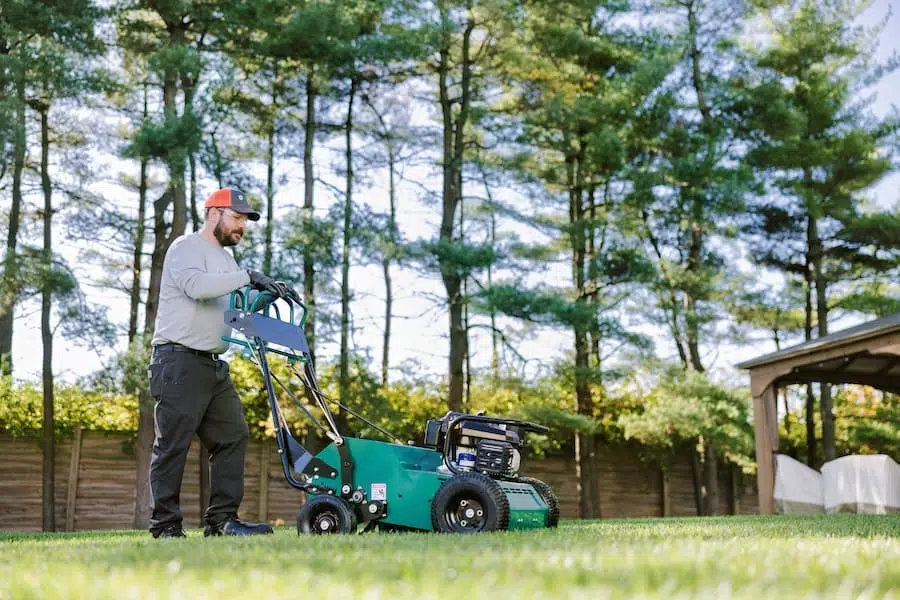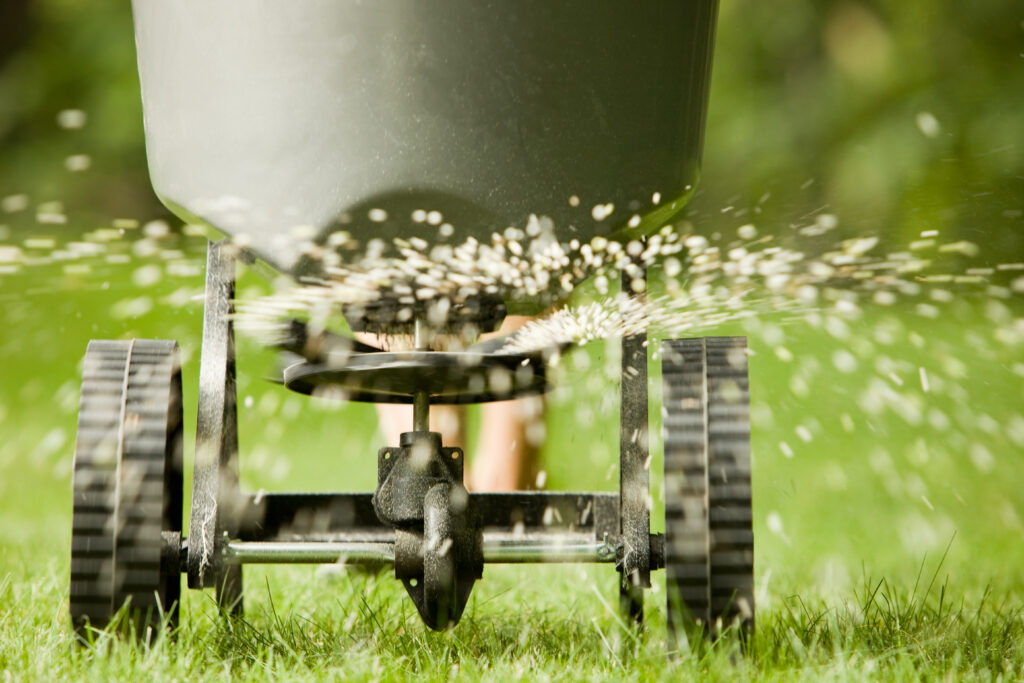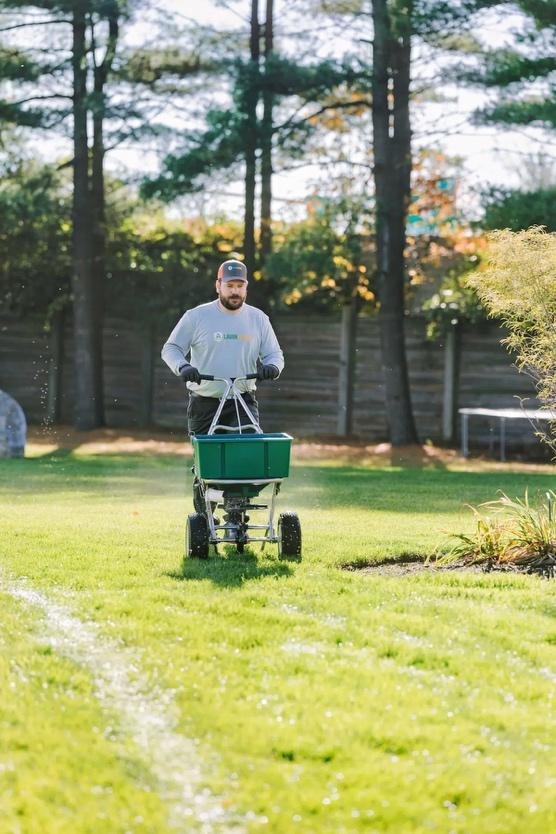
The short answer: San Antonio lawns need a balanced fertilizer with nitrogen as the primary nutrient, applied four to six times per year during the growing season. The exact formula depends on your grass type and soil conditions, but most local lawns do best with a slow release nitrogen fertilizer applied every six to eight weeks from February through October.
Here’s what works for most situations:
Quick overview:
- Spring (February through April): Balanced fertilizer with higher nitrogen to fuel green up and growth
- Summer (May through August): Slow release formula with added iron to maintain color without burning
- Fall (September through November): Balanced fertilizer to help grass recover and store energy for winter
The biggest mistake San Antonio homeowners make is using the wrong fertilizer at the wrong time. A fertilizer that works great in spring can damage your lawn in summer. Keep reading to learn exactly which products to use and when to apply them for the best results in our unique climate.
The Complete Fertilization Approach: Our Seasonal Treatment Program
At Lawn Squad of North San Antonio, fertilization is the backbone of every lawn care program we offer. We include six fertilizer applications in our ELITE and PRO programs, timed to match the natural growth cycles of grass in Bexar, Kendall, and Comal counties.
Our approach goes beyond just spreading fertilizer. We adjust formulas based on the season, use slow release nitrogen to prevent burning, and include soil testing to identify specific nutrient deficiencies in your lawn.
Understanding why we fertilize when we do helps you appreciate the science behind a healthy lawn, whether you hire professionals or do it yourself.
Why Fertilizer Choice Matters More Than Most San Antonio Homeowners Realize
Grass is a living plant that needs food to survive. Without proper nutrition, your lawn becomes thin, pale, and vulnerable to weeds, pests, and disease. But the wrong fertilizer at the wrong time can cause just as much damage as no fertilizer at all.
Here’s what happens when fertilization goes wrong:
Too much nitrogen in summer pushes rapid top growth that the root system can’t support. The grass looks great for a week, then crashes. It becomes more susceptible to heat stress, disease, and drought damage.
The wrong ratio of nutrients creates imbalances that affect long term health. A lawn fed only nitrogen will eventually show deficiencies in phosphorus and potassium, leading to weak roots and poor stress tolerance.
Quick release fertilizer in hot weather dumps all its nitrogen at once, potentially burning grass and creating a feast or famine cycle of growth.
Fertilizing at the wrong time wastes money and can actually harm your lawn. Applying fertilizer to dormant grass does nothing. Applying heavy nitrogen before a drought stresses the lawn when it needs to conserve energy.
The good news is that getting fertilization right isn’t complicated once you understand a few basic principles about nutrients, timing, and San Antonio’s specific growing conditions.
Understanding Fertilizer Numbers: The NPK Guide
Every fertilizer bag displays three numbers separated by dashes, like 15 5 10 or 21 0 0. These numbers represent the percentage by weight of three essential nutrients.
The Three Primary Nutrients
Nitrogen (N) is the first number. This is the most important nutrient for lawns. Nitrogen fuels leaf growth and gives grass its green color. A fertilizer labeled 15 5 10 contains 15% nitrogen.
Nitrogen comes in two forms: quick release and slow release. Quick release nitrogen is immediately available to grass but can burn in hot weather and washes away easily. Slow release nitrogen feeds grass gradually over several weeks and is much safer for San Antonio summers.
Phosphorus (P) is the second number. This nutrient supports root development and helps grass establish after seeding or sodding. Most established lawns don’t need much phosphorus because it binds to soil and doesn’t wash away.
San Antonio soils often already contain adequate phosphorus. Adding more when it’s not needed can contribute to water pollution. A soil test tells you whether your lawn actually needs this nutrient.
Potassium (K) is the third number. This nutrient helps grass handle stress from heat, drought, cold, and disease. Think of it as the immune system booster for your lawn. Potassium is especially important in San Antonio where summer stress is a fact of life.
What the Numbers Mean in Practice
A 50 pound bag of 15 5 10 fertilizer contains:
- 7.5 pounds of nitrogen (50 x 0.15)
- 2.5 pounds of phosphorus (50 x 0.05)
- 5 pounds of potassium (50 x 0.10)
The rest is filler material that helps distribute the nutrients evenly across your lawn.
Why this matters: Understanding these numbers helps you choose the right product for your lawn’s needs and avoid wasting money on nutrients you don’t need.
Seasonal Fertilizer Guide for San Antonio Lawns
Different seasons call for different fertilizer strategies. Here’s how to feed your lawn throughout the year in Bexar, Kendall, and Comal counties.
Step 1: Late Winter Application (February)
This is the first feeding of the year, applied when grass begins to green up and soil temperatures reach 55 to 60 degrees.
What to use: A balanced slow release fertilizer with moderate nitrogen, such as 15 5 10 or similar. Avoid anything over 20% nitrogen this early.
Why it matters: This application provides nutrients as grass comes out of dormancy. Too much nitrogen too early can push weak, floppy growth that’s vulnerable to late freezes.
In the Lawn Squad program, Round 2 (February) includes this first fertilizer application combined with pre emergent weed control.
Step 2: Spring Application (Late March through April)
By late March, San Antonio lawns are growing actively and can handle more nitrogen.
What to use: Higher nitrogen slow release fertilizer, such as 24 5 11 or similar. Look for at least 50% slow release nitrogen on the label.
Why it matters: Spring is when grass builds its root system and stores energy for summer. Proper feeding now creates a lawn that handles heat stress better in July and August.
This timing aligns with Round 3 of our treatment program, which also includes surface insect control and disease prevention.
Step 3: Early Summer Application (May)
As temperatures climb into the 90s, your fertilizer strategy needs to shift.
What to use: Slow release nitrogen fertilizer with added iron. Iron helps maintain green color without pushing excessive growth. Some products are labeled specifically for summer use.
Why it matters: Quick release nitrogen in May can burn grass as temperatures spike. Slow release formulas feed grass gradually without the feast or famine cycle.
Our Round 4 application in May includes fertilizer, broadleaf weed control, surface insect control, sedge suppression, and disease control for ELITE customers.
Step 4: Summer Maintenance (June through July)
Summer is when fertilization requires the most caution. Many lawns are better off with no fertilizer during the hottest weeks.
What to use: If you fertilize at all, use a very low nitrogen slow release product or a fertilizer with just iron and micronutrients. Root stimulant products that don’t contain nitrogen are also good choices.
Why it matters: Pushing growth during extreme heat stresses grass. The goal in summer is survival, not growth. A lawn that gets through August green and intact is set up for a strong fall.
Our ELITE program includes root stimulant in Round 5 (June) to support grass without pushing top growth.
Step 5: Fall Recovery Application (September)
When temperatures drop below 95 degrees, it’s time to feed your lawn again.
What to use: Balanced fertilizer with nitrogen and potassium, such as 15 5 15 or similar. The higher potassium helps grass recover from summer stress and prepare for winter.
Why it matters: Fall is when grass rebuilds its root system and stores carbohydrates for winter. Proper fall fertilization leads to faster green up the following spring.
Round 7 of our program (September) combines fertilizer with pre emergent to prevent winter weeds.
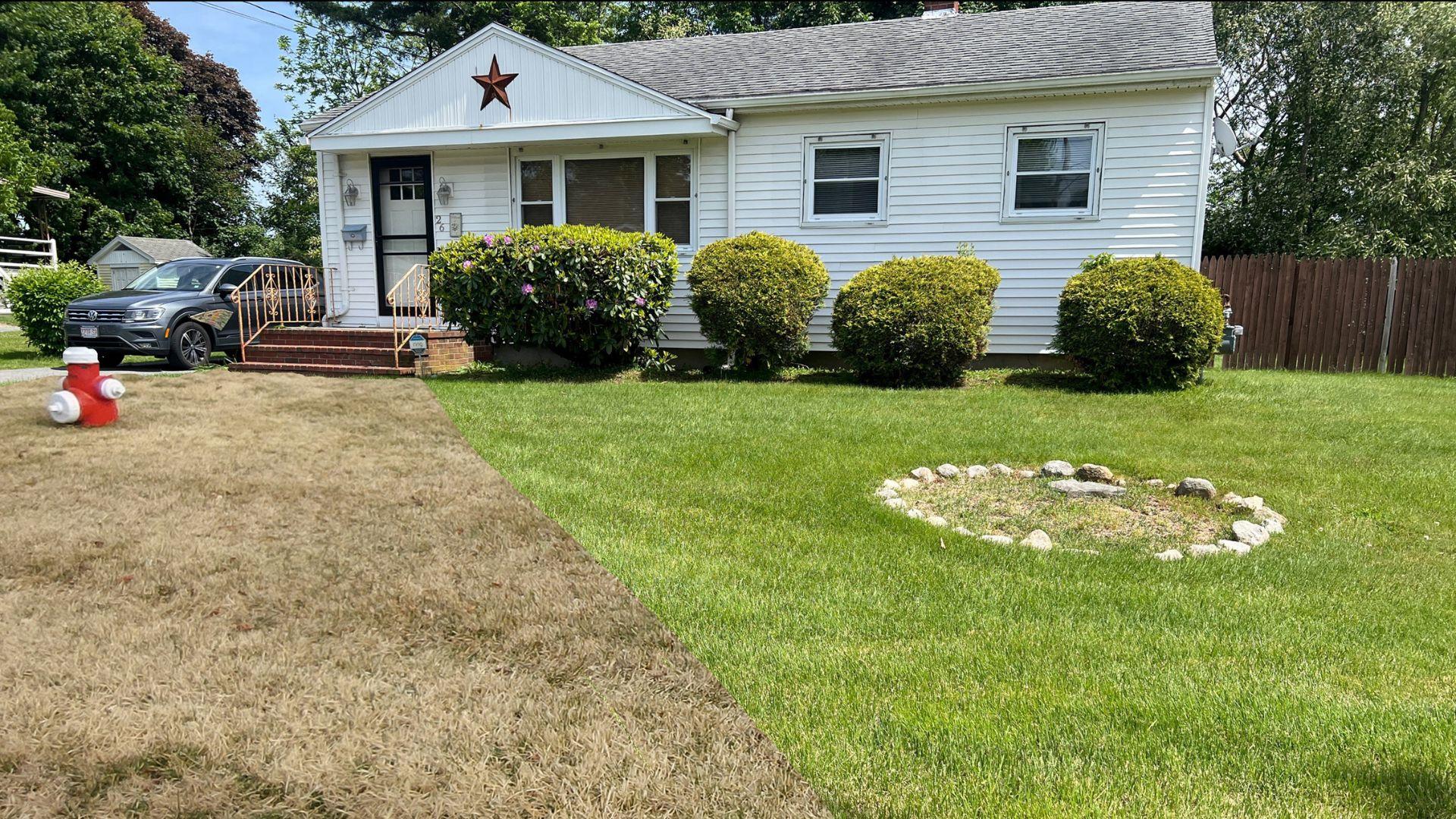
Critical warning: Never apply fertilizer to drought stressed grass. If your lawn is brown and crunchy, water it back to green health before feeding. Fertilizer is salt, and applying it to stressed grass causes additional damage.
Specialty Fertilizers and Soil Amendments for San Antonio
Beyond standard NPK fertilizers, several specialty products address specific needs common to San Antonio lawns.
Iron Supplements
Iron gives grass a deep green color without pushing excessive growth. It’s especially useful during summer when you want color but not the stress of rapid growth.
Look for chelated iron or iron sulfate products. Apply according to label directions, usually at a lower rate than nitrogen fertilizers.
Root Stimulants
These products contain hormones and nutrients that encourage root development. They’re valuable during establishment, after aeration, and during summer stress when roots struggle.
Our ELITE program includes root stimulant in Round 5 to help grass survive peak summer heat.
Lime and Sulfur
San Antonio soil pH varies widely. Some areas have acidic soil that benefits from lime (raises pH), while others have alkaline soil that needs sulfur (lowers pH).
The only way to know what your soil needs is testing. Our ELITE program includes a soil test in Round 1, and we adjust recommendations based on results.
Lime application timing: Lime can be applied spring or fall. It takes several months to change soil pH, so don’t expect immediate results.
Sulfur application timing: Sulfur also works slowly. Apply in spring or fall and retest soil before additional applications.
Organic Fertilizers
Organic fertilizers release nutrients slowly as soil microbes break down the organic material. They’re gentler on lawns and improve soil health over time.
Drawbacks include lower nutrient content (you need to apply more), slower results, and often higher cost per application. They also require warm soil temperatures to work effectively.
Lawn Squad offers an organic program for customers who prefer this approach. Organic fertilizers are combined with organic weed control methods for a comprehensive natural lawn care solution.
How to Calculate How Much Fertilizer Your Lawn Needs
Most fertilizer recommendations are given in pounds of nitrogen per 1,000 square feet. Here’s how to figure out what that means for your lawn.
Step by step process:
- Measure your lawn’s square footage (length times width for rectangular areas)
- Determine desired nitrogen rate (typically 0.5 to 1 pound per 1,000 square feet per application)
- Calculate product needed using the fertilizer’s nitrogen percentage
Example with real numbers:
You have a 5,000 square foot lawn and want to apply 0.75 pounds of nitrogen per 1,000 square feet using a fertilizer with 24% nitrogen.
- Total nitrogen needed: 5,000 ÷ 1,000 x 0.75 = 3.75 pounds of nitrogen
- Product needed: 3.75 ÷ 0.24 = 15.6 pounds of fertilizer
So you’d apply about 16 pounds of that 24% nitrogen fertilizer to your 5,000 square foot lawn.
Annual nitrogen totals:
Most San Antonio lawns need 2 to 4 pounds of nitrogen per 1,000 square feet per year, split across four to six applications. More than that pushes excessive growth and can harm your lawn.
What About Fertilizer and Weed Control Combinations?
Many products combine fertilizer with weed control in one application, often called “weed and feed” products. These can be convenient but come with tradeoffs.
Advantages:
- One application instead of two
- Saves time and effort
- Often less expensive than buying products separately
Disadvantages:
- Timing for fertilization and weed control don’t always match
- Weed control works best on wet leaves; fertilizer should go on dry grass
- You can’t adjust rates independently
- May apply weed control when no weeds are present, wasting product
Professional programs typically apply fertilizer and weed control separately to optimize results for each product. If you’re doing it yourself, separate applications usually give better results but combination products can work in a pinch.
Common Fertilizer Mistakes San Antonio Homeowners Make
After caring for lawns across North San Antonio, Boerne, Bulverde, and Spring Branch for over two decades, we’ve seen every fertilizer mistake possible.
Mistake 1: Fertilizing on a Calendar Instead of Reading the Lawn
Applying fertilizer on the same date every year ignores what your lawn actually needs. A cool, wet spring might delay green up by weeks. A mild fall might extend the growing season. Pay attention to what your grass is doing, not just what the calendar says.
Mistake 2: Using Quick Release Fertilizer in Summer
Quick release nitrogen in June or July is a recipe for burned grass. The nitrogen hits all at once when the lawn is already stressed, causing damage instead of helping. Always use slow release formulas during hot weather.
Mistake 3: Applying Too Much at Once
More is not better with fertilizer. Applying heavy rates burns grass, wastes money, and pollutes waterways when excess nutrients wash away. Follow label rates, and when in doubt, apply less than you think you need.
Mistake 4: Ignoring Soil pH
Soil that’s too acidic or too alkaline locks up nutrients so grass can’t use them. You can apply all the fertilizer in the world, but if pH is off, the grass won’t benefit. Get a soil test before spending money on amendments.
Mistake 5: Fertilizing Dormant or Stressed Grass
Fertilizer is food for actively growing plants. Applying it to dormant winter grass is pointless. Applying it to drought stressed brown grass is harmful. Only fertilize lawns that are green and growing.
Synthetic vs. Organic Fertilizer: Which Should You Choose?
Synthetic fertilizers are manufactured products that deliver precise nutrient ratios. They’re immediately available to grass (especially quick release formulas), cost effective per pound of nutrient, and provide predictable results.
Best for: Homeowners who want fast results, precise control over nutrient levels, and lower cost per application.
Organic fertilizers come from natural sources like composted manure, bone meal, or plant materials. They release nutrients slowly as soil organisms break them down. They improve soil structure and microbial activity over time but provide less precise nutrient ratios.
Best for: Homeowners who prioritize soil health, want to avoid synthetic chemicals, and are willing to accept slower results at higher cost.
The professional perspective: Most professional lawn care programs use synthetic fertilizers because they deliver consistent, predictable results. However, organic options have improved significantly and can maintain a beautiful lawn for homeowners willing to invest in the approach.
Lawn Squad offers both conventional and organic programs to match customer preferences.
Your San Antonio Fertilization Schedule at a Glance
Standard Fertilization Calendar
| When | What to Apply | Rate | Key Notes |
|---|---|---|---|
| February | Balanced slow release (15 5 10) | 0.5 lb N per 1,000 sq ft | Apply as grass greens up |
| Late March | Higher nitrogen slow release (24 5 11) | 0.75 lb N per 1,000 sq ft | Combine with spring weed control |
| May | Slow release with iron | 0.5 lb N per 1,000 sq ft | Avoid quick release products |
| June to July | Root stimulant or iron only | Per label | Skip nitrogen during extreme heat |
| September | Balanced with potassium (15 5 15) | 0.75 lb N per 1,000 sq ft | Helps fall recovery |
| October to November | Optional winterizer | 0.5 lb N per 1,000 sq ft | Only if grass is still growing |
Signs Your Lawn Needs Fertilizer:
- Pale or yellow green color (nitrogen deficiency)
- Slow growth compared to previous years
- Thin turf that doesn’t fill in bare spots
- Poor recovery from foot traffic or mowing
Signs You’re Over Fertilizing:
- Excessive growth requiring mowing twice per week
- Dark green grass that’s prone to disease
- Thatch buildup at soil level
- Brown tips on grass blades (fertilizer burn)

The Bottom Line
Choosing the right fertilizer for your San Antonio lawn comes down to matching the product to the season and applying it at rates your grass can actually use.
Key principles to remember:
- Use slow release nitrogen during warm months to prevent burning
- Apply four to six times per year during active growth, not dormancy
- Follow label rates and err on the side of less rather than more
- Get a soil test to identify specific nutrient needs before adding amendments
- Never fertilize drought stressed or dormant grass
Follow these principles and your lawn will have the nutrition it needs to stay thick, green, and healthy through San Antonio’s challenging climate.
Let Lawn Squad Handle It For You
Fertilization is where professional expertise makes the biggest difference. Knowing which products to use, when to apply them, and how to adjust for weather conditions requires experience and ongoing education.
Our programs take the guesswork out of lawn nutrition with treatments specifically formulated for San Antonio conditions.
ELITE Program includes:
- Six fertilizer applications timed for optimal results
- Slow release formulas that feed grass gradually without burning
- Root stimulant to help grass survive summer stress
- Soil testing to identify your lawn’s specific needs
- Iron treatments to maintain color during summer
- Lime or sulfur applications based on soil test results
- Unlimited service calls when you have questions
Stop guessing which bag to buy at the hardware store. Let us deliver the exact nutrients your lawn needs, exactly when it needs them.
Contact Lawn Squad of North San Antonio today at (210) 919-2420 or visit lawnsquad.com/contact-us to get a free quote and give your lawn the nutrition it deserves.