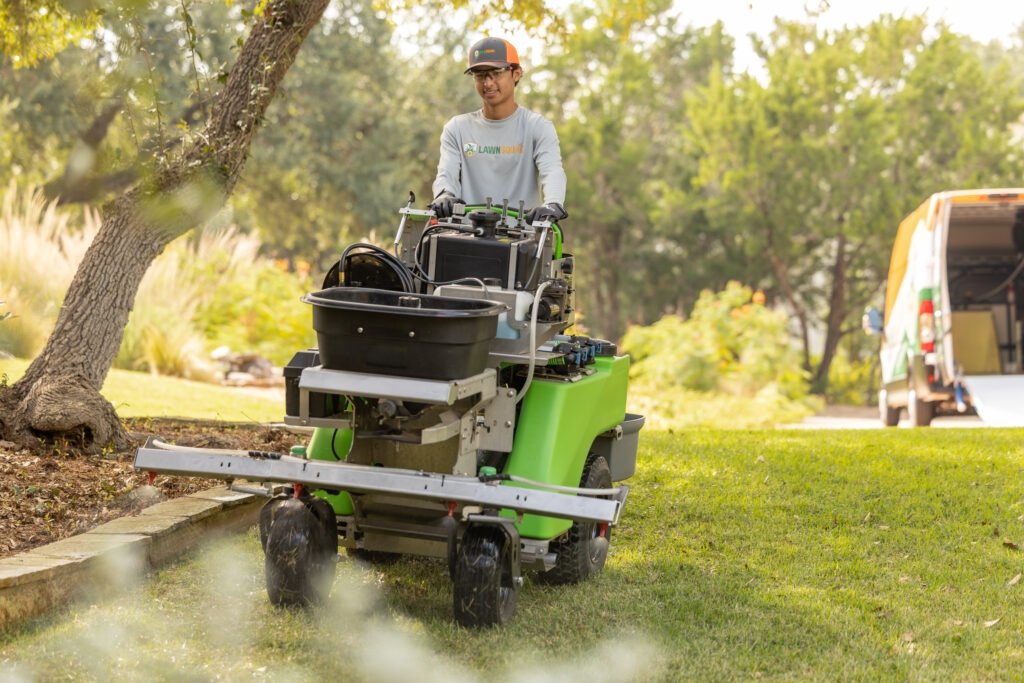
The short answer: The best mowing practice for North Dallas lawns is to mow high, mow often, and never remove more than one third of the grass blade at a time. For most Bermuda lawns, this means maintaining a height of 2 to 3 inches. For St. Augustine, aim for 3 to 4 inches.
Most Prosper, Frisco, and Plano homeowners mow too short and too infrequently. This combination stresses turf, encourages weeds, and makes your lawn more vulnerable to drought and disease.
Quick overview:
- Bermuda grass: Mow at 2 to 3 inches, weekly during peak growth
- St. Augustine: Mow at 3 to 4 inches, weekly during peak growth
- Zoysia: Mow at 2 to 3 inches, every 7 to 10 days during peak growth
Keep reading to learn why mowing height matters so much and how proper mowing technique can transform your North Dallas lawn.

The Complete Lawn Care Approach: Our 8 Round Program
At Lawn Squad of North Dallas Prosper, we have been helping homeowners across Collin and Denton counties maintain beautiful lawns since 2001. While our programs focus on fertilization, weed control, and disease prevention, we know that mowing practices make or break the results.
The best lawn care program in the world cannot overcome poor mowing habits. Scalping your lawn negates the benefits of proper fertilization. Mowing with dull blades creates entry points for disease that our fungicide treatments then have to fight.
Whether you mow yourself or hire a lawn service, understanding proper mowing technique will help you get the most from your investment in lawn care.
Why Mowing Height Matters More Than Most North Dallas Homeowners Realize
Grass height directly controls root depth. Research consistently shows that taller grass develops deeper roots, and deeper roots mean better drought tolerance, improved nutrient uptake, and stronger overall turf health.
When you cut grass short, roots respond by shrinking. A lawn mowed at 1.5 inches might have roots only 2 to 3 inches deep. The same lawn mowed at 3 inches can develop roots 6 inches deep or more. During a North Texas summer when soil surface temperatures hit 130 degrees, those extra inches of root depth make the difference between green grass and brown.
Taller grass also shades the soil surface, which accomplishes two important things. First, it reduces water evaporation so your irrigation goes further. Second, it blocks sunlight from reaching weed seeds, preventing germination naturally without herbicides.
The connection between mowing height and lawn health is the single most underappreciated factor in turf management. Getting this right costs nothing but pays enormous dividends.
Bermuda Grass Mowing Guide for North Dallas Lawns
Bermuda grass is the most common turf type in the Prosper, Frisco, and Plano area. It handles heat well and recovers quickly from stress, but it responds dramatically to mowing practices.
Step 1: Set Your Mower Height to 2 to 3 Inches
Most homeowners mow Bermuda too short because they have seen golf courses with tight, low cut turf. Those courses use specialized hybrid Bermuda varieties, mow daily, and have full time maintenance crews. Your home lawn needs a higher cut to stay healthy.
Setting your mower at 2.5 inches provides a good balance between appearance and turf health for most North Dallas Bermuda lawns.
Step 2: Mow Weekly During Peak Growth Season
From May through September, Bermuda grass in our area grows aggressively. Plan to mow every 5 to 7 days during this period. Waiting 2 weeks between mowings usually means you have to remove more than one third of the blade, which stresses the grass.
During spring and fall when growth slows, you can extend the interval to 10 to 14 days.
Step 3: Raise Your Height During Summer Stress
When temperatures stay above 100 degrees for extended periods, raise your mowing height by half an inch. This extra leaf blade provides more shade for roots and helps your lawn conserve water during the most stressful weeks.
Our Round 4, 5, and 6 treatments fall during peak summer. Combining proper mowing height with our fertilization and disease control gives your Bermuda the best chance to thrive through the heat.
Step 4: Lower Gradually in Fall
As growth slows in October, you can gradually lower your mowing height back toward the 2 inch end of the range. Make these adjustments over 2 to 3 mowings rather than dropping the height all at once.
Critical warning: Never scalp Bermuda grass in an attempt to remove brown thatch. Scalping exposes the soil to weed seeds and removes the energy reserves your grass needs to green up in spring. If thatch is a problem, core aeration is a much safer solution.
St. Augustine Mowing Guide for North Dallas Lawns
St. Augustine is common in shadier North Dallas properties and requires different handling than Bermuda. It grows more slowly and tolerates shade better, but it is less forgiving of mowing mistakes.
Step 1: Set Your Mower Height to 3 to 4 Inches
St. Augustine needs more leaf blade than Bermuda to stay healthy. The broad leaves that give St. Augustine its lush appearance also mean it needs more surface area for photosynthesis.
Setting your mower at 3.5 inches works well for most St. Augustine lawns in our area.
Step 2: Mow Every 7 to 10 Days During Active Growth
St. Augustine grows more slowly than Bermuda, so you can typically go slightly longer between mowings. However, during peak season from May through August, weekly mowing is still usually necessary to follow the one third rule.
Step 3: Never Remove More Than One Third
This rule is even more critical for St. Augustine than for Bermuda. St. Augustine recovers slowly from stress, so removing too much blade at once can cause browning that takes weeks to resolve.
If you return from vacation to find your St. Augustine lawn overgrown, resist the urge to cut it back to normal height in one pass. Instead, remove one third, wait 3 to 4 days, then mow again. Repeat until you reach your target height.
What to Avoid: Mowing St. Augustine in Shade Too Short
Shaded St. Augustine already struggles to get enough light for photosynthesis. Mowing shaded areas at the same height as sunny areas compounds the problem. Raise your mowing height by half an inch for sections of your lawn under tree canopy.
Our technicians note shade conditions when treating your lawn and can recommend adjustments to your mowing routine based on your specific property.
How to Measure and Adjust Your Mowing Height
Most homeowners set their mower height once and forget about it. Unfortunately, mower deck height settings do not always reflect actual cutting height. Here is how to check.
Step by step process:
- Park your mower on a flat, hard surface like a driveway or garage floor
- Measure from the surface to the bottom of the mower blade
- Compare this measurement to your intended cutting height
- Adjust the deck settings as needed and remeasure
Practical example: If your mower is set to the “3 inch” position but actually measures 2.25 inches at the blade, your lawn is getting cut three quarters of an inch shorter than you intended. Over a full season, this difference significantly impacts turf health.
Check your cutting height at the beginning of each season and whenever you notice your lawn looking stressed after mowing.
What About Grass Clippings?
Many North Dallas homeowners bag their clippings, but mulching them back into the lawn provides significant benefits. Grass clippings contain nitrogen and other nutrients that break down quickly and feed your turf.
Research shows that returning clippings can reduce fertilizer needs by 25% or more. The clippings do not cause thatch buildup as long as you mow frequently enough that clippings are small.
Our fertilization programs account for typical mowing practices. If you currently bag and want to switch to mulching, your lawn will benefit from the extra nutrients the clippings provide.
The only time to bag clippings is when your lawn is diseased. Fungal spores can spread through clippings, so bagging during active disease outbreaks helps prevent spread to healthy areas of your lawn.
Common Mowing Mistakes North Dallas Homeowners Make
After 25 years of working with lawns across Prosper, Frisco, Plano, and Allen, we have seen how mowing mistakes undermine even the best lawn care programs. Avoid these errors for better results.
Mistake 1: Mowing Too Short
The desire for a “neat” appearance leads many homeowners to scalp their lawns. Short grass looks tidy for a day or two but creates shallow roots, increased weed pressure, and higher water needs. Raise your mowing height and your lawn will thank you.
Mistake 2: Removing More Than One Third at Once
Life gets busy and mowing gets delayed. When you finally cut an overgrown lawn back to normal height in one pass, you remove so much leaf blade that the grass cannot photosynthesize properly. Take it down gradually over multiple mowings.
Mistake 3: Mowing with Dull Blades
Dull mower blades tear grass instead of cutting it cleanly. Torn leaf tips turn brown and create entry points for disease. Sharpen your blades at least twice per season, more often if you mow frequently or have a large property.
Mistake 4: Mowing Wet Grass
Wet grass does not cut cleanly and clumps together instead of dispersing evenly. Those clumps smother the grass beneath them. Wait until dew has dried or until at least 24 hours after rain before mowing.
Mistake 5: Always Mowing the Same Pattern
Mowing the same direction every time causes grass to lean and creates ruts from your mower wheels. Alternate your mowing pattern each time, switching between horizontal, vertical, and diagonal passes.
Mowing Frequency vs. Mowing Height: Which Matters More?
Mowing height determines root depth, drought tolerance, and weed resistance. Getting height right is the foundation of good mowing practice. Even if you cannot mow as often as recommended, maintaining proper height will keep your lawn healthier. Most important for: Long term lawn health, drought survival, weed prevention
Mowing frequency determines how much blade you remove at each mowing. Frequent mowing lets you maintain consistent height without shocking the grass. During peak growth, frequency matters more because grass grows faster. Most important for: Avoiding stress from removing too much blade, maintaining consistent appearance
If you have to choose, proper height beats perfect frequency. A lawn mowed every 10 days at the right height will outperform a lawn mowed weekly at the wrong height.
Your North Dallas Mowing Calendar at a Glance
Bermuda Grass Schedule
| Season | Mowing Height | Frequency | Notes |
|---|---|---|---|
| Early Spring (March to April) | 2 to 2.5 inches | Every 10 to 14 days | Growth resuming, adjust as needed |
| Peak Season (May to August) | 2.5 to 3 inches | Every 5 to 7 days | Raise height during heat waves |
| Fall (September to October) | 2 to 2.5 inches | Every 7 to 10 days | Gradually lower height |
| Winter (November to February) | No mowing | Dormant | Do not scalp dormant turf |
St. Augustine Schedule
| Season | Mowing Height | Frequency | Notes |
|---|---|---|---|
| Early Spring (March to April) | 3 to 3.5 inches | Every 10 to 14 days | Growth resuming slowly |
| Peak Season (May to August) | 3.5 to 4 inches | Every 7 to 10 days | Higher in shaded areas |
| Fall (September to October) | 3 to 3.5 inches | Every 10 to 14 days | Growth slowing |
| Winter (November to February) | Minimal mowing | As needed | St. Augustine may stay green |
The Bottom Line
Proper mowing is free lawn care. It costs you nothing extra but delivers results that rival expensive treatments and products. The combination of correct height, sharp blades, and consistent frequency transforms lawn health.
Key principles to remember:
- Mow Bermuda at 2 to 3 inches and St. Augustine at 3 to 4 inches
- Never remove more than one third of the grass blade at once
- Sharpen mower blades at least twice per season
- Raise mowing height during summer heat waves
- Return clippings to the lawn unless disease is present
Follow these practices and your Prosper, Frisco, or Plano lawn will develop deeper roots, resist weeds naturally, and require less water to stay green through summer.
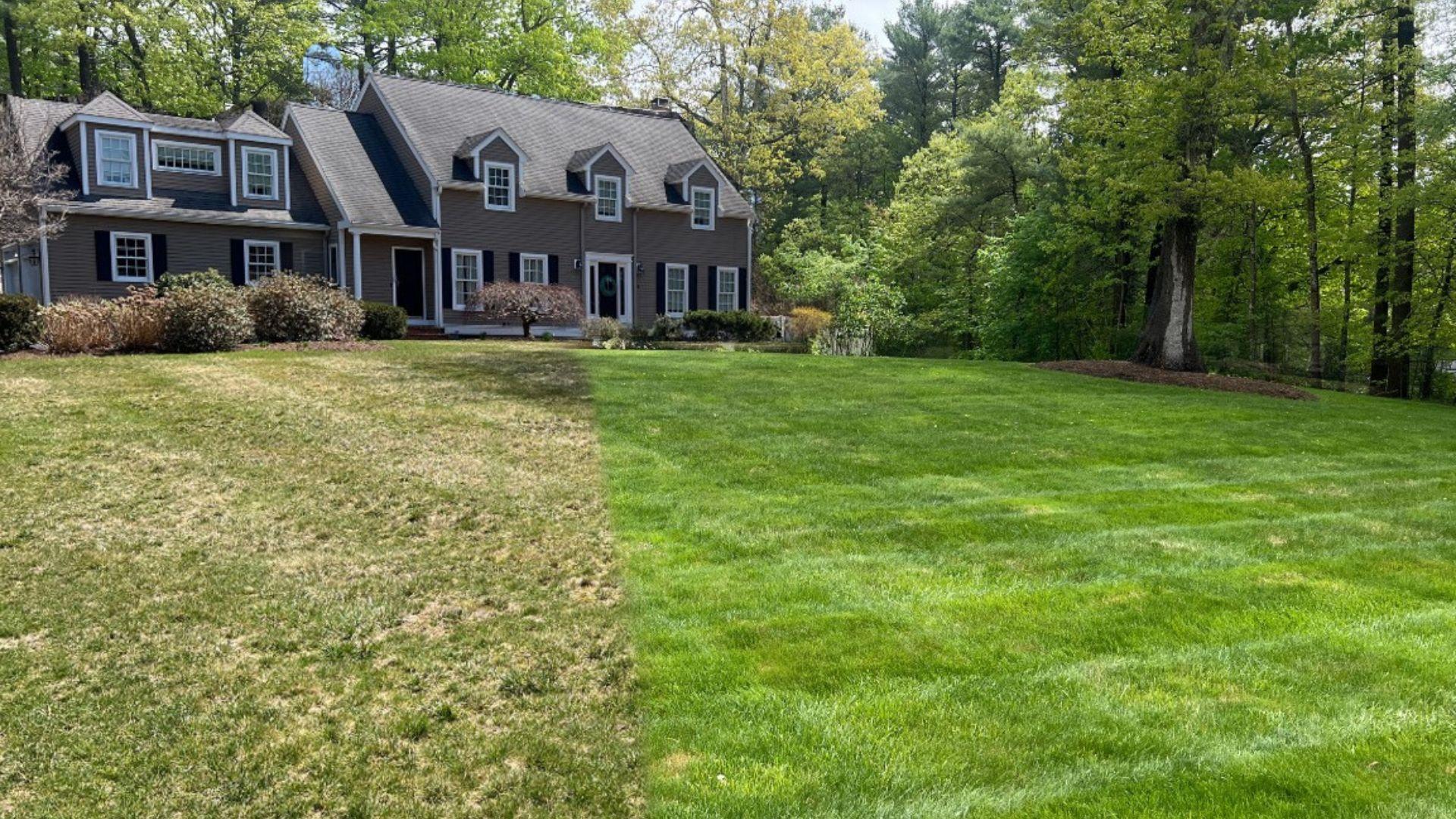
Let Lawn Squad Handle the Rest
Mowing is one part of complete lawn care. While proper mowing technique is something every homeowner can master, the fertilization, weed control, and disease prevention side of lawn care requires professional knowledge and commercial grade products.
Our lawn care programs are designed to complement good mowing practices and give your turf everything it needs to thrive in North Texas conditions.
ELITE Program includes:
- Fertilization in Rounds 2 through 7 matched to your lawn’s seasonal needs
- Broadleaf weed control in all 8 rounds to handle weeds that mowing alone cannot prevent
- Disease control in Rounds 3, 4, 6, and 7 to protect against fungal problems
- Surface insect control to prevent turf damaging pests
- Unlimited service calls when problems arise between treatments
You handle the mowing. We handle everything else. Together, your lawn gets complete care that produces results.
Contact Lawn Squad of North Dallas Prosper today at 469-817-7291 or visit our website to get a free quote and give your lawn the professional care it deserves.