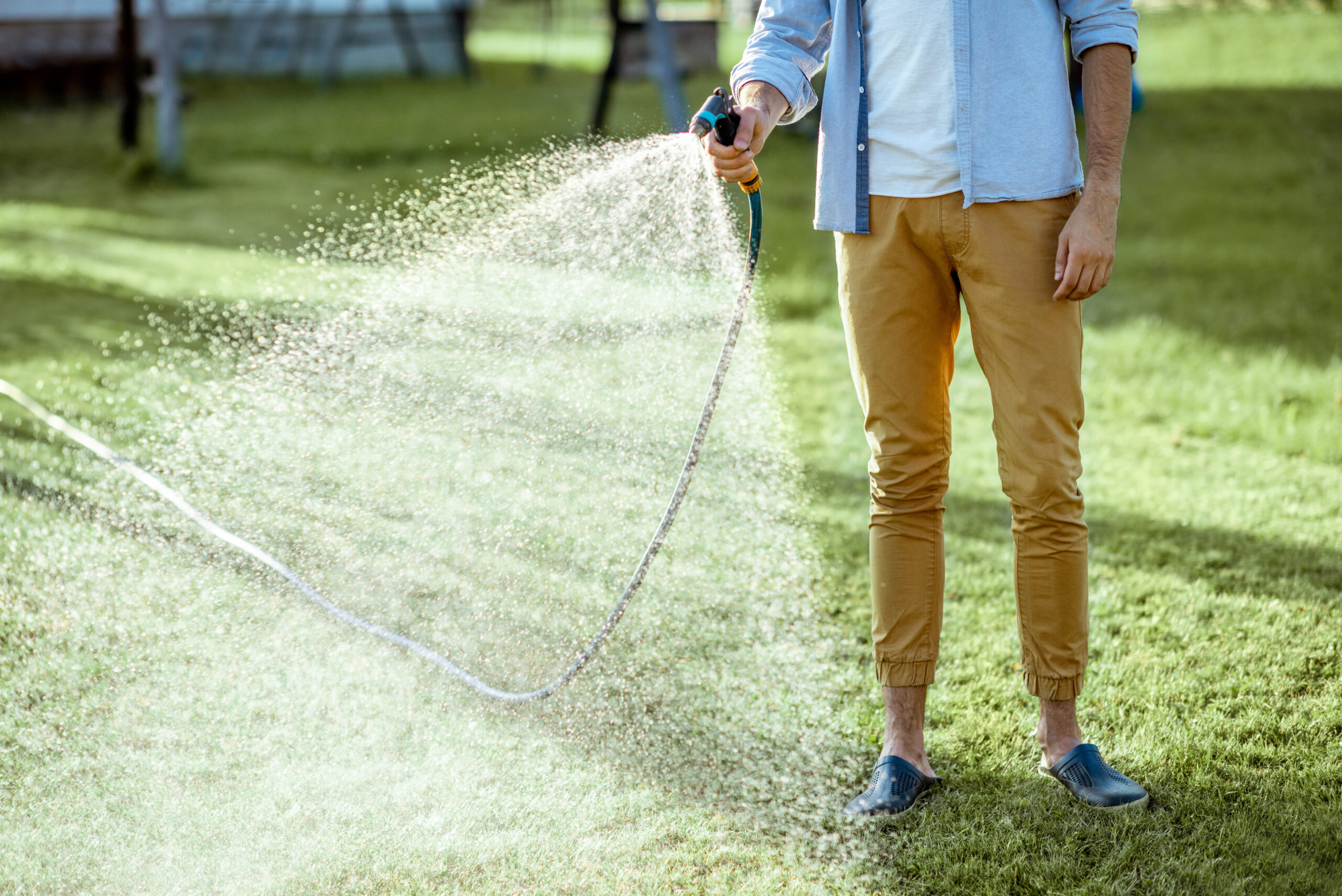
The short answer: The best watering practice for East Texas lawns is deep, infrequent irrigation delivered early in the morning. Most lawns need 1 to 1.5 inches of water per week, applied in two or three sessions rather than daily light watering. This approach builds deep roots that handle our summer heat and reduces disease problems caused by our high humidity.
Here’s a quick overview:
- Frequency: Water 2 to 3 times per week, not every day
- Amount: Deliver 1 to 1.5 inches total per week
- Timing: Between 4 AM and 9 AM only
- Depth: Soak soil 4 to 6 inches deep each session
If you want a lawn that survives East Texas summers without constant problems, understanding how and when to water makes all the difference.
The Complete Lawn Health Approach: Building a Drought Resistant Foundation
At Lawn Squad, we serve homeowners across The Woodlands, Conroe, Spring, Porter, Magnolia, and Tomball with lawn care programs designed for East Texas conditions. Our ELITE program includes root stimulant treatment in Round 5 specifically because deep, healthy roots are your lawn’s best defense against drought stress.
Proper watering is something every homeowner controls directly. No lawn care program can overcome bad watering habits, and no amount of fertilizer will save a lawn that’s watered incorrectly. That’s why we educate every customer about irrigation practices that work in our climate.
Whether you manage your own lawn or hire professionals for treatment, getting watering right is the foundation everything else builds on.
Why East Texas Watering Is Different
East Texas creates unique challenges that make watering advice from other regions useless or even harmful for your lawn.
Our humidity changes everything. High humidity means water evaporates more slowly from grass blades. That sounds helpful until you realize it also means disease thrives. Fungal spores that would dry out and die in Arizona stay active and spreading in our moist air.
Our clay soil complicates absorption. Much of Montgomery and Harris counties sit on heavy clay soil. Clay absorbs water slowly, which means fast watering runs off instead of soaking in. But once clay is saturated, it holds water for days, creating waterlogged conditions that suffocate roots.
Our summers are brutal but inconsistent. We get stretches of 95 degree days with no rain, followed by afternoon thunderstorms that dump two inches in an hour. Your watering schedule needs to flex with these patterns rather than running on autopilot.
Our warm season grasses have specific needs. St. Augustine, Bermuda, and Zoysia lawns common in East Texas handle drought differently than cool season grasses. They go dormant during extreme stress and recover when conditions improve, but only if their root systems are healthy going into summer.
The key principle is this: watering practices that work in other climates can destroy an East Texas lawn. Our combination of heat, humidity, and soil type requires a specific approach.
Deep Watering Guide for East Texas Lawns
Deep watering trains roots to grow down into the soil where moisture stays available longer and temperatures stay cooler. This is the foundation of a drought resistant lawn.
Step 1: Calculate Your Weekly Water Need
Most East Texas lawns need 1 to 1.5 inches of water per week during summer. This includes rainfall, so adjust your irrigation when storms come through.
During spring and fall, your lawn needs less because temperatures are lower and evaporation is slower. Drop to about 1 inch per week or even less during cooler periods.
In winter, warm season grasses go dormant and need minimal water. Many homeowners overwater dormant lawns, which creates disease problems without providing any benefit to the grass.
Step 2: Divide Into Two or Three Sessions
Instead of watering a little bit every day, deliver your weekly total in two or three deep soakings. For most lawns, this means running sprinklers long enough to apply half an inch to three quarters of an inch per session.
This approach lets the soil surface dry between waterings, which discourages fungal disease and weed germination. Meanwhile, the deeper soil stays moist where grass roots can access it.
Step 3: Water Long Enough to Soak Deep
Each watering session should wet the soil 4 to 6 inches deep. For most irrigation systems on clay soil, this means running sprinklers for 30 to 45 minutes per zone.
The exact time depends on your sprinkler output and soil type. Sandy areas absorb water faster. Heavy clay takes longer but holds moisture longer afterward.
Step 4: Adjust for Soil Type and Slope
Clay soil absorbs water at about 0.1 to 0.3 inches per hour. If your sprinklers put out more than that, water will run off into the street instead of soaking into your lawn.
For clay soil or sloped areas, use cycle and soak watering. Run sprinklers for 10 to 15 minutes, let water absorb for 30 minutes, then run another 10 to 15 minutes. This prevents runoff while still delivering deep watering.
Critical warning: Shallow daily watering is the most common lawn care mistake in East Texas. It feels like you’re being attentive, but it trains roots to stay near the surface where summer heat kills them. When you skip a day or go on vacation, your lawn has no reserves to draw from.
Morning Watering Guide for East Texas
When you water matters almost as much as how much you water. East Texas humidity makes timing critical for disease prevention.
Step 1: Water Between 4 AM and 9 AM
Early morning is the ideal watering window for several reasons. Temperatures are cool, so less water evaporates before reaching the soil. Wind is typically calm, so sprinklers hit their targets instead of misting sidewalks. And the rising sun will dry grass blades before evening.
Most irrigation controllers let you set start times in this window. If you water manually, set a reminder to start early.
Step 2: Never Water in the Evening
This is the most important rule for East Texas lawns. Grass that stays wet overnight is grass that gets fungal disease.
Our humidity already keeps the air moist at night. Adding wet grass blades to that equation creates perfect conditions for brown patch, gray leaf spot, and other fungal infections. These diseases can destroy large sections of lawn in just a few days.
Step 3: Avoid Midday Watering
Watering in the heat of the day wastes water to evaporation. Some of the water never reaches roots at all. Additionally, water droplets on grass blades can act like tiny magnifying glasses, potentially scorching the grass in direct sunlight.
If you must water during the day because of extreme heat stress, do it in late afternoon rather than midday, and accept that some water will be lost to evaporation.
Critical Consideration: Adjust for Rainfall
East Texas gets an average of 50 inches of rain per year, but it doesn’t fall evenly. We might go three weeks without rain in July, then get four inches in a single storm.
Turn off your irrigation when significant rain is coming or has fallen. An inch of rain replaces one watering session. Two inches might cover your whole week. Overwatering after rain creates the same problems as evening watering because soil stays saturated too long.
Smart irrigation controllers with rain sensors make this adjustment automatic. If you water manually, check weather forecasts before each session.
How to Measure Your Sprinkler Output
You’ve heard that lawns need 1 to 1.5 inches of water per week, but how do you know what your sprinklers actually deliver?
Step by step process:
- Gather 5 or 6 empty tuna cans, cat food cans, or similar straight sided containers
- Place them around your lawn in different zones, including near sprinkler heads and between them
- Run your sprinklers for exactly 30 minutes
- Use a ruler to measure the water depth in each can
- Average all the measurements and multiply by 2 to get your hourly output
Example calculation: If your cans measure 0.4, 0.5, 0.6, 0.4, and 0.5 inches after 30 minutes, the average is 0.48 inches. Multiply by 2 to get 0.96 inches per hour. To apply 0.75 inches per session, you’d run your sprinklers for about 47 minutes.
This test also reveals coverage problems. If one can has twice as much water as another, you have dry spots forming in your lawn. Adjusting sprinkler heads or adding heads to problem areas prevents brown patches during summer stress.
What About Irrigation System Maintenance?
Your irrigation system needs regular attention to deliver water efficiently. Problems with sprinkler heads, pressure, or controller settings waste water and create dry spots that become weed magnets.
Check heads monthly during growing season. Look for heads that don’t pop up fully, spray in wrong directions, or have clogged nozzles. A single broken head can leave a large area underwatered.
Audit coverage annually. Run each zone while walking your property. Watch for dry spots, areas getting double coverage, and overspray onto sidewalks or driveways.
Adjust run times seasonally. Your lawn needs different amounts of water in April than in August. Controllers with seasonal adjustment features make this easy, or you can manually change run times four times per year.
Lawn Squad’s treatment programs work best when irrigation is working properly. Fertilizer and weed control products need water to activate and reach root zones. An irrigation system that misses areas or delivers uneven coverage undermines everything else you do for your lawn.
Common Watering Mistakes East Texas Homeowners Make
After serving Montgomery and Harris counties since 2001, we’ve seen the same watering mistakes cause lawn problems year after year.
Mistake 1: Watering Every Day Daily light watering feels responsible but creates shallow roots and disease pressure. Your lawn is better off with deep watering three times per week than light watering every day.
Mistake 2: Watering in the Evening This single mistake causes more fungal disease than almost anything else in East Texas. Night plus wet grass plus humidity equals brown patch and other infections spreading through your lawn.
Mistake 3: Ignoring Rainfall Running irrigation on autopilot regardless of weather wastes water and creates oversaturated conditions. Check rainfall totals and adjust your schedule accordingly.
Mistake 4: Watering the Same Amount Year Round Your lawn needs 1.5 inches per week in July and maybe half an inch in October. Continuing summer watering levels into fall and winter promotes disease and wastes water.
Mistake 5: Not Checking Sprinkler Coverage Assuming your irrigation system works correctly without verification leads to dry spots and overwatered areas. The can test takes 30 minutes and prevents months of problems.
Sandy Soil vs. Clay Soil: Which Watering Approach Should You Choose?
Sandy soil drains quickly and doesn’t hold moisture long. Water passes through rapidly, which means less runoff but also faster drying. Best approach: Water more frequently with less per session. Three times per week works better than twice because sandy soil dries out faster between waterings.
Clay soil absorbs slowly but holds moisture for days once saturated. Water runs off easily if applied too fast. Best approach: Water less frequently with cycle and soak method. Twice per week often works well because clay retains moisture longer. Run shorter cycles with breaks to prevent runoff.
Most of The Woodlands, Conroe, Spring, Porter, and Magnolia areas have clay or clay loam soil. If you’re unsure about your soil type, dig a small hole after watering. Clay soil will feel sticky and hold its shape when squeezed. Sandy soil feels gritty and falls apart.
Your Seasonal Watering Schedule at a Glance
Summer Schedule (June through August)
| Day | Action | Details |
|---|---|---|
| Monday | Deep watering | 0.5 to 0.75 inches, early morning |
| Tuesday | No irrigation | Let soil surface dry |
| Wednesday | No irrigation | Check for stress signs |
| Thursday | Deep watering | 0.5 to 0.75 inches, early morning |
| Friday | No irrigation | Let soil surface dry |
| Saturday | Optional third watering | Only if no rain expected |
| Sunday | No irrigation | Assess weekly total |
Spring and Fall Schedule (March through May, September through November)
| Frequency | Amount | Timing |
|---|---|---|
| 1 to 2 times weekly | 0.5 inches per session | Early morning |
| Adjust for rainfall | Skip after 0.5 inches rain | Check forecast |
| Watch for dormancy | Reduce as grass slows | Late fall transition |
Winter Schedule (December through February)
| Frequency | Amount | Notes |
|---|---|---|
| Every 2 to 3 weeks | 0.5 inches if no rain | Only during dry spells |
| Dormant grass needs little | Overwatering causes disease | Watch for winter weeds |
The Bottom Line
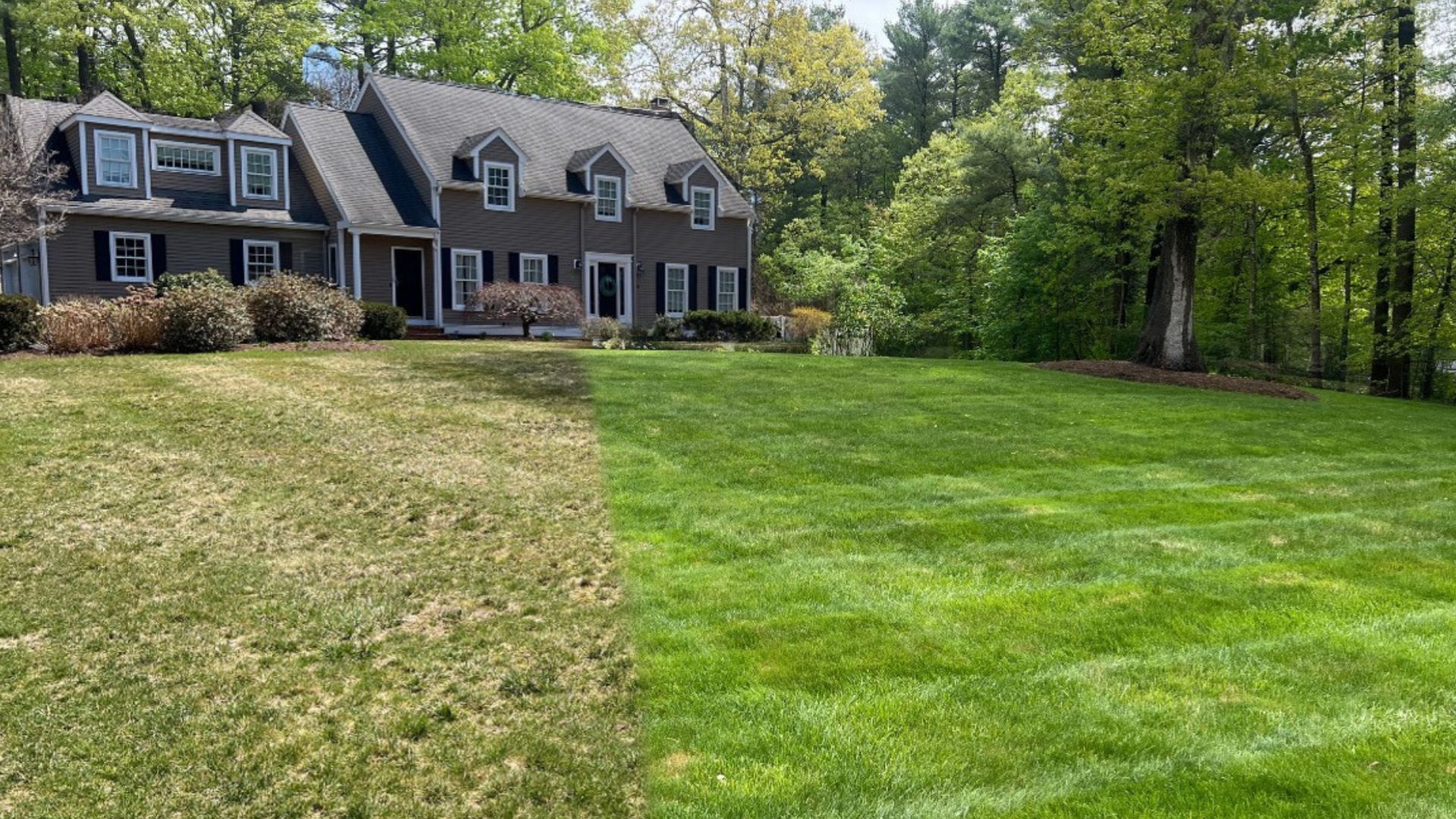
Proper watering is the foundation of a healthy East Texas lawn. Our unique combination of heat, humidity, and clay soil requires an approach that wouldn’t make sense in other parts of the country.
Key principles to remember:
- Water deeply 2 to 3 times per week, not lightly every day
- Always water in early morning, never in the evening
- Deliver 1 to 1.5 inches total per week during summer, less in cooler months
- Adjust for rainfall instead of running irrigation on autopilot
- Use cycle and soak method on clay soil to prevent runoff
The lawns that stay green through August while others turn brown are lawns where someone understood these principles and applied them consistently.
Let Lawn Squad Handle the Rest
Watering is something every homeowner controls directly. But fertilization, weed control, disease prevention, and insect management require precise timing and professional grade products.
Our lawn care programs are designed to work with proper watering practices to create the healthiest possible lawn.
Our ELITE program includes:
- Root stimulant in Round 5 to build drought resistant roots
- Disease control in 4 rounds to prevent fungal problems
- Soil testing to identify drainage and absorption issues
- Surface insect control to protect stressed lawns from pests
- Aeration in 3 rounds to improve water penetration
- Unlimited service calls when problems appear
If your lawn struggles despite your best watering efforts, the problem might be soil health, disease pressure, or nutrient deficiency. Our team can identify what’s happening and create a plan to fix it.
Contact Lawn Squad at 281-674-9226 today to get a quote for your property and build a lawn that handles East Texas summers with ease.