
The short answer: Protecting your lawn from The Woodlands heat and humidity comes down to proper watering, correct mowing height, and treating problems before they spread. Most lawn damage in our area happens because homeowners water too often, cut grass too short, or miss the early signs of fungal disease.
Here’s a quick overview:
- Watering: Deep and infrequent beats shallow and daily every time
- Mowing: Keep warm season grasses at 3 to 4 inches during summer
- Disease prevention: Fungal problems love humidity, so timing and airflow matter most
If you want your lawn to survive and even thrive through a Woodlands summer, keep reading for the specific steps that work in our climate.
The Complete Heat and Humidity Approach: Our 8 Round ELITE Program
At Lawn Squad, we built our ELITE program specifically for the challenges homeowners face in The Woodlands and surrounding areas like Conroe, Spring, Porter, and Magnolia. This 14 treatment program spreads across 8 rounds throughout the year, targeting heat stress, humidity driven disease, and the insects that show up when lawns are weak.
What makes this approach effective is the timing. We apply disease control in Rounds 3, 4, 6, and 7 because that’s when fungal pressure peaks in Montgomery and Harris counties. We include surface insect control from spring through fall because stressed lawns attract pests. And we add three rounds of aeration during summer to help roots breathe when the soil is compacted and waterlogged.
Whether you handle lawn care yourself or hire a professional, understanding how heat and humidity affect your grass will help you make smarter decisions all season long.
Why Heat and Humidity Matter More Than Most Woodlands Homeowners Realize
The Woodlands sits in a climate that pushes warm season lawns to their limits. Summer temperatures regularly hit the mid 90s, and humidity often stays above 80 percent. That combination creates the perfect environment for lawn problems.
Here’s what happens when you don’t account for our climate:
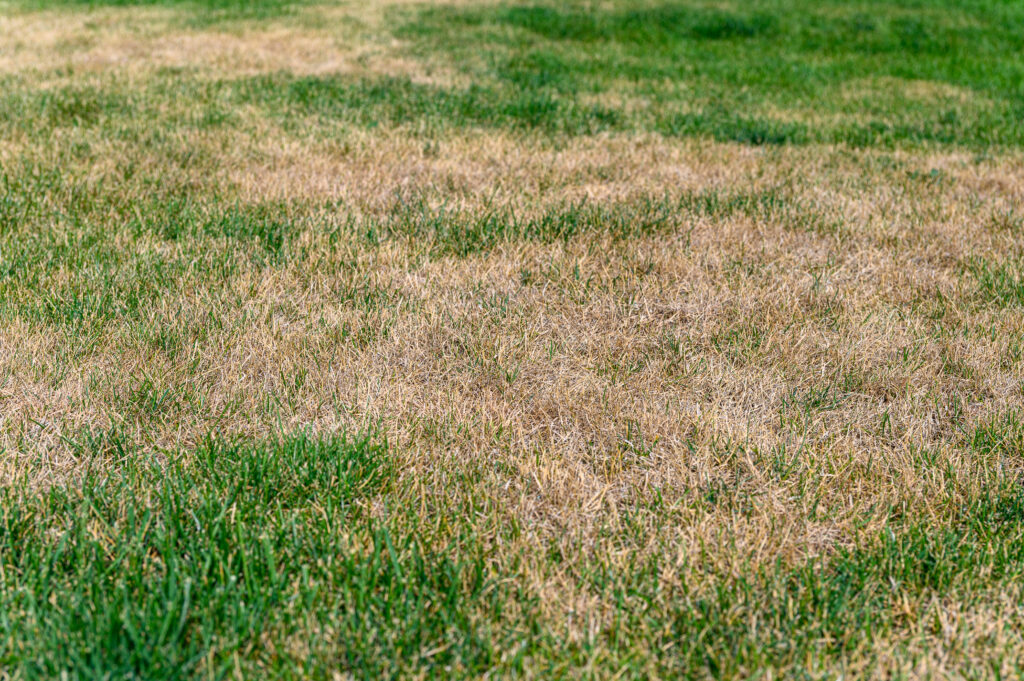
Brown patch and other fungal diseases spread fast. Warm nights and humid air let fungus grow overnight. By the time you notice brown circles in your lawn, the damage is already done.
Shallow roots can’t survive drought stress. Many homeowners water their lawn a little bit every day. This trains roots to stay near the surface where they bake in the summer heat. When you skip a day or two, the grass has no reserves to draw from.
Chinch bugs and other insects target weak lawns. Heat stressed grass sends out signals that attract surface feeding insects. These pests do the most damage in July and August when your lawn is already struggling.
The key principle is this: a healthy lawn handles heat and humidity much better than a struggling one. Everything you do should focus on building strength before stress arrives, not reacting after damage appears.
Summer Watering Guide for The Woodlands
Watering correctly is the single most important thing you can do for your lawn during a Woodlands summer. Most lawn damage we see comes from watering mistakes, not lack of water.
Step 1: Water Deep and Infrequent
Your lawn needs about 1 to 1.5 inches of water per week during summer. But how you deliver that water matters more than the total amount.
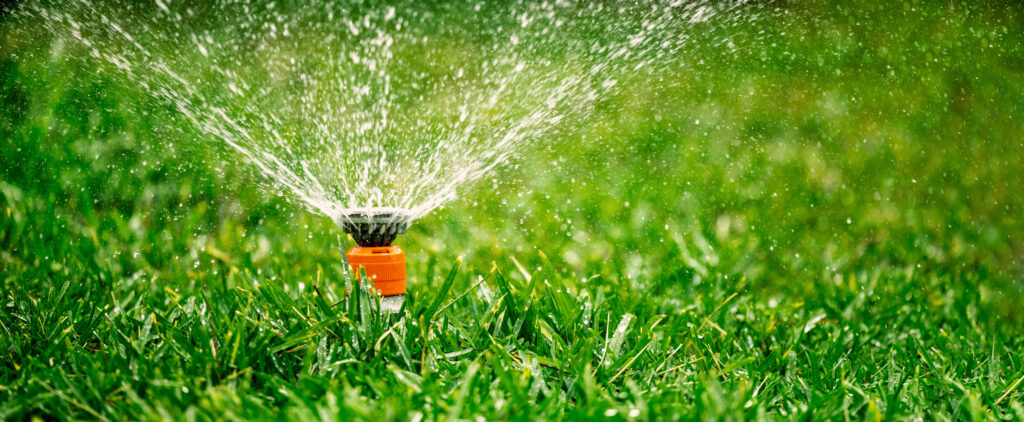
Water deeply two to three times per week instead of lightly every day. Deep watering means running your sprinklers long enough to soak the soil 4 to 6 inches down. This trains roots to grow deep where the soil stays cooler and moister.
Light daily watering does the opposite. It keeps roots near the surface where summer heat kills them.
Step 2: Water Early in the Morning
The best time to water is between 4 AM and 9 AM. At this time, temperatures are cool, wind is calm, and the sun will dry the grass blades before evening.
Watering in the evening or at night is one of the biggest mistakes you can make in The Woodlands. Grass that stays wet overnight is grass that gets fungal disease. Our humidity is already high enough without adding wet grass blades to the mix.
Step 3: Check Your Irrigation Coverage
Walk your lawn while your sprinklers are running. Look for dry spots, areas getting double coverage, and heads that aren’t reaching where they should.
Uneven watering creates weak spots in your lawn. Those weak spots become problem areas when heat and humidity ramp up.
Step 4: Adjust for Rainfall
The Woodlands gets plenty of summer thunderstorms. When it rains an inch or more, skip your next scheduled watering. Overwatering causes as many problems as underwatering, especially with disease pressure.
Critical warning: Never water in the heat of the day. Most of that water evaporates before it reaches the roots, and you can actually scald grass blades by watering in direct sunlight.
Our ELITE program includes root stimulant treatment in Round 5 specifically because deep roots are your lawn’s best defense against summer heat.
Summer Mowing Guide for The Woodlands
How you mow affects how well your lawn handles heat and humidity almost as much as how you water.
Step 1: Raise Your Mowing Height
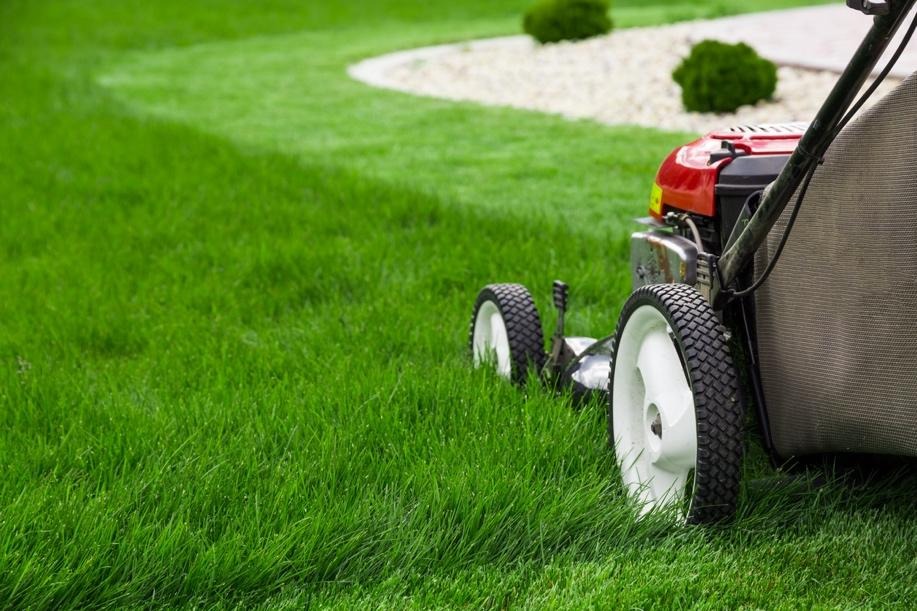
Keep your mower blade set to 3.5 to 4 inches during summer months. Taller grass shades the soil, keeps roots cooler, and holds moisture better.
Many homeowners cut their grass too short because they think it looks neater or means mowing less often. In The Woodlands summer, short grass is stressed grass.
Step 2: Follow the One Third Rule
Never remove more than one third of the grass blade in a single mowing. If your lawn is 6 inches tall, don’t cut it shorter than 4 inches.
Cutting too much at once shocks the grass and exposes the lower stems to sudden sun and heat. This stress invites disease and insect problems.
Critical Consideration: Keep Blades Sharp
Dull mower blades tear grass instead of cutting it cleanly. Those torn edges turn brown, lose moisture faster, and create entry points for fungal disease.
Sharpen your mower blade at least twice during summer. If you mow weekly, sharpen it monthly.
Step 3: Mow When Grass Is Dry
Wait until late morning or early evening to mow, after the dew has dried but before the hottest part of the day. Mowing wet grass spreads disease and clumps up, leaving piles that smother the lawn beneath.
How to Calculate Your Lawn’s Water Needs
You’ve heard that lawns need 1 to 1.5 inches of water per week, but how do you know if your sprinklers are delivering that amount?
Step by step process:
- Place 5 or 6 empty tuna cans or similar containers around your lawn
- Run your sprinklers for 30 minutes
- Measure the water in each can with a ruler
- Average the amounts and multiply by 2 to get your hourly output
Example: If your cans average half an inch after 30 minutes, your system puts out 1 inch per hour. To deliver 1.5 inches per week, you’d run your sprinklers for about 45 minutes twice a week, or 30 minutes three times a week.
This simple test also shows you if your coverage is uneven. If one can has twice as much water as another, you have a coverage problem to fix.
What About Fungal Disease Control?
Fungal disease is the hidden threat that ruins Woodlands lawns every summer. Our combination of heat and humidity creates perfect conditions for brown patch, gray leaf spot, and take all root rot.
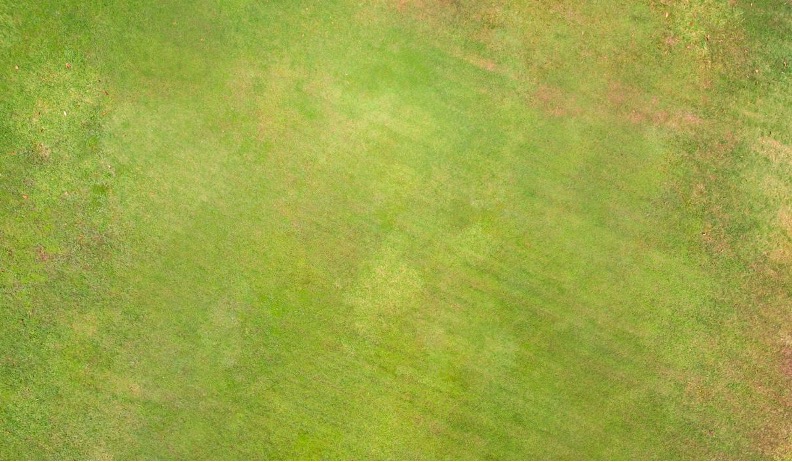
Most homeowners don’t realize they have a fungus problem until they see dead patches spreading across their lawn. By then, the disease has been active for weeks.
Preventative fungicide treatment stops disease before it starts. Lawn Squad’s ELITE program includes disease control applications in Rounds 3, 4, 6, and 7 because those are the high risk periods in our area. Round 3 starts in late March, catching problems before they establish. Round 6 in August addresses the peak humidity season.
For lawns already showing disease symptoms, we offer fungicide curative treatments ranging from $80 to $377 depending on lawn size. Catching disease early makes treatment more effective and less expensive.
Common Heat and Humidity Mistakes Woodlands Homeowners Make
After serving The Woodlands area since 2001, we’ve seen the same mistakes cause lawn damage year after year.
Mistake 1: Watering Every Day Daily light watering feels like you’re taking good care of your lawn. In reality, it creates shallow roots that can’t survive heat stress and wet conditions that encourage disease.
Mistake 2: Cutting Grass Too Short Short grass exposes soil to direct sun, heats up roots, and loses moisture faster. Your lawn might look golf course neat for a day, but it’s suffering all summer.
Mistake 3: Ignoring Early Disease Signs Small yellow or brown patches that appear overnight are usually fungal disease, not drought stress. Waiting to see if they spread means waiting while damage grows.
Mistake 4: Fertilizing During Heat Waves Applying fertilizer when temperatures are above 90 degrees can burn already stressed grass. Our treatment schedule times fertilizer applications to avoid the hottest periods.
Mistake 5: Skipping Aeration Compacted soil can’t absorb water or allow roots to breathe. The Woodlands clay soil compacts easily, especially in high traffic areas. Summer aeration helps lawns survive humidity.
Professional Treatment vs. DIY: Which Should You Choose?
DIY lawn care lets you control timing, products, and costs. You can respond quickly to problems and learn your lawn’s specific needs. Best for: Homeowners who enjoy yard work, have time for weekly attention, and want to understand every aspect of their lawn.
Professional treatment delivers consistent timing, commercial grade products, and expert diagnosis of problems. You get guaranteed results without the learning curve. Best for: Busy homeowners, those with large lawns, and anyone who wants reliable results without researching products and schedules.
Many Woodlands homeowners find a middle ground. They handle mowing and basic watering themselves while leaving fertilization, weed control, and disease prevention to professionals who understand our specific conditions.
Your Heat and Humidity Protection Calendar at a Glance
ELITE Program Schedule
| Round | Timing | Key Services for Heat and Humidity |
|---|---|---|
| 1 | January | Pre emergent, soil test to assess lawn health |
| 2 | February | Pre emergent, fertilizer to build strength |
| 3 | Late March | Disease control, surface insect control begins |
| 4 | May | Disease control, aeration, fire ant prevention |
| 5 | June | Root stimulant, aeration, insect control |
| 6 | August | Disease control, aeration, sedge suppression |
| 7 | September | Disease control, pre emergent for fall weeds |
| 8 | October | Final weed control before dormancy |
DIY Summer Schedule
| When | What to Do | Details |
|---|---|---|
| Weekly | Mow at 3.5 to 4 inches | Sharp blade, one third rule |
| 2 to 3 times weekly | Deep watering | 1 to 1.5 inches total per week |
| Monthly | Check for disease | Look for circular brown patches |
| As needed | Adjust irrigation | Account for rainfall |
The Bottom Line
Protecting your lawn from The Woodlands heat and humidity isn’t complicated, but it does require doing the right things at the right times. Our climate is tough on grass, and small mistakes become big problems quickly in summer.
Key principles to remember:
- Water deeply and infrequently, always in early morning
- Keep grass tall at 3.5 to 4 inches during summer
- Watch for fungal disease signs and act quickly
- Don’t fertilize during extreme heat
- Aerate to help compacted soil breathe
The lawns that look great in August are the lawns that got proper care starting in January. Building health before stress arrives makes all the difference.
Let Lawn Squad Handle It For You
Every lawn in The Woodlands is different. Soil conditions vary across neighborhoods. Some yards get more shade while others bake in full sun. Drainage patterns affect disease risk. Your grass type determines exactly what treatments work best.
Our ELITE program accounts for all these factors with treatments timed specifically for Montgomery and Harris county conditions.
ELITE Program includes:
- Disease control in 4 rounds during high risk periods
- Summer aeration in 3 rounds to combat soil compaction
- Surface insect control from spring through fall
- Root stimulant to help grass survive drought stress
- Soil testing to identify your lawn’s specific needs
- Unlimited service calls when problems appear between visits
If you’re tired of watching your lawn struggle through summer while your neighbor’s stays green, the problem probably isn’t effort. It’s timing and products. Professional treatment takes the guesswork out of lawn care in our challenging climate.
Contact Lawn Squad at 281-674-9226 today to get a quote for your property and see what a summer without lawn stress looks like.