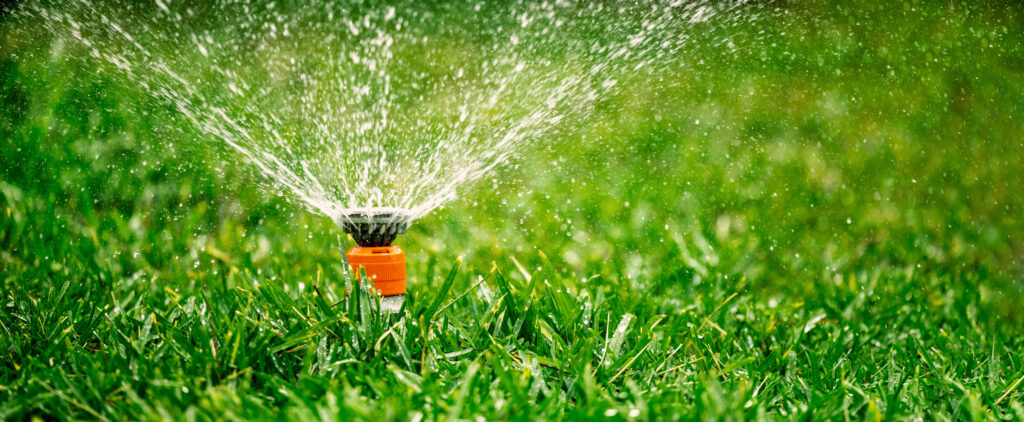
The short answer: Murfreesboro lawns need about 1 to 1.5 inches of water per week, including rainfall. The best approach is deep, infrequent watering in the early morning hours rather than frequent shallow watering throughout the day.
Most Murfreesboro homeowners either overwater or underwater their lawns. Both create problems. The key is understanding how much water your specific lawn needs and delivering it at the right time in the right way.
Quick overview:
- How much: 1 to 1.5 inches per week total (rain plus irrigation)
- When: Early morning between 4 AM and 8 AM
- How often: 2 to 3 times per week rather than daily
- How long: Varies by sprinkler type, typically 20 to 40 minutes per zone
Keep reading for specific irrigation strategies that work for Murfreesboro’s climate, soil, and seasonal conditions.
The Complete Irrigation Approach: Working With Professional Lawn Care
At Lawn Squad of Murfreesboro, we understand that proper irrigation makes the difference between a lawn that thrives and one that struggles despite professional treatments. Our programs deliver fertilizer, weed control, and other treatments, but those products work best when your watering practices support healthy grass growth.
What makes irrigation tricky in Murfreesboro is our combination of clay soils, humid summers, and unpredictable rainfall. Water that would drain quickly through sandy soil sits on top of our clay, creating runoff or pooling. Meanwhile, summer heat can dry out the top few inches of soil while deeper layers stay moist.
Whether you have an irrigation system or water by hand, these tips will help your Murfreesboro lawn get the moisture it needs without waste or damage.
Why Proper Irrigation Matters More Than Most Murfreesboro Homeowners Realize
Watering seems simple, but improper irrigation causes more lawn problems in Murfreesboro than most people realize.
Here’s what happens when irrigation goes wrong:
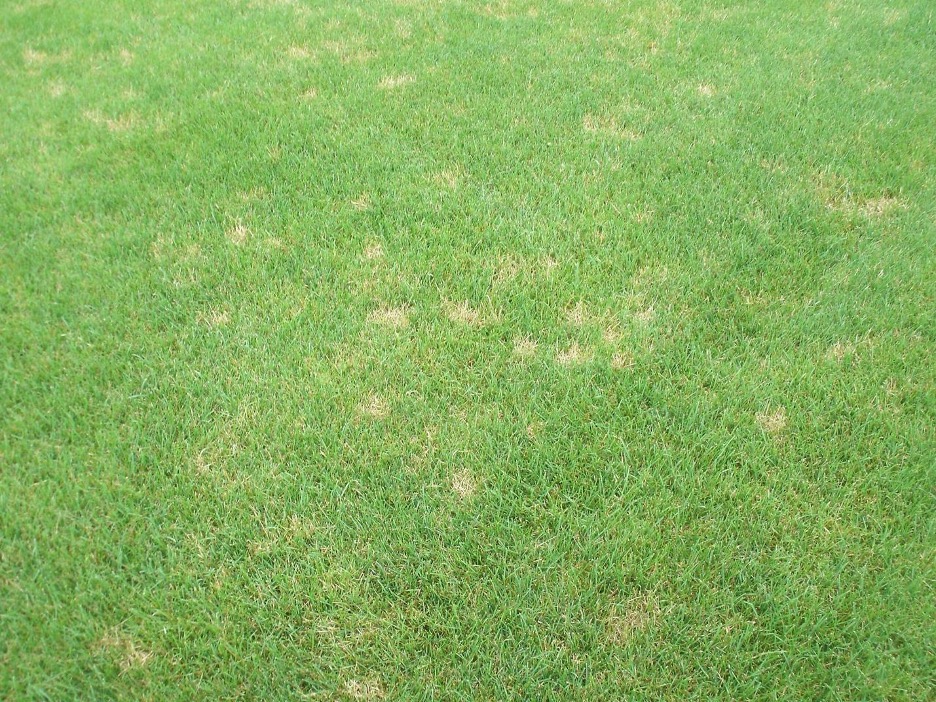
Overwatering creates shallow root systems because grass doesn’t need to grow deep to find moisture. Shallow roots mean less drought tolerance, more disease susceptibility, and weaker grass overall. Excess moisture also creates perfect conditions for fungal diseases like brown patch, which thrives in Murfreesboro’s humid summers.
Underwatering stresses grass and forces it into survival mode. Stressed lawns can’t fight off weeds, recover from damage, or respond well to fertilizer treatments. Chronic underwatering leads to thin, patchy turf that gets worse each season.
Wrong timing wastes water and promotes disease. Watering in the heat of afternoon loses much of your water to evaporation. Watering in the evening leaves grass wet overnight, which is exactly what fungal diseases need to spread.
The key principle Murfreesboro homeowners need to understand is that your grass needs consistent, adequate moisture delivered in a way that encourages deep root growth. This means changing how you think about watering from “keeping grass wet” to “training roots to grow deep.”
At Lawn Squad of Murfreesboro, we’ve served homeowners in Rutherford, Williamson, and Wilson counties since 2001. We’ve seen how proper irrigation transforms lawn health in Christiana, Smyrna, La Vergne, Nolensville, and Mt. Juliet.
How Much Water Does Your Murfreesboro Lawn Actually Need?
The standard recommendation is 1 to 1.5 inches of water per week, but let’s break down what that actually means for your lawn.
Measuring Your Lawn’s Water Needs
Step 1: Account for rainfall first
Before you turn on sprinklers, check how much rain Murfreesboro received that week. A simple rain gauge in your yard gives accurate readings for your specific location. Phone apps and weather reports give general estimates, but rainfall varies significantly across neighborhoods.
If Murfreesboro gets 0.75 inches of rain one week, you only need to supplement with another 0.25 to 0.75 inches of irrigation.
Step 2: Measure your sprinkler output
Place empty tuna cans or similar containers around your yard while running sprinklers. After 30 minutes, measure the water in each can. This tells you how many inches per hour your system delivers and reveals any coverage gaps.
Most sprinkler systems deliver 0.25 to 0.5 inches per hour. If your system puts out 0.5 inches per hour, running it for one hour gives you 0.5 inches of water.
Step 3: Calculate run time
Divide your weekly water need by your sprinkler output rate. If you need 1 inch of water and your system delivers 0.5 inches per hour, you need 2 hours of total run time per week.
Split this across 2 to 3 watering sessions rather than running for 2 hours straight. Murfreesboro’s clay soils can’t absorb water that fast, so long continuous runs create runoff.
Adjusting for Murfreesboro’s Seasons
Water needs change throughout the year:
Spring (March through May): 0.75 to 1 inch per week. Cooler temperatures and spring rains often provide much of this naturally. Supplement only when needed.
Summer (June through August): 1 to 1.5 inches per week. This is peak demand season. Monitor soil moisture and adjust based on rainfall and temperature.
Fall (September through November): 0.75 to 1 inch per week. Needs decrease as temperatures cool, but continue watering until grass goes dormant.
Winter (December through February): Usually no irrigation needed. Dormant grass requires minimal moisture, and winter precipitation typically provides enough.
When Is the Best Time to Water Your Murfreesboro Lawn?
Early Morning: The Optimal Window
Water your Murfreesboro lawn between 4 AM and 8 AM for best results.
Why early morning works:
- Cool temperatures mean less evaporation loss
- Grass blades dry quickly once the sun rises
- Water pressure is typically highest (fewer neighbors watering)
- Wind is usually calmest for even coverage
Why this matters for disease prevention: Fungal diseases need prolonged moisture on grass blades to spread. Early morning watering means grass dries by mid morning, giving diseases no opportunity to develop. This is especially important in Murfreesboro’s humid climate where brown patch and dollar spot thrive.
Times to Avoid
Midday (10 AM to 4 PM): Up to 50% of water can be lost to evaporation during hot Murfreesboro summer days. You’re paying to water the air, not your lawn.
Evening (6 PM to 10 PM): Grass stays wet all night, creating perfect conditions for fungal disease. This single mistake causes more lawn disease problems in Murfreesboro than any other watering error.
Late night (10 PM to 4 AM): Better than evening but still leaves grass wet for extended periods. Early morning is always the better choice.
Setting Your Irrigation Timer
Most irrigation systems allow programming by zone. Set each zone to complete watering by 8 AM. If you have multiple zones, start early enough that all zones finish before the sun gets hot.
Example schedule for a 4 zone system:
- Zone 1: 4:00 AM to 4:30 AM
- Zone 2: 4:30 AM to 5:00 AM
- Zone 3: 5:00 AM to 5:30 AM
- Zone 4: 5:30 AM to 6:00 AM
All zones complete by 6 AM, giving grass plenty of time to dry before evening.
Deep Watering vs Shallow Watering: Why It Matters
The Case for Deep, Infrequent Watering
Watering deeply 2 to 3 times per week beats watering lightly every day. Here’s why this matters for Murfreesboro lawns:
Deep watering encourages deep roots. When you water deeply, moisture reaches 4 to 6 inches into the soil. Grass roots follow the water down, creating a deep root system that accesses moisture even during dry spells.
Shallow watering creates shallow roots. Daily light watering keeps only the top inch of soil moist. Roots stay near the surface where they’re vulnerable to heat, drought, and foot traffic damage.
Deep roots mean drought tolerance. A lawn with 6 inch roots can go several days without water because it accesses moisture stored deep in the soil. A lawn with 2 inch roots wilts within a day or two of missed watering.
How to Water Deeply on Murfreesboro’s Clay Soil
Murfreesboro’s clay soil creates a challenge for deep watering. Clay absorbs water slowly, so applying an inch of water all at once creates runoff rather than penetration.
The cycle and soak method:
Instead of running each zone for 40 continuous minutes, try:
- Run zone for 15 minutes
- Allow 30 to 60 minutes for water to soak in
- Run zone for another 15 minutes
- Repeat if needed
This approach lets water penetrate clay soil without running off. Many smart irrigation controllers have cycle and soak features built in.
Check your penetration:
After watering, push a screwdriver into the soil. It should slide easily to at least 4 to 6 inches if you’ve watered deeply enough. If it stops at 2 inches, you need to water longer or use the cycle and soak method.
Irrigation Tips for Different Murfreesboro Lawn Situations
New Lawns and Overseeded Areas
Newly seeded areas need different irrigation than established lawns.
For new seed:
- Water lightly 2 to 3 times daily to keep soil surface moist
- Apply just enough to moisten the top half inch
- Continue this pattern until grass germinates (10 to 14 days)
- Gradually reduce frequency and increase depth as grass establishes
- Transition to normal deep watering schedule after 3 to 4 mowings
Why this differs: Seeds need consistent surface moisture to germinate. Deep watering doesn’t help seeds at the soil surface. Once grass establishes roots, transition to deep watering to encourage those roots to grow down.
Shaded Areas
Shaded areas in Murfreesboro yards need less water than sunny areas.
Adjustments for shade:
- Reduce watering by 25 to 30% compared to sunny areas
- Water these zones separately if possible
- Watch for signs of overwatering (moss, algae, persistent dampness)
Why this matters: Shade reduces evaporation and slows grass growth. Applying the same water as sunny areas leads to overwatering, shallow roots, and disease problems.
Slopes and Hills
Water runs off slopes before it can soak in, especially on Murfreesboro’s clay soil.
Adjustments for slopes:
- Use cycle and soak method religiously
- Consider switching to drip irrigation or low precipitation rate heads
- Water at lower rates for longer periods
- Check for erosion and adjust as needed
Areas Near Trees
Large trees compete with grass for water and can create dry spots.
Adjustments near trees:
- These areas may need additional water
- Tree roots often extend far beyond the branch canopy
- Consider hand watering dry spots if irrigation doesn’t reach them adequately
Signs Your Murfreesboro Lawn Needs More Water
Learn to read your lawn’s signals rather than watering on autopilot.
Footprint test: Walk across your lawn. If footprints remain visible for more than a few seconds, grass is drought stressed and needs water.
Color change: Grass shifts from bright green to a dull, grayish green when it needs water. This happens before obvious wilting.
Blade folding: Grass blades fold lengthwise to reduce surface area and conserve moisture. This is a clear signal to water soon.
Soil probe test: Push a screwdriver into the soil. If it’s hard to penetrate the top few inches, soil is dry and needs water.
Signs Your Murfreesboro Lawn Is Getting Too Much Water
Overwatering causes just as many problems as underwatering.
Spongy feel: Lawn feels soft and spongy when you walk on it. Soil is saturated.
Fungal disease: Circular dead patches, visible fungal growth, or rapidly spreading brown areas often indicate disease encouraged by excess moisture.
Persistent puddles: Water standing on the lawn for hours after watering indicates either overwatering or poor drainage.
Moss or algae growth: These thrive in constantly moist conditions and signal chronic overwatering.
Mushrooms: While some mushrooms are normal, large quantities suggest excess soil moisture.
Runoff during watering: If water runs off your lawn while sprinklers are still running, you’re applying water faster than soil can absorb it.
Common Irrigation Mistakes Murfreesboro Homeowners Make
After serving lawns in Murfreesboro, Smyrna, La Vergne, Christiana, and surrounding areas since 2001, we’ve seen these watering mistakes repeatedly.
Mistake #1: Watering Every Day Daily light watering creates shallow roots and actually makes your lawn more dependent on irrigation. Switch to 2 to 3 deep watering sessions per week and watch your lawn develop better drought tolerance.
Mistake #2: Ignoring Rainfall Running irrigation on schedule regardless of rainfall wastes water and can overwater your lawn. Install a rain sensor or smart controller that adjusts for weather conditions. At minimum, manually skip watering after significant rain.
Mistake #3: Evening Watering Watering in the evening is convenient but creates perfect conditions for fungal disease. Shift your watering to early morning, even if it means adjusting your schedule or investing in a timer.
Mistake #4: One Size Fits All Zones Sunny areas, shaded areas, slopes, and flat sections all have different water needs. Program each zone separately rather than running the whole system for the same duration.
Mistake #5: Set It and Forget It Seasonal water needs vary dramatically. A summer irrigation schedule will overwater in spring and fall. Adjust your program at least four times per year as seasons change.
Smart Irrigation Technology for Murfreesboro Homes
Modern irrigation technology can improve watering efficiency and lawn health.
Rain sensors: Automatically skip irrigation when rainfall provides adequate moisture. Required by Tennessee law for new irrigation systems but can be added to existing systems for $25 to $100.
Smart controllers: Adjust watering based on local weather data, soil type, plant type, and sun exposure. These can reduce water use by 20 to 50% while often improving lawn health.
Soil moisture sensors: Measure actual soil moisture rather than estimating based on weather. Water only when soil actually needs it.
High efficiency sprinkler heads: Replace older heads with models that deliver water more evenly and with less misting and evaporation.
Drip irrigation for beds: Consider drip irrigation for landscape beds near your lawn. This keeps beds watered efficiently while reducing overspray onto lawn areas.
Your Murfreesboro Irrigation Schedule at a Glance
Spring (March through May)
| Frequency | Amount | Timing | Notes |
|---|---|---|---|
| 1 to 2 times weekly | 0.75 to 1 inch total | 4 AM to 8 AM | Supplement rainfall only |
Summer (June through August)
| Frequency | Amount | Timing | Notes |
|---|---|---|---|
| 2 to 3 times weekly | 1 to 1.5 inches total | 4 AM to 8 AM | Peak water demand season |
Fall (September through November)
| Frequency | Amount | Timing | Notes |
|---|---|---|---|
| 1 to 2 times weekly | 0.75 to 1 inch total | 4 AM to 8 AM | Reduce as temperatures drop |
Winter (December through February)
| Frequency | Amount | Timing | Notes |
|---|---|---|---|
| Usually none | Natural precipitation | N/A | Winterize system before freezing |
The Bottom Line
Proper irrigation is one of the most important things you can do for your Murfreesboro lawn. The right amount of water at the right time supports healthy grass that responds well to fertilization, resists disease, and outcompetes weeds.
Key principles to remember:
- Water deeply 2 to 3 times per week rather than lightly every day
- Aim for 1 to 1.5 inches per week total, including rainfall
- Water between 4 AM and 8 AM to reduce evaporation and disease risk
- Adjust your schedule seasonally and skip watering after rain
- Learn to read your lawn’s signals for over and underwatering
- Account for Murfreesboro’s clay soil by using cycle and soak watering
Following these irrigation tips will help your Murfreesboro lawn thrive through every season.
Let Lawn Squad of Murfreesboro Partner With Your Irrigation
Proper watering supports every treatment we provide. Fertilizer reaches roots better in well watered soil. Disease control works best when irrigation practices don’t promote fungal growth. Weed control succeeds when healthy grass crowds out invaders.
Our programs include:
- Treatments timed to work with proper irrigation practices
- Disease control that addresses moisture related fungal problems
- Root stimulant applications that help grass develop deep, drought tolerant roots
- Expert advice on watering practices specific to your treatments
- Unlimited service calls if you notice watering related problems
If your Murfreesboro lawn struggles despite watering, or if you want professional treatments that complement good irrigation practices, we’re here to help.
Contact Lawn Squad of Murfreesboro today at 615-931-4478 or visit lawnsquad.com/contact-us to get a free quote and give your lawn the complete care it deserves.