
The short answer: West Houston lawns face serious disease pressure from spring through fall due to our combination of heat, humidity, and heavy rainfall. The most effective approach combines preventive fungicide applications starting in late March with proper cultural practices like morning watering and correct mowing height.
Most lawn diseases in our area can be prevented entirely. Treating disease after it appears costs more, takes longer, and often leaves permanent damage.
Quick overview:
- Brown patch: Most common disease, appears as circular brown areas from spring through fall
- Take-all root rot: Attacks St. Augustine grass roots, causes yellow then brown patches
- Gray leaf spot: Shows as gray spots on grass blades, spreads rapidly in humid weather
- Prevention timing: Fungicide applications in Rounds 3, 4, 6, and 7 (late March through mid-September)
Read on to learn how to identify lawn diseases early, prevent them from taking hold, and treat outbreaks if they occur.

The Complete Disease Prevention Approach: Lawn Squad’s Fungicide Program
At Lawn Squad of West Houston, we’ve built disease control into our ELITE program because we know how quickly fungal problems spread in our climate. Our program includes preventive fungicide applications in Rounds 3, 4, 6, and 7, timed to protect your lawn during peak disease season.
What makes prevention work is timing. Fungal spores are always present in the soil, waiting for the right conditions. Once those conditions arrive (warm temperatures plus high humidity), disease can spread across your lawn in just a few days. Preventive fungicides stop this cycle before it starts.
Whether you handle disease prevention yourself or hire a professional, understanding which diseases threaten West Houston lawns and how to recognize early symptoms will help you act fast when it matters most.
Why Disease Prevention Matters More Than Most West Houston Homeowners Realize
Lawn diseases don’t just make your grass look bad. They can kill large sections of turf that take months or even years to recover.
Here’s what happens when disease takes hold: Fungal infections attack grass plants at the cellular level, destroying leaves, stems, or roots depending on the disease type. Infected areas stop photosynthesizing, turn brown, and die. The fungus then spreads to neighboring grass, expanding the damaged area daily.
The key principle to understand is this: conditions in West Houston favor fungal growth for six months or more each year. Our warm nights, high humidity, frequent afternoon thunderstorms, and heavy clay soils create a perfect environment for lawn diseases.
Take-all root rot, for example, can destroy an entire St. Augustine lawn over two to three years if left untreated. Brown patch can create dead spots that don’t fill in until the following growing season. Gray leaf spot spreads so fast during humid weather that a lawn can go from healthy to devastated in two weeks.
This is why prevention matters so much in our area. The diseases we deal with in West Houston are aggressive, and our climate gives them ideal conditions to thrive.
Common Lawn Diseases in West Houston: Identification Guide
Knowing what you’re dealing with helps you respond correctly. Here are the diseases that cause the most damage in the 77024, 77057, 77079, and surrounding zip codes we serve.
Brown Patch (Rhizoctonia solani)
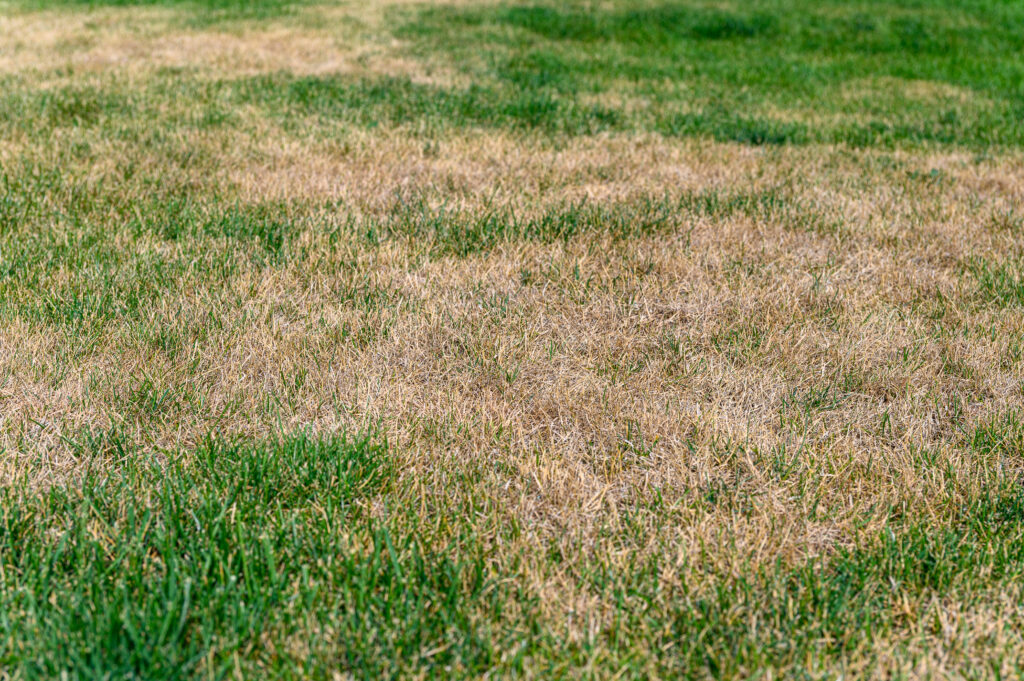
Brown patch is the most common lawn disease in West Houston. It appears as circular patches of brown or tan grass ranging from a few inches to several feet across.
How to identify it:
- Circular or irregular brown patches
- Grass blades pull easily from the soil
- “Smoke ring” border (dark gray or purple ring at the edge of the patch) visible in early morning
- Most active when nighttime temperatures stay above 68 degrees
When it appears: Late spring through fall, peaking during humid weather with warm nights
Grass types affected: St. Augustine, Bermuda, Zoysia (all common West Houston grasses)
Brown patch attacks the leaf blades and stems but usually doesn’t kill the roots. Lawns often recover once conditions change, but severe infections can thin turf permanently.
Take-All Root Rot (Gaeumannomyces graminis)
Take-all root rot is the most destructive disease for St. Augustine lawns in our area. It attacks the root system, making it harder to diagnose and harder to treat than leaf diseases.
How to identify it:
- Yellow patches that gradually turn brown
- Roots appear short, black, and rotted when you pull up affected grass
- Grass doesn’t respond to watering or fertilizer
- Often starts in shaded or poorly drained areas
When it appears: Spring and fall when soil temperatures are between 60 and 75 degrees
Grass types affected: Primarily St. Augustine, occasionally Bermuda
Take-all root rot is sneaky. By the time you notice yellow patches, the root damage has already occurred. Affected areas may not recover even with treatment, requiring sod replacement.
Gray Leaf Spot (Pyricularia grisea)
Gray leaf spot spreads explosively during hot, humid weather. It can turn a healthy lawn brown in just one to two weeks under the right conditions.
How to identify it:
- Small gray or tan spots on grass blades with dark brown borders
- Spots expand and merge, causing entire blades to die
- Affected areas look scorched or burned
- Spreads rapidly during rainy periods
When it appears: Summer months, especially during extended humid periods
Grass types affected: St. Augustine (highly susceptible), Bermuda, Zoysia
Gray leaf spot loves nitrogen. Lawns that receive heavy fertilization during humid summer months are especially vulnerable.
Chinch Bug Damage vs. Disease
Chinch bug damage often looks like disease but requires completely different treatment. Before treating for disease, rule out insects.
How to tell the difference:
- Chinch bug damage starts near driveways, sidewalks, and other heat-reflecting surfaces
- Disease often starts in shaded or poorly drained areas
- Chinch bugs can be seen by flooding a small area and watching for tiny black and white insects
- Disease shows symptoms on individual grass blades; chinch bug damage shows uniform yellowing
Lawn Squad’s ELITE program includes both disease control and surface insect control because these problems often occur together and can be hard to distinguish.
Preventive Fungicide Application Guide for West Houston
Prevention is far more effective than treatment for lawn diseases. Here’s when and how to apply preventive fungicides in our area.
Round 3: Late March Application (Starting March 30)
This first fungicide application protects your lawn as temperatures rise and humidity increases. It targets brown patch and early-season disease pressure.
Apply preventive fungicide before disease symptoms appear. If you wait until you see brown patches, you’ve missed the prevention window and now need curative treatment.
Water in fungicide according to label directions. Most products need light irrigation to move the active ingredient into the soil where roots can absorb it.
Round 4: May Application (Starting May 11)
This application extends protection through late spring when disease pressure intensifies. Warm nights and afternoon thunderstorms create ideal conditions for fungal growth.
Combine disease control with other May treatments like surface insect control and sedge suppression for comprehensive protection.
Round 6: August Application (Starting August 3)
August is peak disease season in West Houston. High temperatures, humidity, and frequent rain create constant fungal pressure.
This application is critical for preventing gray leaf spot, which spreads fastest during August’s humid conditions.
Round 7: September Application (Starting September 14)
Fall brings a second wave of disease activity as temperatures begin dropping. Take-all root rot becomes more active in fall when soil temperatures hit its preferred range.
This final preventive application carries protection through the transition to cooler weather.
Critical warning: Fungicides work preventively, not curatively. Most preventive fungicides will not stop an active disease outbreak. If you already see symptoms, you need a curative fungicide at higher rates, which costs significantly more and may not save already-damaged turf.
Cultural Practices That Prevent Disease
Fungicides are important, but cultural practices can reduce disease pressure by 50% or more. Here’s what every West Houston homeowner should do.
Water in the Morning Only
This is the single most important cultural practice for disease prevention. Watering in the morning allows grass blades to dry before nighttime, when fungal infections occur.
Run irrigation between 4 AM and 9 AM. Grass should be completely dry by evening. If you water in the afternoon or evening, you’re creating the exact conditions that fungal diseases need to spread.
West Houston’s humid nights already keep grass damp longer than in drier climates. Don’t make it worse by watering at the wrong time.
Mow at the Correct Height
Mowing too short stresses grass and makes it more susceptible to disease. Keep St. Augustine at 3.5 to 4 inches and Bermuda at 1.5 to 2 inches during disease-prone months.
Taller grass develops deeper roots and handles stress better. Scalped lawns are disease magnets.
Improve Air Circulation
Fungal diseases thrive in stagnant, humid air. Trim back shrubs and low-hanging tree branches that block airflow across your lawn.
Areas surrounded by fences, hedges, or buildings often have the worst disease problems because air doesn’t move through them.
Reduce Nitrogen During Peak Disease Season
Heavy nitrogen fertilization during summer encourages lush growth that’s highly susceptible to disease, especially gray leaf spot.
Lawn Squad’s treatment schedule reduces nitrogen rates during peak disease months and increases them during safer periods in spring and fall.
Address Drainage Problems
Standing water and soggy soil promote root rot diseases. If areas of your lawn stay wet for hours after rain or irrigation, you have a drainage problem that needs fixing.
Aerating compacted soil helps water penetrate rather than pool on the surface. Lawn Squad’s ELITE program includes summer aeration in Rounds 4, 5, and 6.
How to Respond to Active Disease Outbreaks
Despite best efforts, disease outbreaks sometimes occur. Here’s how to respond quickly and limit damage.
Step-by-step response process:
- Identify the disease correctly (brown patch, take-all root rot, gray leaf spot, or another issue)
- Stop any practices that worsen the problem (evening watering, excess nitrogen)
- Apply curative fungicide at label rates for active disease
- Repeat application in 14 to 21 days if symptoms continue
- Once disease is controlled, resume preventive applications
Curative fungicides cost more and require higher application rates than preventive products. A single curative treatment often costs three times what a preventive application would have cost.
For severe outbreaks, contact Lawn Squad at 713-510-3656. Our unlimited service calls mean we’ll come assess the problem and adjust your treatment plan at no extra charge for ELITE, PRO, and ESSENTIAL program customers.
Disease Control Product Options
Understanding your options helps you make informed decisions whether you’re treating yourself or evaluating professional services.
Preventive Fungicides
Preventive products work by creating a protective barrier that stops fungal spores from infecting grass plants. They must be applied before infection occurs.
Common active ingredients include azoxystrobin, propiconazole, and myclobutanil. These products typically protect for 14 to 28 days depending on weather conditions and disease pressure.
Curative Fungicides
Curative products stop active infections but cannot repair damage already done. They work best when applied at the first sign of symptoms.
Curative treatments often combine multiple active ingredients and require higher application rates. Some diseases, like take-all root rot, don’t respond well to curative treatment because the root damage has already occurred.
Lawn Squad’s Fungicide Program
For homeowners who want complete disease protection without the guesswork, Lawn Squad offers a standalone Lawn Fungicide Program in addition to the disease control included in our ELITE program.
The program includes four rounds of preventive fungicide treatment timed specifically for West Houston’s disease calendar. This is ideal for lawns with a history of fungal problems or properties in high-humidity areas.
Common Disease Prevention Mistakes West Houston Homeowners Make
Serving the West Houston community since 2001, we’ve seen these mistakes cause unnecessary lawn damage year after year.
Mistake #1: Watering in the Evening Evening watering is the number one cause of preventable lawn disease. Grass stays wet all night, giving fungal spores hours to infect plant tissue. Switch to morning watering immediately.
Mistake #2: Waiting for Symptoms Before Treating Preventive fungicides don’t work on active infections. By the time you see brown patches, you’ve missed the prevention window. Apply preventive treatments in late March, before symptoms appear.
Mistake #3: Confusing Disease with Other Problems Drought stress, insect damage, and disease can all cause brown patches. Treating for disease when you actually have chinch bugs wastes money and lets the real problem get worse. Identify correctly before treating.
Mistake #4: Over-Fertilizing During Summer Heavy nitrogen fertilization during humid summer months feeds gray leaf spot. Reduce fertilizer rates from June through August and increase them during safer periods.
Mistake #5: Ignoring Take-All Root Rot Early Signs Take-all root rot starts as slight yellowing that’s easy to dismiss. By the time grass turns brown and dies, root damage is severe. If St. Augustine grass looks yellow and doesn’t respond to water or fertilizer, suspect take-all root rot and act immediately.
Preventive Program vs. Curative Treatment: Which Approach Is Right?
Preventive fungicide programs apply products before disease appears, creating protection that lasts through high-risk periods. Cost is predictable, damage is minimized, and lawns stay healthy all season. Best for: All West Houston lawns, especially those with history of disease, St. Augustine turf, shaded areas, or properties with drainage issues.
Curative treatment only waits until disease appears, then treats active outbreaks. This approach costs less in disease-free years but costs much more when outbreaks occur. It also accepts some lawn damage as unavoidable. Best for: Lawns with no disease history, Bermuda grass in full sun, homeowners willing to accept occasional damage in exchange for lower annual costs.
Given West Houston’s climate, we recommend preventive treatment for most lawns. The cost difference between prevention and cure is significant, and the damage from even one bad outbreak can take years to repair.
Your West Houston Disease Prevention Calendar at a Glance
DIY Prevention Schedule
| Month | What to Do | Target Diseases |
|---|---|---|
| March | First preventive fungicide application | Brown patch, early-season diseases |
| April | Monitor for symptoms, maintain morning watering | Brown patch |
| May | Second preventive application, reduce nitrogen | Brown patch, gray leaf spot |
| June/July | Monitor closely, avoid evening watering | Gray leaf spot, brown patch |
| August | Third preventive application | Gray leaf spot, brown patch |
| September | Fourth preventive application | Take-all root rot, brown patch |
| October | Monitor, resume normal fertilization | Late-season brown patch |
Professional Treatment Schedule (ELITE Program)
| Round | Timing | Disease Control Services |
|---|---|---|
| 3 | March 30, 2026 | Disease control (preventive fungicide) |
| 4 | May 11, 2026 | Disease control, aeration for drainage |
| 6 | August 3, 2026 | Disease control (peak season protection) |
| 7 | September 14, 2026 | Disease control (fall protection) |
The Bottom Line
Lawn disease in West Houston isn’t a matter of “if” but “when” for unprotected lawns. Our climate creates ideal conditions for brown patch, take-all root rot, and gray leaf spot from March through October.
Key principles to remember:
- Water only in the morning, never in the evening
- Apply preventive fungicides before symptoms appear (starting late March)
- Reduce nitrogen fertilization during peak disease months (June through August)
- Mow at proper height and improve air circulation
- Act immediately if you see symptoms; disease spreads fast in our climate
Follow these guidelines consistently, and you’ll avoid the costly damage and frustration that lawn diseases cause for unprepared homeowners.
Let Lawn Squad Handle It For You
Every West Houston property has different disease risk factors based on grass type, shade patterns, drainage, and irrigation setup.
Our programs account for all these variables, with fungicide applications timed specifically for our local disease calendar and climate conditions.
Our ELITE Program includes:
- Four preventive fungicide applications during peak disease season
- Summer aeration to improve drainage and reduce root rot risk
- Properly timed fertilization that avoids feeding diseases
- Soil testing to identify conditions that promote disease
- Unlimited service calls if problems appear between visits
Tired of watching brown patches spread across your lawn every summer? Let the local experts protect your investment.
Contact Lawn Squad of West Houston today at 713-510-3656 or visit lawnsquad.com/contact-us to get a free quote and keep your lawn disease-free all season.