
The short answer: West Houston lawns need extra care from May through September because our combination of extreme heat and high humidity creates unique challenges. The key is adjusting your watering, mowing, and treatment schedule to work with our climate instead of against it.
Most West Houston homeowners struggle with heat stress, fungal diseases, and stubborn summer weeds like nutsedge. Understanding how to handle each of these issues will keep your lawn healthy all season long.
Quick overview:
Watering: Deep, infrequent watering in early morning hours works best
Mowing: Keep grass taller (3 to 4 inches) and mow during cooler parts of the day
Treatments: Surface insect control, disease prevention, and sedge suppression are essential from late spring through early fall
Read on to learn exactly what your West Houston lawn needs to survive and thrive during our toughest months.

The Complete Summer Lawn Care Approach: Lawn Squad’s Multi-Round Program
At Lawn Squad of West Houston, we’ve developed treatment programs specifically designed for warm season lawns in our area. Our ELITE program includes 14 treatments across 13 visits, timed to address each challenge as it appears throughout the growing season.
What makes our approach effective is the timing. We apply surface insect control starting in Round 3 (late March), add sedge suppression and disease control in Rounds 4 through 6 (May through August), and include summer aeration to help your lawn breathe during the most stressful months.
Whether you handle lawn care yourself or hire a professional, understanding the fundamentals of summer lawn care in West Houston will help you make better decisions for your property.
Why Summer Lawn Care Matters More Than Most West Houston Homeowners Realize
Summer is when West Houston lawns either thrive or fall apart. Our climate creates a perfect storm of stress factors that can turn a healthy lawn brown and patchy in just a few weeks.
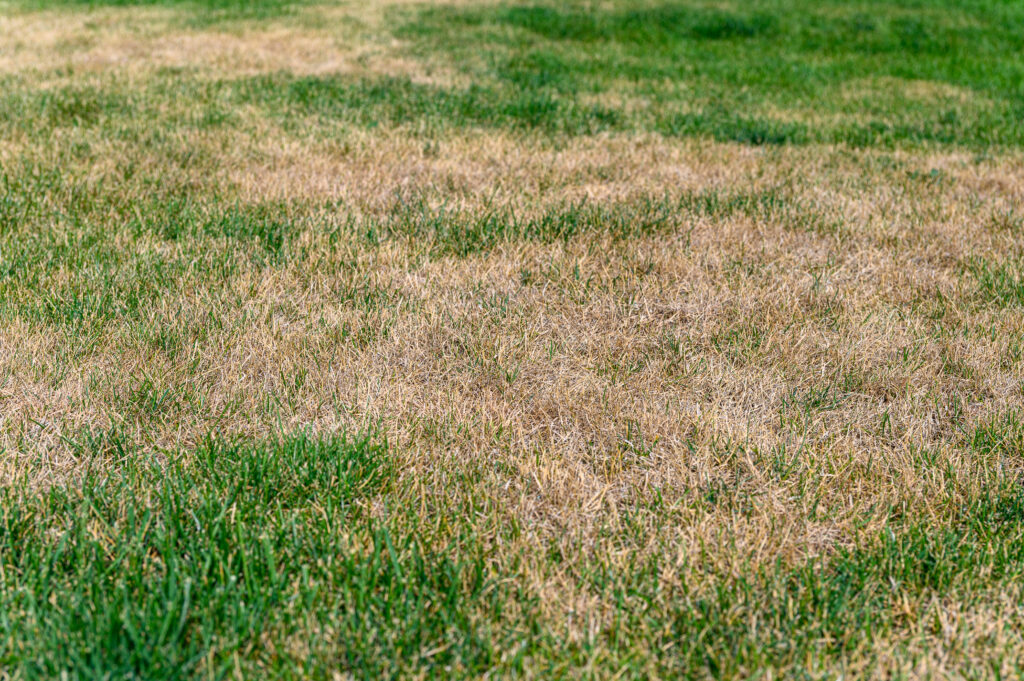
Here’s what can go wrong: Heat stress causes grass to go dormant and turn brown. High humidity encourages fungal diseases like brown patch and take-all root rot. Chinch bugs and other surface insects feast on stressed turf. Nutsedge and other summer weeds take advantage of any weakness in your lawn.
The key principle to understand is this: prevention is easier than cure. Once your lawn has a serious fungal infection or insect infestation, fixing it costs more money and takes more time than preventing it in the first place.
West Houston’s specific challenges (our heavy clay soils, our particular mix of heat and humidity, our common grass types) mean that generic lawn care advice often falls short. What works in Dallas or Austin doesn’t always work in the 77057, 77024, or 77079 zip codes we serve.
DIY Summer Lawn Care Guide for West Houston Homeowners
If you prefer handling your own lawn care, here’s what you need to know to get through our brutal summers.
Watering: The Foundation of Summer Lawn Health
Your irrigation schedule makes or breaks your lawn in July and August. West Houston lawns typically need about 1 to 1.5 inches of water per week during peak summer.
Water deeply but infrequently. This means running your sprinklers long enough to soak the soil 4 to 6 inches deep, then waiting several days before watering again. Deep watering encourages deep root growth, which helps grass survive heat stress.
Always water before 10 AM. Watering in the evening leaves grass wet overnight, which creates perfect conditions for fungal diseases. Our humid nights already push lawns toward disease; wet grass makes it worse.
Mowing: Height and Timing Matter
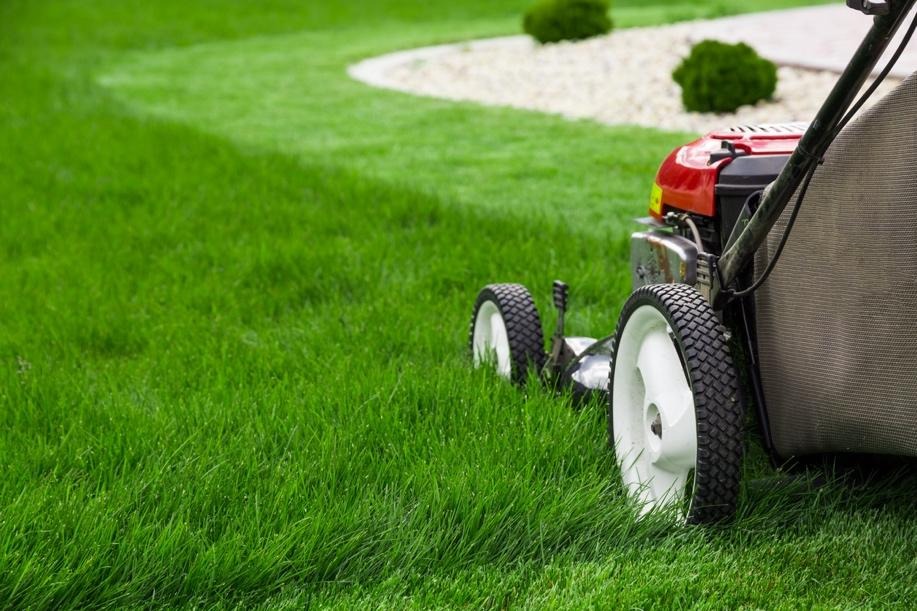
Raise your mower blade to 3 to 4 inches during summer. Taller grass shades the soil, keeps roots cooler, and reduces water evaporation. Many West Houston homeowners cut their grass too short, which stresses the lawn and invites weeds.
Mow during the cooler parts of the day (early morning or evening) and never remove more than one third of the grass blade at a time. If you’ve been on vacation and the grass got tall, mow it down gradually over several sessions.
Keep your mower blade sharp. Dull blades tear grass instead of cutting it cleanly, creating ragged edges that turn brown and become entry points for disease.
Fertilization: Feed Your Lawn Right
West Houston lawns need regular feeding from spring through early fall. A balanced fertilizer applied every 6 to 8 weeks keeps grass healthy enough to resist stress, pests, and disease.
Avoid fertilizing during extreme heat waves. If temperatures are above 95 degrees for several days in a row, wait until conditions cool down. Fertilizing heat-stressed grass can actually cause more damage.
Critical warning: Over-fertilizing is one of the most common mistakes we see. More fertilizer does not mean greener grass. Too much nitrogen burns grass and encourages excessive growth that the plant can’t sustain during hot weather.
Lawn Squad’s ELITE and PRO programs include properly timed fertilization in Rounds 2 through 7, taking the guesswork out of when and how much to apply.
Professional Treatment Guide for West Houston Lawns
For homeowners who want expert care, here’s what a comprehensive summer treatment program should include.
Surface Insect Control (Rounds 3 through 7)
Chinch bugs, grubs, and other turf-damaging insects become active as temperatures rise. Professional-grade insect control applied from late March through September protects your lawn during peak pest season.
Surface insect treatments need to be applied before you see damage. By the time you notice brown patches from chinch bugs, they’ve already done significant harm.
Disease Control (Rounds 3, 4, 6, and 7)
Fungal diseases love West Houston summers. Brown patch, take-all root rot, and gray leaf spot can destroy sections of your lawn seemingly overnight.
Professional fungicide applications during disease-prone months prevent these problems before they start. Curative treatments (applied after disease appears) cost more and take longer to work than preventive applications.
Sedge Suppression: Nutsedge Control
If you’ve ever pulled what looks like grass and found a small “nut” at the root, you’ve met nutsedge. This aggressive summer weed spreads through underground tubers and laughs at regular weed killers.
Nutsedge requires specialized herbicides applied multiple times during the growing season. Lawn Squad includes sedge suppression in Rounds 4, 5, and 6 of our ELITE and PRO programs because one application isn’t enough to control established nutsedge.
Summer Aeration: Help Your Lawn Breathe
West Houston’s clay-heavy soils compact easily, especially during our dry summer stretches. Compacted soil prevents water, air, and nutrients from reaching grass roots.
Summer aeration (included in ELITE program Rounds 4, 5, and 6) loosens compacted soil and helps your lawn absorb water more efficiently. This is especially important if you notice water pooling on your lawn or running off instead of soaking in.
How to Calculate Your Lawn’s Water Needs
You’ve probably heard the “1 inch per week” recommendation, but how do you actually measure that?
Step-by-step process:
- Place several empty tuna cans or similar containers around your lawn before running sprinklers
- Run your irrigation system for 30 minutes
- Measure the water depth in each can and calculate the average
- Divide 1 inch by your average depth to determine how long to run sprinklers
For example: If 30 minutes of watering puts 0.25 inches in the can, you need to run sprinklers for 2 hours total per week (split into 2 or 3 sessions).
Different areas of your lawn may need different amounts. Sunny spots and areas near concrete need more water than shady spots. Adjust your irrigation zones accordingly.
What About Soil Testing?
Understanding your soil’s pH and nutrient levels helps you fertilize more effectively and avoid wasting money on treatments your lawn doesn’t need.
West Houston soils tend to be alkaline (high pH) and often lack iron, which causes grass to yellow even when other nutrients are adequate. A soil test reveals exactly what your lawn needs.
Lawn Squad’s ELITE program includes a soil test in Round 1, with results used to customize treatments throughout the season. We recommend testing every 2 to 3 years, or anytime your lawn isn’t responding to treatments as expected.
Common Summer Lawn Care Mistakes West Houston Homeowners Make
After 25 years serving the West Houston area, we’ve seen the same mistakes repeated over and over.
Mistake #1: Watering Too Often and Too Lightly Many homeowners water for 10 to 15 minutes every day. This creates shallow roots and encourages fungal growth. Water deeply 2 to 3 times per week instead.
Mistake #2: Cutting Grass Too Short “Scalping” the lawn might mean less mowing, but it stresses grass and invites weeds. Keep summer mowing height at 3 to 4 inches.
Mistake #3: Ignoring Early Signs of Disease Circular brown patches that appear overnight usually indicate fungal disease. Treating immediately limits damage. Waiting even a week allows the disease to spread.
Mistake #4: Using the Wrong Products on Nutsedge Regular weed killers don’t work on nutsedge. You need specific sedge herbicides, and you’ll need multiple applications. Pulling nutsedge by hand actually makes it spread faster.
Mistake #5: Skipping Treatments During Vacation Months July and August are when lawns need the most attention, but they’re also popular vacation months. Gaps in treatment schedules let pests, diseases, and weeds gain ground that’s hard to recover.
DIY vs. Professional Lawn Care: Which Should You Choose?
DIY lawn care gives you complete control and costs less upfront. You can adjust treatments based on what you observe and take pride in doing it yourself. However, DIY requires significant time, knowledge of which products to use, proper application equipment, and consistent follow-through even during busy summer months. Best for: Homeowners who enjoy yard work, have time to stay on schedule, and are willing to learn about lawn care science.
Professional lawn care provides expert knowledge, commercial-grade products, and reliable scheduling. Professionals can identify problems early and adjust treatments based on what they see during each visit. The cost is higher, but results are typically better and more consistent. Best for: Busy homeowners, those who travel frequently, anyone frustrated by DIY results, and properties with recurring pest or disease issues.
Your West Houston Summer Lawn Care Calendar at a Glance
DIY Basic Schedule
| Month | What to Do | Details |
|---|---|---|
| May | Increase mowing height, apply grub prevention | Mow at 3 to 4 inches, water 1 inch per week |
| June | Watch for chinch bugs, first nutsedge treatment | Check for irregular brown patches, apply sedge herbicide |
| July | Monitor irrigation, second nutsedge treatment | Adjust watering during drought, retreat sedge 3 to 4 weeks after first application |
| August | Watch for brown patch, light fertilization | Water early morning only, reduce fertilizer rate |
| September | Resume normal fertilization, pre-emergent | Prepare lawn for fall recovery |
Professional Treatment Schedule (ELITE Program)
| Round | Timing | Key Services |
|---|---|---|
| 4 | May 11, 2026 | Fertilizer, surface insect control, sedge suppression, disease control, aeration |
| 5 | June 22, 2026 | Fertilizer, root stimulant, surface insect control, sedge suppression, aeration |
| 6 | August 3, 2026 | Fertilizer, surface insect control, sedge suppression, disease control, aeration |

The Bottom Line
West Houston summers push lawns to their limits. Heat, humidity, insects, disease, and aggressive weeds all attack at once during our toughest months.
Key principles to remember:
- Water deeply and infrequently, always in early morning
- Mow high (3 to 4 inches) and keep blades sharp
- Surface insect control and disease prevention require multiple applications from May through September
- Nutsedge needs specialized products and repeat treatments
- Compacted soil makes everything worse; aeration helps your lawn absorb water and nutrients
Follow these guidelines consistently, and your lawn will not only survive our summers but actually look good doing it.
Let Lawn Squad Handle It For You
Every West Houston property is different. Soil type, grass variety, shade patterns, irrigation systems, and past treatment history all affect what your lawn needs.
Our programs account for all these factors, with treatments timed specifically for our local climate and conditions.
Our ELITE Program includes:
- Surface insect control from spring through fall
- Disease prevention during peak fungal season
- Multiple sedge suppression treatments
- Summer aeration to relieve soil compaction
- Soil testing to customize your treatment plan
- Unlimited service calls if problems arise between visits
Tired of fighting a losing battle with your summer lawn? Let the local experts take over.
Contact Lawn Squad of West Houston today at 713-510-3656 or visit lawnsquad.com/contact-us to get a free quote and start your lawn on the path to year-round health.