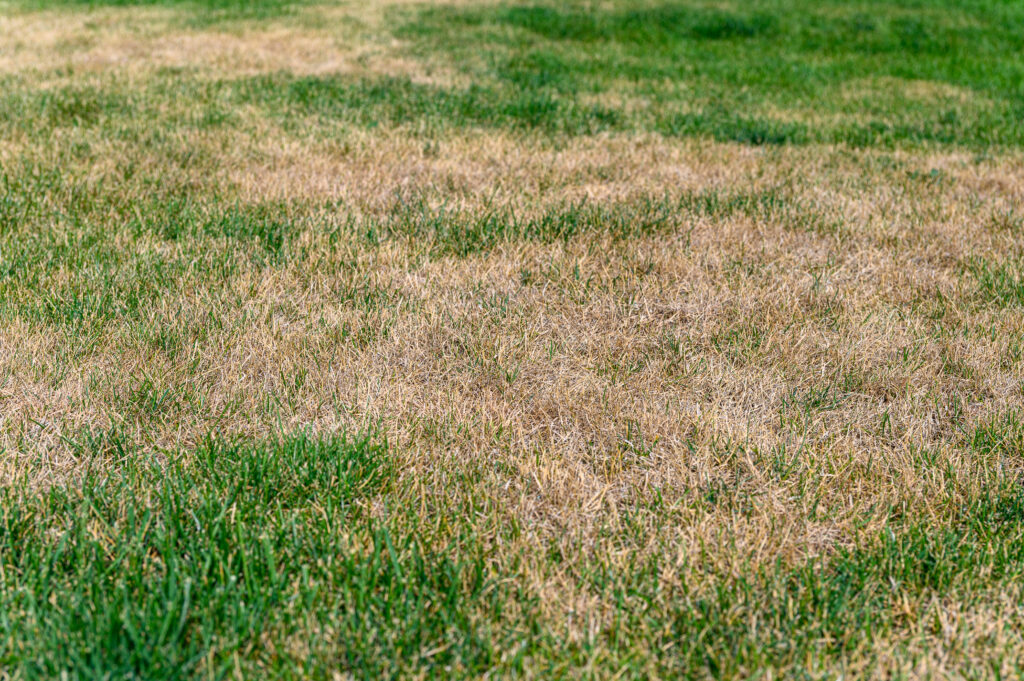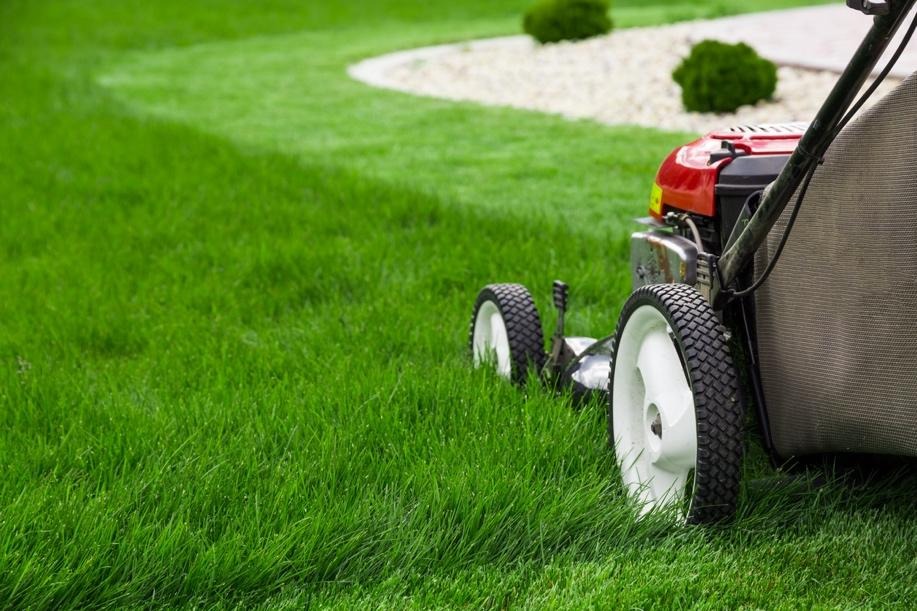

The short answer: Spring lawn prep in Utah County should start in late February or early March, focusing on cleaning up winter debris, applying pre-emergent crabgrass control before soil temperatures reach 55 degrees, and giving your lawn its first feeding of slow-release fertilizer.
Timing is everything for spring lawn prep in Utah. Start too late and you miss the pre-emergent window. Start too early and your treatments will not work properly.
Quick overview:
- Late February to early March: Clean up debris, assess winter damage, apply pre-emergent and fertilizer
- Mid March to April: Begin mowing when grass reaches 3.5 to 4 inches, address broadleaf weeds
- Late April to May: Watch for insect activity, continue weed control, adjust watering schedule
Keep reading to learn the exact steps for preparing your Utah County lawn for a successful growing season.
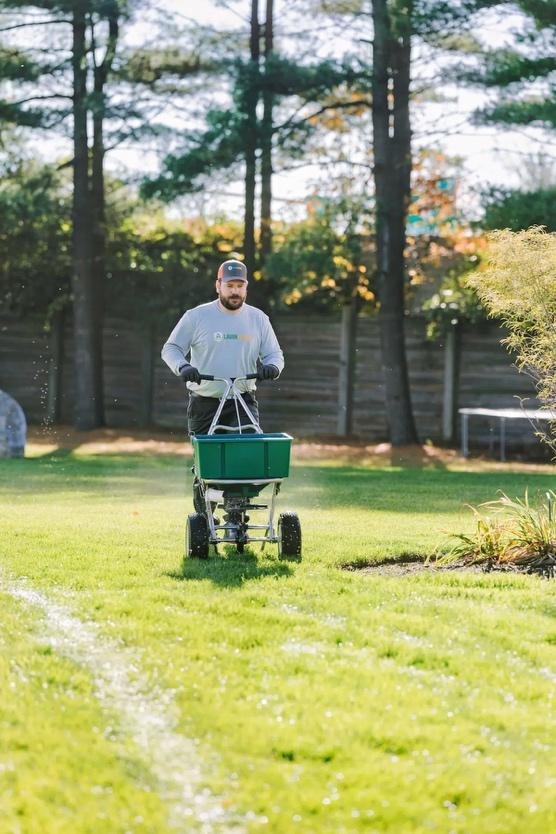
The Complete Spring Prep Approach: Lawn Squad’s First Two Rounds
At Lawn Squad of Utah County, we start the season with two carefully timed rounds of treatment designed specifically for our local growing conditions. Our Round 1 begins in early March, and Round 2 follows in mid-April on a 42-day interval.
This timing is based on decades of experience caring for lawns throughout Utah County. We know when soil temperatures typically reach critical thresholds in Alpine, when crabgrass starts germinating in Orem, and how spring weather patterns affect lawns from Eagle Mountain to Midway.
Whether you handle spring prep yourself or let professionals take care of it, understanding why timing matters will help you get better results this year.
Why Spring Lawn Prep Matters More Than Most Utah County Homeowners Realize
Spring is the most critical time of year for your lawn. What you do in March and April sets the tone for the entire growing season. Get it right and you will enjoy a thick, green lawn all summer. Get it wrong and you will fight problems until fall.
Here is what happens when you skip proper spring prep. Crabgrass seeds that overwintered in your soil germinate and establish before you even notice them. By June, those few seedlings have become thick patches that crowd out your good grass. Once crabgrass is established, it is extremely difficult and expensive to control.
Meanwhile, broadleaf weeds like dandelions emerge from winter dormancy hungry and ready to spread. Every dandelion that goes to seed in April creates hundreds of new weeds throughout your lawn and your neighbors’ lawns.
Your grass is also waking up hungry after winter dormancy. Without proper nutrition, it cannot grow thick enough to crowd out weeds or develop the deep roots it needs to survive summer heat.
Utah County’s spring weather adds extra challenges. We can have 70-degree days in February followed by snowstorms in April. This temperature roller coaster stresses lawns and makes timing tricky. Our alkaline soils also require specific approaches that generic lawn care advice does not address.
Step-by-Step Spring Lawn Prep for Utah County
Step 1: Clean Up Winter Debris (Late February)
Before you do anything else, get your lawn clean. Winter leaves behind debris that smothers grass and creates perfect conditions for disease.
Walk your entire lawn and remove fallen branches, leaves, trash, and any other debris. Pay special attention to areas where snow piled up against fences or buildings. These spots often have matted grass and accumulated debris underneath.
If you see gray or pink patches of matted grass, you may have snow mold. Gently rake these areas to break up the matted grass and improve air circulation. Most snow mold damage recovers on its own once the grass starts growing.
Why it matters: Debris blocks sunlight and traps moisture against your grass. This slows green-up and encourages fungal diseases that thrive in cool, wet conditions.
Step 2: Assess Winter Damage (Late February to Early March)
Take a careful look at your lawn and note any problem areas. Common winter damage in Utah County includes:
Salt damage near sidewalks and driveways where ice melt was applied. These areas may look brown or dead and need extra attention.
Vole damage appearing as raised trails or tunnels running through the grass. Voles stay active under snow all winter, eating grass roots and creating runways.
Crown damage from extreme cold or ice. Grass crowns that freeze and thaw repeatedly may die even though the roots survive.
Compaction in high-traffic areas where snow was piled or foot traffic was concentrated.
Document these areas so you can address them appropriately. Some damage will recover on its own. Other areas may need overseeding or more aggressive repair in fall.
Step 3: Apply Pre-Emergent Crabgrass Control (Early March)
This is the most time-sensitive step of spring lawn prep. Pre-emergent herbicides create a barrier in the soil that prevents crabgrass seeds from germinating. But they only work if you apply them before crabgrass starts growing.
In Utah County, you need to apply pre-emergent when soil temperatures are consistently between 50 and 55 degrees. This typically happens in early March, though exact timing varies by elevation and location. Lawns in Highland and Alpine may need treatment a week or two later than lawns in Provo or Orem due to elevation differences.
Our Round 1 treatment starts in early March specifically to hit this critical window throughout our service area.
Why it matters: Once crabgrass seeds germinate, pre-emergent is useless. You will spend the rest of the summer fighting an enemy that could have been stopped with proper timing.
Critical warning: If you plan to overseed your lawn in spring, do not apply pre-emergent. It will prevent your grass seed from germinating too. For this reason, we generally recommend fall overseeding instead.
Step 4: Apply Slow-Release Fertilizer (Early March)
Your lawn is waking up hungry after months of dormancy. A slow-release fertilizer application in early spring provides steady nutrition as your grass enters its first major growth period.
We use slow-release formulas because they feed your lawn gradually over several weeks. Quick-release fertilizers dump all their nutrients at once, causing a surge of growth followed by a crash. Slow-release products provide more consistent results.
Our Round 1 treatment combines pre-emergent and slow-release fertilizer in a single application. This ensures proper timing for both products while minimizing trips across your lawn.
Why it matters: Properly fed grass grows thick and crowds out weeds naturally. Underfed grass remains thin and allows weeds to establish in the gaps.
Step 5: Get a Soil Test (Early March)
Most Utah County homeowners have never tested their soil, yet it is one of the most valuable things you can do for your lawn. A soil test reveals your soil pH, nutrient levels, and organic matter content.
Utah County soils are typically alkaline with pH levels between 7.5 and 8.5. This high pH can lock up nutrients like iron and phosphorus, making them unavailable to your grass even when they are present in the soil.
Our ELITE program includes a professional soil test as part of Round 1. The results help us customize recommendations for your specific lawn conditions.
Why it matters: Without knowing your soil conditions, you are guessing at solutions. A soil test takes the guesswork out of lawn care.
Step 6: Begin Mowing When Ready (Mid March to April)
Do not rush to mow your lawn in spring. Wait until your grass is actively growing and reaches 3.5 to 4 inches tall before the first cut.
When you do start mowing, follow these guidelines:
Set your mower high. Cut no more than one-third of the grass blade at a time. For Utah County lawns, this means maintaining a height of 3 to 3.5 inches.
Sharpen your blade. Dull mower blades tear grass instead of cutting it cleanly. Torn grass turns brown at the tips and becomes more susceptible to disease.
Leave clippings on the lawn. Grass clippings break down quickly and return nutrients to the soil. This natural recycling reduces your fertilizer needs.
Why it matters: Mowing too early or too short stresses grass that is just waking up. Proper mowing height helps grass develop deep roots and shade out weeds.
Step 7: Address Broadleaf Weeds (April)
By mid-April, broadleaf weeds like dandelions are actively growing and vulnerable to treatment. This is the ideal time to apply post-emergent broadleaf weed control.
Our Round 2 treatment includes broadleaf weed control along with a second pre-emergent application and fertilizer. The second pre-emergent extends crabgrass protection into late spring when the first application begins wearing off.
Why it matters: Killing dandelions before they flower and go to seed prevents hundreds of new weeds from spreading. Spring treatment is more effective than waiting until weeds are mature and stressed by summer heat.
Step 8: Begin Surface Insect Control (April)
Spring is when many lawn insects become active after overwintering. Surface insects like chinch bugs, sod webworms, and billbugs can damage lawns throughout the growing season.
Our Round 2 treatment includes surface insect control to eliminate these pests before they establish large populations. Early control prevents the damage that becomes visible later in summer.
Why it matters: A few insects in April become thousands of insects by July. Early control is easier and more effective than treating a full-blown infestation.
How to Know When Soil Temperature Reaches 55 Degrees
You have probably heard that pre-emergent should go down when soil temperatures reach 55 degrees. But how do you actually measure this?
Step-by-step process:
- Purchase an inexpensive soil thermometer from any garden center
- Insert the probe 2 to 3 inches into the soil in a sunny area of your lawn
- Take readings in the morning for the most accurate measurement
- Check temperatures for several consecutive days
- When readings consistently hit 50 to 55 degrees, it is time for pre-emergent
Alternative method: Watch for forsythia bushes to begin blooming. This is a reliable natural indicator that soil temperatures have reached the right range for pre-emergent application.
In Utah County, this typically happens in early March at lower elevations like Provo and Orem, and mid-March at higher elevations like Alpine and Highland.
What About Spring Aeration?
Many homeowners ask about aerating their lawn in spring. While aeration provides real benefits for compacted soil, spring is not always the best time.
The problem with spring aeration: Aerating in spring creates openings in the soil where weed seeds can germinate. If you have applied pre-emergent to prevent crabgrass, aeration punches holes right through that protective barrier.
When spring aeration makes sense: If your soil is severely compacted and your lawn is struggling to grow, the benefits of aeration may outweigh the downsides. Just understand that you may have more weed pressure as a result.
Our recommendation: Schedule aeration for fall instead. Fall aeration avoids the pre-emergent conflict and coincides with the best time for overseeding. Our ELITE program includes aeration in Rounds 5 and 6 for exactly this reason.
Common Spring Lawn Prep Mistakes Utah County Homeowners Make
After caring for lawns throughout Utah County since 2001, we have seen the same spring mistakes repeated year after year.
Mistake #1: Waiting Too Long to Apply Pre-Emergent By the time most homeowners think about crabgrass, it has already germinated. Pre-emergent must go down before soil hits 55 degrees consistently. In Utah County, that means early March, not April or May.
Mistake #2: Mowing Too Short, Too Soon Eager homeowners often scalp their lawns on the first warm day of spring. This shocks grass that is just emerging from dormancy and removes the energy stored in leaf blades. Wait until grass is actively growing and never cut more than one-third at once.
Mistake #3: Overwatering in Spring Spring rains and snowmelt usually provide adequate moisture for lawns in March and April. Turning on your irrigation system too early wastes water and can encourage fungal diseases. Wait until soil begins drying out between natural precipitation events.
Mistake #4: Fertilizing with the Wrong Product Grabbing whatever fertilizer is on sale at the hardware store often leads to poor results. Spring fertilizer should be slow-release and balanced for early-season growth. High-nitrogen quick-release products cause surge growth that weakens your lawn.
Mistake #5: Ignoring Winter Damage Problem areas from winter do not fix themselves. Salt damage needs to be flushed with water. Vole damage needs to be raked and possibly reseeded. Ignoring these problems allows them to get worse throughout the season.
DIY Spring Prep vs. Professional Programs: Which Should You Choose?
DIY spring prep gives you control over timing and products. If you enjoy lawn care and have time to monitor soil temperatures and apply products correctly, you can achieve good results. However, timing is critical and mistakes are costly. Best for: Homeowners who pay close attention to their lawns, have flexibility to act when conditions are right, and invest in quality products and equipment.
Professional programs like those from Lawn Squad ensure proper timing without the guesswork. We monitor soil temperatures throughout Utah County and begin treatments when conditions are right for each area. Our commercial-grade products and calibrated equipment deliver consistent results. Best for: Busy homeowners who want reliable results, those who have missed the pre-emergent window in past years, or anyone who prefers expert care.
Your Utah County Spring Lawn Prep Calendar at a Glance
Professional Program Schedule (ELITE)
| Round | Timing | Key Services |
|---|---|---|
| Round 1 | Early March | Pre-emergent crabgrass control, slow-release fertilizer, soil test |
| Round 2 | Mid April | Pre-emergent (second application), fertilizer, broadleaf weed control, surface insect control |
DIY Spring Prep Schedule
| When | What to Do | Key Notes |
|---|---|---|
| Late February | Clean up debris | Remove leaves, branches, and winter trash |
| Late February | Assess damage | Document problem areas for treatment |
| Early March | Apply pre-emergent and fertilizer | Before soil reaches 55 degrees |
| Mid March | First mowing | When grass reaches 3.5 to 4 inches |
| Early April | Begin weed control | Target dandelions before they flower |
| Mid April | Second pre-emergent | Extends protection through late spring |
| Late April | Check irrigation system | Repair leaks and adjust heads |
| May | Monitor for insects | Watch for damage patterns |

The Bottom Line
Proper spring lawn prep sets the foundation for a successful growing season in Utah County. The key is timing your treatments to match our local growing conditions, not following generic advice from national sources.
Key principles to remember:
- Pre-emergent timing is critical and cannot be delayed once soil warms up
- Slow-release fertilizer provides better results than quick-release products
- Clean up and damage assessment should happen before treatments begin
- Wait to mow until grass is actively growing and at proper height
- Spring aeration conflicts with pre-emergent and is better scheduled for fall
- Early weed and insect control prevents bigger problems later
Utah County homeowners who follow proper spring prep enjoy thicker lawns, fewer weeds, and less stress throughout the summer months.
Let Lawn Squad Handle It For You
Every Utah County lawn faces different spring challenges. Elevation affects timing. Soil conditions vary from neighborhood to neighborhood. Last year’s care affects this year’s needs.
Our spring program accounts for these variables with trained technicians who know Utah County conditions.
Round 1 and Round 2 include:
- Pre-emergent crabgrass control timed perfectly for your location
- Slow-release fertilizer to fuel spring growth
- Professional soil testing (ELITE program)
- Broadleaf weed control when weeds are most vulnerable
- Surface insect control before pests establish
- Second pre-emergent application to extend protection
- Unlimited service calls if problems arise
Tired of missing the pre-emergent window or guessing at the right timing? Let the professionals handle your spring lawn prep.
Contact Lawn Squad of Utah County today at 385-474-9032 to get a free quote and start the season right.