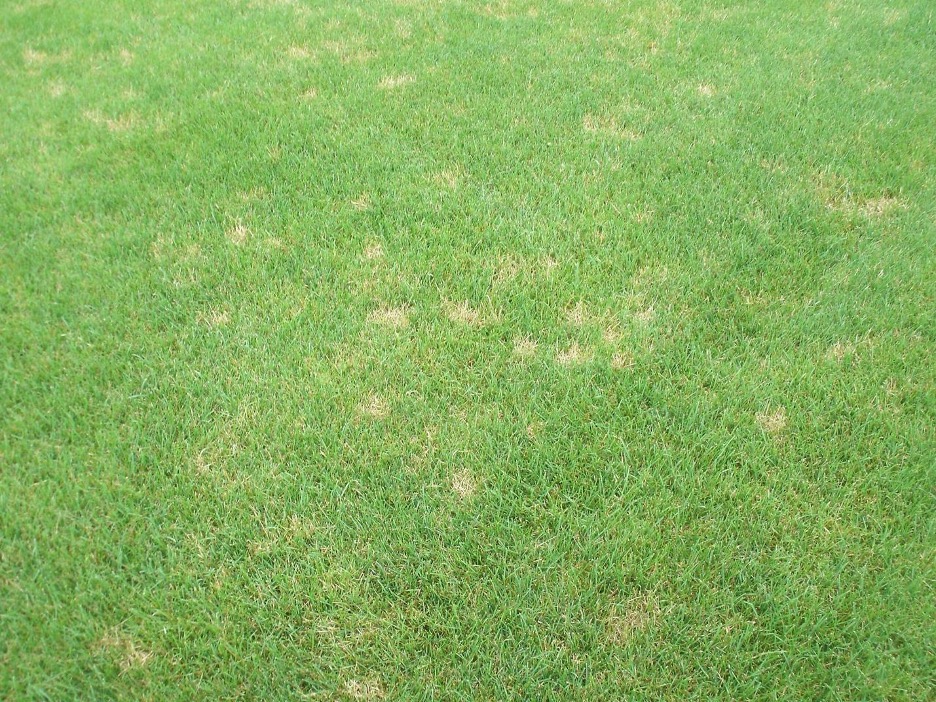
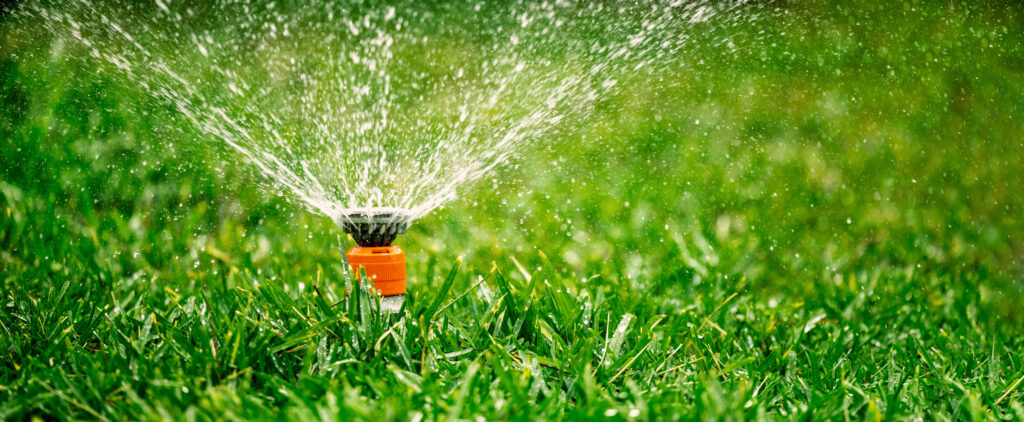
The short answer: You can maintain a beautiful green lawn in Utah County despite our dry climate by watering deeply but less often, choosing the right grass type, and building healthy soil that holds moisture better.
Most Utah County lawns need about 1 to 1.5 inches of water per week during summer. However, a lawn with healthy roots and good soil can get by with less water and still look great.
Quick overview:
- Deep watering: Water less often but for longer periods to encourage deep roots
- Soil health: Healthy soil acts like a sponge and holds water longer
- Proper timing: Water early morning to reduce evaporation
- Smart fertilizing: Well-fed lawns handle drought stress better
Keep reading to learn exactly how to make your lawn thrive while using less water in our unique Utah County climate.

The Complete Water-Wise Approach: Lawn Squad’s 6-Round Program
At Lawn Squad of Utah County, we have designed our lawn care programs specifically for the challenges of our dry climate. Our ELITE program includes six carefully timed rounds of treatment that build soil health, strengthen roots, and help your lawn use water more efficiently.
Our approach works because we understand that a healthy lawn starts below the surface. When your soil is balanced and your grass has deep roots, it can survive dry periods that would turn a neglected lawn brown and crispy.
Whether you decide to care for your lawn yourself or let us handle it, understanding these water-wise principles will help you make smarter choices for your yard.
Why Water-Wise Lawn Care Matters More Than Most Utah County Homeowners Realize
In Utah County, we live in a high desert climate. Our annual rainfall averages only about 15 inches, and most of that comes as winter snow. During summer, we can go weeks without a drop of rain while temperatures climb into the 90s.
This means your lawn faces a double challenge. It needs water to survive, but water costs money and is becoming more scarce. Many Utah County cities have implemented watering restrictions, and water rates keep climbing.
Here is the good news: a properly cared for lawn actually needs less water than you might think. The problem is that most homeowners make mistakes that force them to overwater just to keep their grass alive.
A lawn with shallow roots needs constant watering because those roots cannot reach deeper moisture in the soil. A lawn growing in compacted soil wastes water because it runs off instead of soaking in. A lawn weakened by poor nutrition cannot handle any drought stress at all.
Our Utah County location presents unique challenges. We serve areas from Alpine and Highland down to Provo, and from Eagle Mountain east to Midway. Each of these areas has slightly different soil conditions, but they all share the same dry climate challenge.
Building a Water-Wise Lawn: The Foundation Approach
The secret to a lawn that thrives with less water is building strong foundations. Think of it like building a house. You would not start with the roof. You start with a solid foundation.
Step 1: Test Your Soil
Before you can fix anything, you need to know what you are working with. A soil test tells you the pH level, nutrient content, and organic matter in your soil.
Utah County soils tend to be alkaline, which can lock up nutrients and make them unavailable to your grass. Our soils also often lack organic matter, which means they do not hold water well.
Our ELITE program includes a soil test in the first round so we know exactly what your lawn needs. Without this information, you are just guessing.
Step 2: Aerate Compacted Soil
Utah County soil gets compacted over time from foot traffic, mowing, and just regular use. Compacted soil is like a brick. Water runs off it instead of soaking in, and roots cannot push through it.
Core aeration punches small holes in your lawn, allowing water, air, and nutrients to reach the root zone. It also gives roots room to grow deeper.
We include aeration in our ELITE program during Rounds 5 and 6. Fall aeration is especially important because it prepares your lawn to develop strong roots before winter.
Step 3: Feed Your Lawn Properly
A well-fed lawn develops deeper roots and handles stress better. But timing matters. In Utah County, we need to feed lawns in a way that matches our growing season.
Our programs include six fertilizer applications spread throughout the season on a 42-day interval. This keeps your lawn consistently nourished without the feast-and-famine cycle that stresses grass.
We also include a root stimulant in Round 5 of our ELITE program. This encourages your grass to grow deeper roots before the summer heat hits hardest.
Step 4: Control Weeds Before They Steal Water
Weeds compete with your grass for water and nutrients. A lawn full of weeds needs more water to keep the grass alive because those weeds are stealing moisture.
Pre-emergent treatments in early spring stop weeds like crabgrass before they sprout. Broadleaf weed control throughout the season eliminates dandelions, clover, and other water-stealing invaders.
Critical warning: Many homeowners skip pre-emergent treatments and then wonder why they have crabgrass problems all summer. Once crabgrass is established, it is much harder and more expensive to control.
Smart Watering Practices for Utah County Lawns
Even with a healthy lawn, you still need to water correctly. Here is how to get the most out of every drop.
Water Deeply and Less Often
Shallow, frequent watering creates shallow roots. Your goal should be to wet the soil 4 to 6 inches deep each time you water. This encourages roots to grow down toward that moisture.
Most Utah County lawns need about 1 to 1.5 inches of water per week during peak summer. But instead of watering a little bit every day, water deeply two or three times per week.
Water in the Early Morning
The best time to water is between 4 AM and 10 AM. Morning watering reduces evaporation because temperatures are cooler and winds are calmer. It also allows grass blades to dry before evening, which helps prevent fungal diseases.
Watering in the heat of the day wastes water to evaporation. Watering at night leaves grass wet for hours, creating perfect conditions for disease.
Know Your Soil Type
Sandy soil drains quickly and may need more frequent watering in shorter cycles. Clay soil holds water longer but can also become waterlogged if overwatered.
Most Utah County areas have clay or loam soil. If water pools on your lawn after watering, you may need to split your watering into two shorter cycles with a break in between to let the water soak in.
Adjust for Seasons and Weather
Your lawn needs more water in July than in April. Pay attention to the weather and adjust your irrigation schedule. If it rains, skip a watering cycle.
Many Utah County cities offer rebates for smart irrigation controllers that automatically adjust watering based on weather conditions. These can save significant water and money over time.
How to Measure How Much Water Your Lawn Gets
You have probably heard that lawns need about an inch of water per week. But how do you know if you are applying that much?
Step-by-step process:
- Place several empty tuna cans or similar containers around your lawn
- Run your sprinklers for 15 minutes
- Measure the water depth in each can
- Calculate the average depth
- Multiply by 4 to find your hourly application rate
Example: If you collect 0.25 inches in 15 minutes, your sprinklers apply 1 inch per hour. To apply 0.5 inches of water, you would run your sprinklers for 30 minutes.
Check multiple zones because different sprinkler heads may apply water at different rates.
What About Soil Testing?
Soil testing is one of the most valuable things you can do for your lawn, yet most Utah County homeowners have never done one.
A soil test reveals your soil pH, nutrient levels, and organic matter content. This information tells you exactly what your lawn needs instead of guessing.
Our ELITE program includes a professional soil test as part of Round 1. Based on the results, we can recommend amendments like limestone to adjust pH or specific fertilizers to address deficiencies.
We recommend testing your soil every 2 to 3 years because soil conditions change over time.
Common Water-Wise Lawn Care Mistakes Utah County Homeowners Make
After years of caring for lawns throughout Utah County, we have seen the same mistakes over and over.
Mistake #1: Watering Every Day for Short Periods Daily light watering creates shallow roots that cannot survive drought. Your lawn becomes dependent on constant irrigation and will brown quickly if you miss even one day.
Mistake #2: Ignoring Soil Compaction Compacted soil prevents water from reaching roots. You water and water, but most of it runs off into the gutter. Your lawn stays thirsty no matter how much you irrigate.
Mistake #3: Cutting Grass Too Short Scalping your lawn stresses the grass and exposes soil to the sun, causing it to dry out faster. Keep your mower blade at 3 to 3.5 inches during summer. Taller grass shades the soil and develops deeper roots.
Mistake #4: Fertilizing at the Wrong Time Fertilizing in the heat of summer can burn your lawn. Fertilizing too late in fall does not give roots time to absorb nutrients before winter. Proper timing matters as much as the fertilizer itself.
Mistake #5: Skipping Pre-Emergent Treatments Weeds steal water and nutrients from your grass. Allowing weeds to establish means your lawn needs more water just to compete. Prevention is easier and cheaper than cure.
DIY Lawn Care vs. Professional Programs: Which Should You Choose?
DIY lawn care gives you control over timing and products. You can save money on labor costs and learn more about your lawn. However, it requires time, knowledge, and the right equipment. Mistakes can be costly and hard to fix. Best for: Homeowners who enjoy yard work, have time to research proper techniques, and are willing to invest in quality products and equipment.
Professional programs like those offered by Lawn Squad provide expertise, proper timing, and commercial-grade products. We know Utah County soils and climate conditions. You save time and avoid costly mistakes. Best for: Busy homeowners who want consistent results without the learning curve, or those who have struggled with DIY approaches.
Your Utah County Water-Wise Lawn Care Calendar at a Glance
ELITE Program Schedule
| Round | Timing | Key Services |
|---|---|---|
| Round 1 | March | Pre-emergent, slow-release fertilizer, soil test |
| Round 2 | April | Pre-emergent, fertilizer, weed control, surface insect control |
| Round 3 | Late May | Fertilizer, weed control, grub prevention, disease control |
| Round 4 | July | Fertilizer, weed control, grub prevention, disease control |
| Round 5 | August | Fertilizer, root stimulant, weed control, aeration |
| Round 6 | Late September | Fertilizer, weed control, winterizer, aeration |
DIY Water-Wise Schedule
| When | What to Do | Details |
|---|---|---|
| Early March | Apply pre-emergent | Before soil temps reach 55 degrees |
| April through September | Water deeply 2 to 3 times weekly | 1 to 1.5 inches total per week |
| May | Check for grubs | Treat if present |
| September | Aerate and overseed | Best time for lawn renovation |
| October | Apply winterizer | Final feeding before dormancy |
The Bottom Line
Keeping your lawn green in Utah County’s dry climate is absolutely possible without wasting water. The key is building a healthy foundation through proper soil care, smart fertilization, and correct watering practices.
Key principles to remember:
- Healthy soil holds water better than compacted or depleted soil
- Deep roots reach moisture that shallow roots cannot access
- Watering deeply but less often builds drought tolerance
- Proper timing of fertilizer and weed control keeps your lawn strong
- Prevention of problems is easier than fixing them later
Utah County homeowners who follow these principles enjoy greener lawns while using less water than their neighbors who water constantly but neglect the fundamentals.
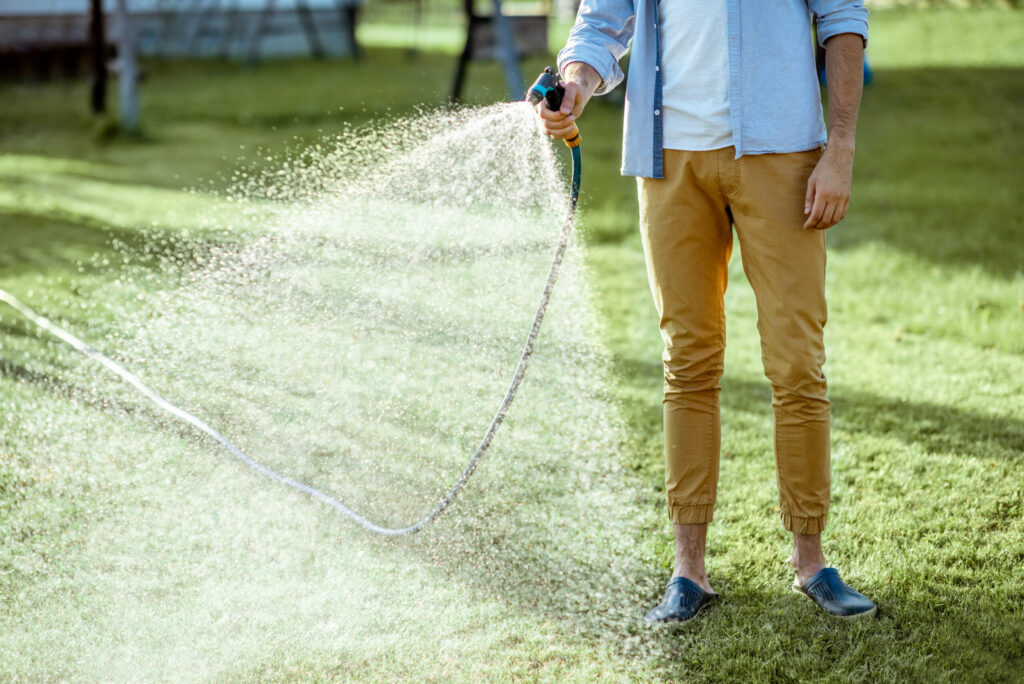
Let Lawn Squad Handle It For You
Every Utah County lawn is different. Soil conditions vary from Alpine to Provo. Lawn sizes range from small townhome yards to multi-acre properties. Your specific challenges depend on sun exposure, irrigation system, grass type, and more.
Our lawn care programs account for all these variables with customized treatments for your specific situation.
ELITE Program includes:
- Professional soil testing to identify your lawn’s specific needs
- Six rounds of perfectly timed treatments throughout the growing season
- Pre-emergent weed control to stop problems before they start
- Grub prevention and surface insect control
- Disease control to protect against Utah County fungal issues
- Fall aeration to reduce compaction and improve water absorption
- Root stimulant to encourage deep, drought-resistant roots
- Winterizer to prepare your lawn for spring green-up
- Unlimited service calls if problems arise between treatments
Tired of brown spots, water bills that keep climbing, and neighbors with greener lawns? We can help.
Contact Lawn Squad of Utah County today at 385-474-9032 to get a free quote and start building a lawn that thrives in our dry climate.