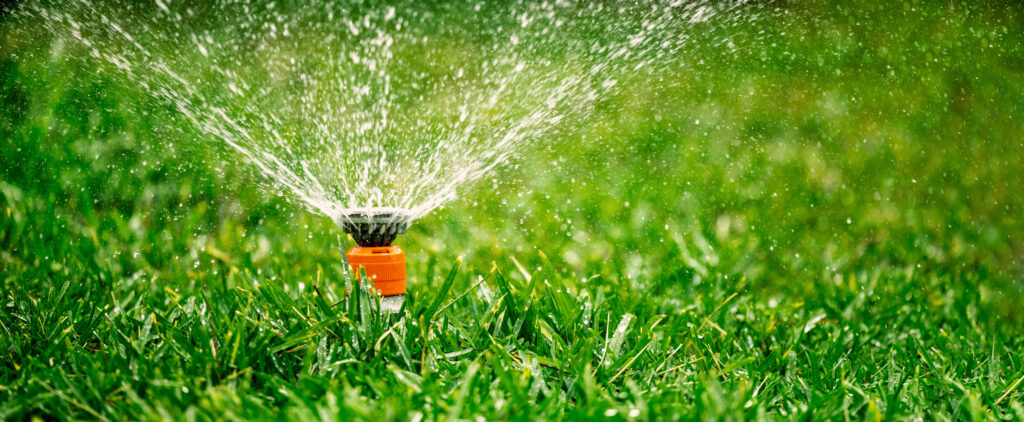

The short answer: San Antonio lawns need about 1 inch of water per week during the growing season, applied in two deep watering sessions early in the morning. The exact amount depends on your grass type, soil conditions, and current weather, but the goal is always the same: water deeply and infrequently to encourage strong root growth.
Here’s what works for most situations:
Quick overview:
- Spring and fall: Water twice per week, delivering about half an inch each time
- Summer heat waves: Increase to 1.5 inches per week during extreme temperatures
- Winter: Reduce to once every two weeks or when grass shows signs of stress
The biggest mistake San Antonio homeowners make is watering too often for too short a time. This creates shallow roots that can’t survive our brutal summers. Keep reading to learn exactly how to water your lawn for the best results in our unique climate.

The Complete Irrigation Approach: Watering That Works With Professional Lawn Care
At Lawn Squad of North San Antonio, we see firsthand how proper watering makes or breaks a lawn care program. You can have the best fertilizer and weed control treatments in the world, but if your irrigation is off, your lawn will struggle.
Our treatment programs are designed around proper watering. When we apply fertilizer, it needs water to activate. When we treat for weeds, the lawn needs to be healthy enough to fill in the bare spots. Every service we provide works better when irrigation is dialed in correctly.
Whether you manage your own sprinkler system or hire a professional, understanding San Antonio’s specific irrigation needs will help you get the most out of your lawn.
Why Irrigation Practices Matter More Than Most San Antonio Homeowners Realize
San Antonio sits in a unique climate zone where water is precious and heat is relentless. We average only 32 inches of rain per year, and most of that falls in spring and fall. Summer can bring weeks without a drop while temperatures stay above 95 degrees.
This creates a real challenge for lawns. Grass needs consistent moisture to stay green and healthy, but San Antonio Water System (SAWS) enforces watering restrictions that limit when and how often you can irrigate. During drought conditions, those restrictions get even tighter.
Here’s what happens when irrigation goes wrong:
Overwatering drowns roots, encourages fungal disease, and wastes money. It also trains grass to develop shallow root systems that collapse during the first water restriction.
Underwatering stresses grass, making it vulnerable to weeds, pests, and disease. A stressed lawn can’t recover from summer heat, and brown patches spread quickly.
Bad timing loses water to evaporation. Watering at noon on a July day means half your water disappears into the air before it reaches the roots.
The good news is that getting irrigation right isn’t complicated. It just requires understanding a few key principles and adjusting for San Antonio’s specific conditions.
Manual Watering Guide for San Antonio Lawns
If you water by hand with a hose or use hose end sprinklers, here’s how to do it effectively.
Step 1: Water Early in the Morning
The best time to water is between 4am and 8am. At this hour, temperatures are cool, wind is calm, and water has time to soak into the soil before the sun gets intense.
Watering in the evening might seem convenient, but it leaves grass wet overnight. This creates perfect conditions for fungal diseases like brown patch and take all root rot, which thrive in our humid climate.
Why this matters: Morning watering can reduce fungal disease risk by up to 80% compared to evening watering.
Step 2: Water Deeply, Not Frequently
Each watering session should deliver about half an inch of water. This takes longer than most people expect, usually 30 to 45 minutes per zone depending on your water pressure and sprinkler type.
Deep watering pushes moisture down into the soil where roots can access it. This encourages roots to grow deeper, which makes grass more drought tolerant and heat resistant.
Why this matters: Grass with deep roots can survive a week without water. Grass with shallow roots starts wilting after two days.
Step 3: Check Your Output
Place five or six empty tuna cans or similar containers around your watering zone. Run your sprinklers for 30 minutes, then measure the water in each can. Average the results to see how much water you’re actually delivering.
If you’re getting a quarter inch in 30 minutes, you need to water for one hour to deliver half an inch per session.
Why this matters: Most people drastically overestimate how much water their sprinklers deliver. Measuring removes the guesswork.
Step 4: Adjust for Soil Type
San Antonio soil varies widely. Some areas have sandy soil that drains fast. Others have heavy clay that absorbs water slowly and holds it longer.
For clay soil (common in much of Bexar County): Water in two shorter cycles with a 30 minute break between them. This prevents runoff and lets water soak in.
For sandy soil: Water in one longer session since sandy soil absorbs water quickly but doesn’t hold it as long.
Critical warning: If you see water running off your lawn onto the sidewalk or street, you’re watering too fast for your soil to absorb. Split your watering into shorter cycles.
Automatic Sprinkler System Guide for San Antonio Lawns
If you have an in ground irrigation system, proper programming makes all the difference.
Step 1: Program for Early Morning
Set your controller to start watering between 4am and 6am. This gives all zones time to complete before the heat of the day.
Most San Antonio sprinkler systems have four to eight zones. If each zone runs for 30 minutes, your system needs three to four hours to complete a full cycle. Plan accordingly.
Step 2: Use Cycle and Soak
Modern controllers have a cycle and soak feature that runs each zone for a shorter time, pauses to let water absorb, then runs again. This is essential for San Antonio’s clay soils.
Example: Instead of running Zone 1 for 30 minutes straight, run it for 10 minutes, wait 30 minutes, then run it for another 10 minutes, wait again, and finish with a final 10 minutes.
Step 3: Adjust Heads for Even Coverage
Walk your property while the system runs and look for these problems:
- Heads spraying onto sidewalks, driveways, or streets (wasted water and potential fines)
- Heads blocked by plants that have grown since installation
- Heads not rotating properly or spraying in the wrong direction
- Dry spots between heads where coverage doesn’t overlap
Why this matters: Uneven coverage creates brown spots that make your whole lawn look bad, even if most of it is getting enough water.
Step 4: Install a Rain Sensor
San Antonio requires rain sensors on all automatic irrigation systems. If yours doesn’t have one, or if it’s not working, you’re potentially breaking city code and definitely wasting water.
A working rain sensor shuts off your system when it rains, preventing overwatering and saving money on your water bill.
Seasonal Programming: Adjust Four Times Per Year
Your sprinkler system shouldn’t run the same schedule year round. San Antonio’s seasons demand different approaches.
Spring (March through May): Two watering days per week, half inch per session. Grass is actively growing and temperatures are moderate.
Summer (June through August): Two watering days per week, but consider increasing run times during heat waves. Watch for signs of stress and adjust as needed within SAWS restrictions.
Fall (September through November): Reduce to two days per week with shorter run times as temperatures cool and rain becomes more frequent.
Winter (December through February): Once every two weeks is usually sufficient. Grass is dormant or semi dormant and needs much less water.
How to Calculate Your Lawn’s Water Needs
Understanding the math behind irrigation helps you make smarter decisions.
Step by step process:
- Determine your lawn’s square footage (length times width for rectangular areas)
- Calculate gallons needed: Square footage times 0.62 equals gallons for 1 inch of water
- Check your water meter before and after watering to see actual usage
Example with real numbers: A 5,000 square foot lawn needs about 3,100 gallons of water to receive 1 inch. If your system delivers 15 gallons per minute across all zones, you need about 3.5 hours of total run time per week.
This calculation helps you understand why deep, infrequent watering is so important. Running your system for 10 minutes every day might feel like you’re watering a lot, but you’re probably delivering less than half the water your lawn actually needs.
What About Drought Conditions and Water Restrictions?
San Antonio Water System enforces year round watering rules that get stricter during droughts. Understanding these rules helps you plan your irrigation strategy.
Year Round Rules:
- No watering between 10am and 8pm from April through October
- No watering on your non designated day (check SAWS for your address)
- Sprinkler systems must have working rain sensors
- No runoff onto sidewalks, streets, or other impervious surfaces
During Drought Restrictions:
- Watering days may be reduced to once per week
- Hand watering with a hose may still be allowed on any day
- Drip irrigation is often exempt from restrictions
Lawn Squad’s treatment programs work within these restrictions. We schedule applications knowing that your lawn may be on limited water, and we adjust our recommendations based on current drought stages.
When restrictions tighten, focus your limited watering on the areas that matter most: the front yard that everyone sees, established trees that take years to replace, and any newly planted grass or sod.
Common Irrigation Mistakes San Antonio Homeowners Make
After decades of caring for lawns in North San Antonio, Boerne, Bulverde, and surrounding areas, we’ve seen every irrigation mistake possible.
Mistake 1: Watering Every Day for 10 Minutes
This is the most common mistake and the most damaging. Daily light watering keeps only the top inch of soil moist. Roots stay shallow because they don’t need to grow deep to find water. When restrictions hit or you go on vacation, those shallow rooted lawns die fast.
Mistake 2: Watering in the Heat of the Day
Watering at noon or early afternoon wastes up to 50% of your water to evaporation. It also risks burning grass because water droplets can magnify sunlight.
Mistake 3: Ignoring Brown Spots
A brown spot in an otherwise green lawn usually means an irrigation problem, not a disease. Before calling for treatment, check if the sprinkler heads in that area are working properly. A clogged or broken head is the most common cause of localized brown patches.
Mistake 4: Never Adjusting the Controller
A sprinkler schedule that works in April will overwater in December and underwater in August. Check your controller at least four times per year and adjust run times for the season.
Mistake 5: Forgetting to Maintain the System
Sprinkler heads get clogged, knocked out of alignment, or damaged by mowers. Valves stick. Controllers lose their programming during power outages. An annual inspection by a professional can catch problems before they kill your grass.
Sprinkler Systems vs. Manual Watering: Which Should You Choose?
Automatic sprinkler systems provide consistent coverage, can be programmed to water at optimal times, and work even when you’re asleep or out of town. They cost more upfront (typically $3,000 to $6,000 for installation) but save time and often deliver better results.
Best for: Homeowners who travel frequently, anyone with a large lawn, people who want set it and forget it convenience.
Manual watering with hoses and portable sprinklers costs much less and gives you direct control. It requires more time and attention, and watering often gets skipped when life gets busy.
Best for: Small lawns, budget conscious homeowners, people who enjoy yard work and have time for regular maintenance.
Many San Antonio homeowners use a hybrid approach: automatic systems for the main lawn and manual watering for beds, trees, and problem areas that need extra attention.
Your San Antonio Irrigation Schedule at a Glance
Growing Season (April through October)
| When | How Often | How Much | Best Time |
|---|---|---|---|
| Spring | Twice per week | Half inch per session | 4am to 8am |
| Summer | Twice per week | Half inch to three quarters inch per session | 4am to 6am |
| Fall | Twice per week | Half inch per session | 4am to 8am |
Dormant Season (November through March)
| When | How Often | How Much | Best Time |
|---|---|---|---|
| Early Winter | Every 10 to 14 days | Quarter inch per session | Morning |
| Late Winter | Every 14 days or as needed | Quarter inch per session | Morning |
Signs Your Lawn Needs Water:
- Grass blades fold in half lengthwise
- Footprints remain visible after walking on grass
- Grass takes on a blue gray color instead of bright green
- Soil feels dry two inches below the surface
Signs You’re Overwatering:
- Squishy or soggy soil
- Mushrooms growing in the lawn
- Persistent fungal disease
- Yellowing grass despite plenty of water
- Increased weed growth, especially nutsedge
The Bottom Line
Proper irrigation is the foundation of a healthy San Antonio lawn. All the fertilizer, weed control, and pest treatments in the world can’t save a lawn that’s being watered wrong.
Key principles to remember:
- Water deeply and infrequently to encourage deep root growth
- Always water in the early morning to reduce disease and evaporation
- Measure your actual water output instead of guessing
- Adjust your schedule four times per year for seasonal changes
- Stay within SAWS watering restrictions to avoid fines and conserve water
Follow these principles and your lawn will be better equipped to handle whatever San Antonio’s climate throws at it.

Let Lawn Squad Handle Your Lawn Care
Watering is only one piece of the puzzle. A truly healthy lawn also needs proper fertilization, weed control, pest management, and disease prevention, all timed to work together.
Our lawn care programs are designed specifically for San Antonio’s challenging climate, including the irrigation realities of living in South Texas.
ELITE Program includes:
- 14 treatments across 13 visits
- Pre emergent weed prevention timed around your watering schedule
- Fertilization that works with proper irrigation
- Surface insect control including fire ant prevention
- Disease control for problems often caused by incorrect watering
- Soil testing to understand your lawn’s specific needs
- Unlimited service calls when you have questions
When your irrigation is on point and your lawn care program is dialed in, you get a lawn that looks great and can handle the worst San Antonio has to offer.
Contact Lawn Squad of North San Antonio today at (210) 919-2420 or visit lawnsquad.com/contact-us to get a free quote and start enjoying a healthier, more beautiful lawn.