
The short answer: Keeping your lawn healthy in North San Antonio’s brutal summer heat comes down to proper watering, smart timing, and choosing the right treatments for each season. Most lawns need about 1 inch of water per week, applied early in the morning, combined with regular fertilization and weed control timed to our specific climate.
Here’s what works best for different situations:
Quick overview:
- DIY approach: Water deeply but less often, mow high, and apply fertilizer every 6 weeks during the growing season
- Professional program: Year round care with 8 scheduled treatments that handle fertilization, weed control, and pest prevention automatically
- Combination approach: Handle mowing and watering yourself while professionals manage the chemical treatments
Whether you’re doing it yourself or hiring help, understanding how South Texas heat affects your lawn will help you make better decisions all year long.
The Complete Lawn Care Approach: Our 8 Round Treatment Program
At Lawn Squad of North San Antonio, we’ve developed a comprehensive lawn care system specifically designed for the challenges of Bexar, Kendall, and Comal county lawns. Our programs run on a 42 day schedule that matches the natural growth cycles of grass in our area.
What makes this approach work is the timing. South Texas lawns face different threats at different times of year. Fire ants wake up in spring. Nutsedge explodes in summer. Fungal diseases thrive when humidity spikes. Our treatment rounds target each problem at the exact time it appears.
Even if you decide to care for your lawn yourself, understanding these seasonal patterns will help you get better results.
Why Lawn Care in South Texas Heat Matters More Than Most Homeowners Realize
The biggest mistake North San Antonio homeowners make is treating their lawn like it’s somewhere else. What works in Dallas doesn’t work here. What your cousin does in Austin won’t work in Boerne or Bulverde.
Here’s why: Our summers regularly hit 100 degrees with weeks of no rain. The soil in much of Bexar County is heavy clay that holds water near the surface when it’s wet but turns rock hard when it dries out. And our growing season never really stops, which means weeds don’t either.
When lawn care goes wrong in our heat, it goes wrong fast. A lawn that misses one watering during a July heat wave can go from green to brown in 48 hours. Fungal diseases can spread across an entire yard in a week if conditions are right. And once weeds like nutsedge get established, they’re almost impossible to remove without professional help.
The good news is that lawns in North San Antonio can look amazing year round. You just have to understand what they need and when they need it.
DIY Lawn Care Guide for North San Antonio
If you’re handling lawn care yourself, here’s what you need to know for each season.
Step 1: Winter and Early Spring (January through February)
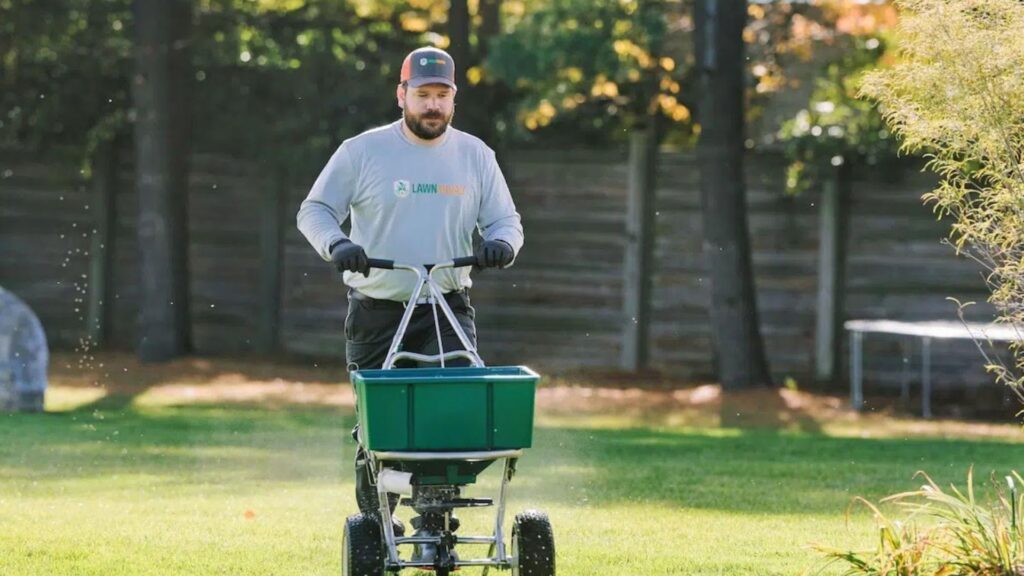
This is when you set up your lawn for the entire year. The most important task is applying pre emergent herbicide before weed seeds germinate.
- Apply pre emergent between January 5 and February 16 when soil temperatures reach 55 degrees
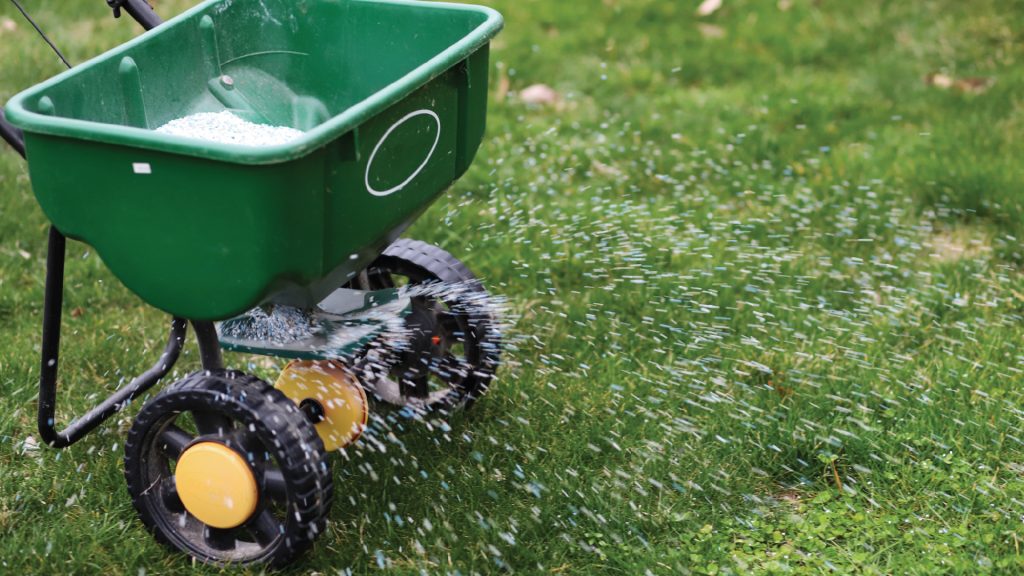
- Use a granular pre emergent and water it in within 24 hours
- Add broadleaf weed control to knock out any winter weeds already growing
- Consider a soil test to check pH and nutrient levels
Why this matters: Pre emergent creates a chemical barrier that stops weed seeds from sprouting. If you miss this window, you’ll fight weeds all summer long.
Step 2: Spring (March through May)
This is when your lawn wakes up and starts growing fast. It’s also when pests become active.
- Apply fertilizer once soil temperatures stay above 65 degrees
- Continue broadleaf weed control as needed
- Start surface insect treatments to prevent fire ants and mole crickets
- Watch for signs of fungal disease, especially in shaded areas
- Begin applying a second round of pre emergent to prevent summer weeds
Why this matters: Spring fertilization gives your grass the nutrients it needs to build a strong root system before summer stress hits.
Step 3: Summer (June through August)
Summer is survival mode for North San Antonio lawns. Your job is to keep grass alive and healthy while fighting heat, drought, and pests.
- Water deeply once or twice per week, delivering about 1 inch total
- Water early morning, between 4am and 8am, to reduce evaporation
- Mow high, keeping grass at 3 to 4 inches
- Apply fertilizer with root stimulant to help grass handle stress
- Treat nutsedge, which thrives in hot weather
- Continue surface insect control
Why this matters: Tall grass shades the soil, keeping roots cooler and reducing water loss. Short grass exposes soil to sun and dries out faster.
Critical warning: Never fertilize a drought stressed lawn. If your grass is brown and crunchy, water it back to green before applying any fertilizer, or you’ll burn the grass.
Step 4: Fall (September through November)
Fall is recovery time. Cooler temperatures and occasional rain help your lawn bounce back from summer.
- Apply pre emergent in September to prevent winter weeds
- Continue fertilization to help grass recover and store energy
- Keep up with broadleaf weed control
- Consider aeration if your soil is compacted
- Reduce watering as temperatures drop
Why this matters: A strong fall sets up your lawn for an easier winter and a faster green up next spring.
Professional Lawn Care Guide for North San Antonio
If you’d rather have experts handle the treatments while you focus on mowing and watering, here’s what a professional program looks like.
Round 1: January
Pre emergent herbicide and broadleaf weed control create the foundation for the year. The ELITE program also includes a soil test at this time.
Round 2: February
A second pre emergent application combined with the first fertilizer of the year and continued weed control.
Round 3: Late March
Fertilizer, weed control, surface insect control, fire ant prevention, and disease control all happen in this critical spring round.
When to Skip: Round 5 in the Essential Program
The Essential program skips Round 5 (late June) to keep costs down. This means less surface insect control and no sedge treatment during peak summer. If nutsedge is a problem on your property, you’ll want to upgrade to PRO or ELITE.
Rounds 6 through 8: August through October
Late summer and fall treatments focus on keeping grass healthy through the last of the heat and preparing it for winter with pre emergent applications.
How to Calculate How Much Water Your Lawn Needs
You’ve heard that lawns need about 1 inch of water per week. But how do you know if you’re actually delivering that much?
Step by step process:
- Place 5 or 6 empty tuna cans or cat food cans around your lawn in different zones
- Run your sprinklers for 30 minutes
- Measure the water in each can with a ruler
- Average the measurements
If the average is half an inch after 30 minutes, you need to water for one hour total each week (split into two 30 minute sessions).
Here’s a practical example: If your cans show 0.4 inches after 30 minutes, you’ll need about 75 minutes of watering per week to hit 1 inch. Split that into two sessions of roughly 38 minutes each.
What About Aeration?
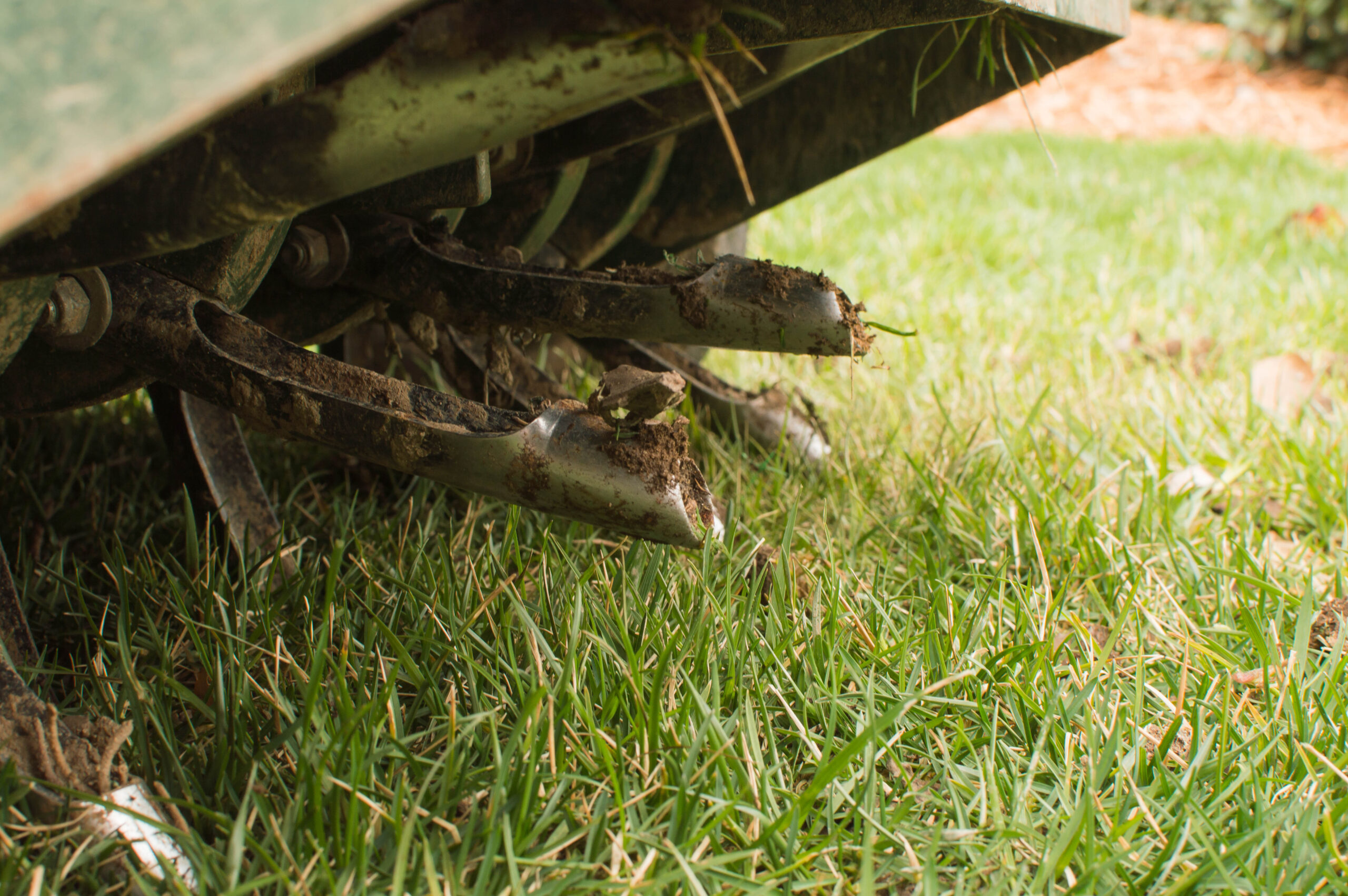
Aeration punches small holes in your lawn, allowing water, air, and nutrients to reach the roots more easily. It’s especially important for North San Antonio lawns because our clay soil compacts easily.
Core aeration removes small plugs of soil. Liquid aeration uses a chemical solution to break up compacted soil without the mess of plugs on your lawn.
Lawn Squad includes aeration in Rounds 4, 5, and 6 of the ELITE program because summer is when compacted soil hurts your lawn the most. Hot weather plus hard soil equals shallow roots that can’t find water.
We recommend aeration at least once per year for most North San Antonio lawns, and twice per year if your soil is especially dense or you have heavy foot traffic.
Common Lawn Care Mistakes North San Antonio Homeowners Make
After serving the North San Antonio area since 2001, we’ve seen every mistake in the book. Here are the ones that cause the most damage.
Mistake 1: Watering Every Day for Short Periods
Daily light watering trains grass roots to stay near the surface. When heat hits, those shallow roots can’t find moisture. Deep, infrequent watering encourages roots to grow down where soil stays cooler and moister.
Mistake 2: Mowing Too Short
Cutting grass below 3 inches exposes soil to sun, raises soil temperature, and increases water loss. It also stresses the grass plant. Tall grass is healthier grass in South Texas.
Mistake 3: Missing the Pre Emergent Window
Once weed seeds germinate, pre emergent won’t help. You have to apply it before soil temperatures trigger sprouting. In North San Antonio, that means January for spring weeds and September for winter weeds.
Mistake 4: Fertilizing During Drought Stress
Fertilizer is salt. Applying it to a stressed lawn is like pouring salt in a wound. Always make sure your lawn is healthy and hydrated before fertilizing.
Mistake 5: Ignoring Fungal Disease
Fungal infections spread fast in our humid summers. Brown patches, circles of dead grass, or grass that pulls up easily are all warning signs. Early treatment prevents small problems from becoming lawn wide disasters.
DIY vs. Professional Lawn Care: Which Should You Choose?
DIY lawn care saves money upfront and gives you complete control over what goes on your lawn. It requires buying equipment, storing chemicals safely, learning application techniques, and staying on schedule throughout the year.
Best for: Homeowners who enjoy yard work, have time for regular maintenance, and want to learn about lawn science.
Professional lawn care costs more but eliminates the guesswork. Trained technicians handle timing, product selection, and application rates. You get the right treatment at the right time without buying equipment or storing chemicals.
Best for: Busy homeowners, people who want guaranteed results, and anyone dealing with persistent lawn problems they can’t solve on their own.
Your North San Antonio Lawn Care Calendar at a Glance
ELITE Program (14 Treatments)
| When | What Happens | Key Services |
|---|---|---|
| January | Round 1 | Pre emergent, weed control, soil test |
| February | Round 2 | Pre emergent, fertilizer, weed control |
| Late March | Round 3 | Fertilizer, insect control, fire ant prevention, disease control |
| May | Round 4 | Fertilizer, insect control, sedge control, aeration, disease control |
| Late June | Round 5 | Fertilizer, root stimulant, insect control, sedge control, aeration |
| August | Round 6 | Fertilizer, insect control, sedge control, disease control, aeration |
| September | Round 7 | Pre emergent, fertilizer, insect control, disease control |
| Late October | Round 8 | Pre emergent, weed control |
ESSENTIAL Program (6 Treatments)
| When | What Happens | Key Services |
|---|---|---|
| January | Round 1 | Pre emergent, weed control |
| February | Round 2 | Pre emergent, fertilizer, weed control |
| Late March | Round 3 | Fertilizer, weed control |
| May | Round 4 | Fertilizer, weed control |
| September | Round 7 | Pre emergent, fertilizer, weed control |
The Bottom Line
Lawn care in North San Antonio’s heat isn’t complicated, but it does require understanding our unique climate and timing your treatments correctly.
Key principles to remember:
- Apply pre emergent in January and September before weeds germinate
- Water deeply but infrequently to encourage deep root growth
- Mow high, at least 3 inches, to shade soil and reduce stress
- Never fertilize a drought stressed lawn
- Address fungal disease and pest problems quickly before they spread
Follow these principles and your lawn can thrive even through our toughest summers.

Let Lawn Squad Handle It For You
Every lawn in North San Antonio is different. Soil type, sun exposure, grass variety, shade patterns, and irrigation systems all affect what your lawn needs.
Our programs account for all of these factors with treatments specifically timed for Bexar, Kendall, and Comal county conditions.
ELITE Program includes:
- 14 treatments across 13 visits
- Pre emergent weed prevention (4 applications)
- Fertilization tailored to each season (6 applications)
- Broadleaf weed control (8 applications)
- Surface insect control including fire ant prevention
- Disease control and sedge suppression
- Summer aeration and soil testing
- Unlimited service calls
If you’re tired of guessing what your lawn needs, fighting weeds that keep coming back, or watching your grass struggle through summer, we can help.
Contact Lawn Squad of North San Antonio today at (210) 919-2420 or visit lawnsquad.com/contact-us to get a free quote and start enjoying a healthier lawn.