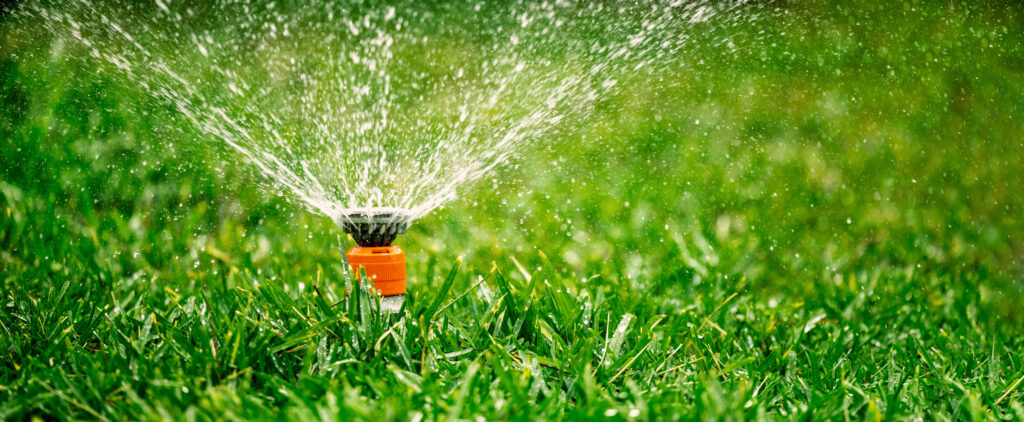

The short answer: Most Myrtle Beach lawns need about 1 to 1.5 inches of water per week during summer, including rainfall. Water deeply two to three times per week rather than lightly every day, and always water in the early morning between 4 AM and 10 AM to reduce disease risk.
The humid coastal climate along the Grand Strand creates unique watering challenges. Too little water stresses your grass, but too much water promotes fungal disease and wastes money.
Quick overview:
- How much: 1 to 1.5 inches per week total (irrigation plus rainfall)
- How often: 2 to 3 deep watering sessions per week
- When: Early morning, finishing before 10 AM
- How long: 20 to 40 minutes per zone depending on your sprinkler output
Getting watering right during Myrtle Beach summers can mean the difference between a green lawn and a brown, diseased mess. Let’s break down exactly what your lawn needs.
The Complete Lawn Care Approach: Our Year Round Program System
At Lawn Squad of Myrtle Beach, proper watering is something we discuss with every customer. The best fertilization and weed control programs in the world won’t save a lawn that’s watered incorrectly.
Our treatment programs for Horry, Georgetown, and Williamsburg counties are designed to work with proper irrigation. When we apply fertilizer, your lawn needs adequate water to absorb nutrients. When we apply pre-emergent herbicides, water activates the product. When summer disease pressure increases, proper watering habits help prevent the fungal problems we treat.
Understanding how to water correctly supports everything else you do for your lawn, whether you handle care yourself or let us manage it.
Why Proper Watering Matters More Than Most Myrtle Beach Homeowners Realize
Many homeowners think watering is simple: if the lawn looks dry, turn on the sprinklers. But incorrect watering causes more lawn problems in the Myrtle Beach area than almost any other factor.
Here’s what happens when you water wrong: Watering lightly every day encourages grass roots to stay near the surface where water is available. Shallow roots make your lawn less drought tolerant and more susceptible to heat stress. When a really hot week hits, those shallow rooted lawns turn brown first.
Watering in the evening creates a different problem. Grass blades stay wet overnight, creating perfect conditions for fungal diseases like brown patch and dollar spot. These diseases thrive in the warm, humid conditions we experience from June through September. A lawn that looked healthy on Monday can have large brown patches by Friday if disease takes hold.
Overwatering wastes water and money, but it also damages your lawn. Constantly wet soil suffocates grass roots, promotes shallow root growth, and encourages fungal problems. Your grass might look green for a while, but it’s actually getting weaker and more disease prone.
The Myrtle Beach climate adds complexity. Our humidity is high even when it hasn’t rained, which means grass doesn’t dry out as quickly as it would inland. Afternoon thunderstorms are common but unpredictable. Sandy soils drain quickly, which is good for preventing waterlogging but means water doesn’t stay in the root zone as long.
This is why generic watering advice often fails here. A lawn in Charlotte or Columbia has different needs than a lawn in North Myrtle Beach or Pawleys Island.
Deep Watering Guide for Myrtle Beach Lawns
The goal of summer watering is to encourage deep root growth while keeping grass blades dry as much as possible. Here’s how to do it.
Principle 1: Water Deeply and Infrequently
Your lawn should receive 1 to 1.5 inches of water per week during hot summer months. But how you deliver that water matters as much as how much you apply.
What to do: Divide your weekly water needs into two or three sessions. If your lawn needs 1 inch per week and you water twice, apply half an inch each time. If you water three times, apply about a third of an inch each session.
Why this works: Deep watering forces grass roots to grow downward searching for moisture. A root system that extends 6 inches into the soil can access water that shallow roots can’t reach. This makes your lawn more resilient during dry spells and reduces overall water needs.
How deep should water penetrate: Aim for moisture reaching 4 to 6 inches into the soil. You can check this by pushing a screwdriver into the ground after watering. It should slide easily into moist soil and stop when it hits dry soil.
Principle 2: Water in the Early Morning
Timing your irrigation correctly is just as important as the amount you apply.
What to do: Set your irrigation system to run between 4 AM and 10 AM. The ideal window is around sunrise, typically 6 AM to 7 AM during Myrtle Beach summers.
Why this works: Early morning watering allows grass blades to dry quickly once the sun comes up. Water droplets sitting on grass blades for extended periods create ideal conditions for fungal disease. Morning watering also reduces evaporation compared to midday watering, so more water reaches the roots.
What to avoid: Evening watering is the worst choice because grass stays wet all night. Midday watering loses significant water to evaporation, especially during hot Myrtle Beach afternoons when temperatures reach the 90s.
Principle 3: Adjust for Rainfall
Myrtle Beach receives an average of 5 to 6 inches of rain during summer months, but distribution is unpredictable. A week might bring 3 inches of rain from afternoon thunderstorms, or no rain at all.
What to do: Install a rain gauge or check local weather data to track rainfall. Reduce or skip irrigation after significant rain. Increase irrigation during dry stretches.
A simple rule: If your lawn received half an inch or more of rain in the past two days, you can skip that irrigation session. If you’re in a dry spell with no rain for a week, you may need to increase watering slightly.
Smart irrigation controllers with rain sensors handle this automatically. They skip scheduled watering when soil moisture is adequate and resume when the lawn needs water. This technology pays for itself through water savings within a few seasons.
Principle 4: Know Your Soil Type
Sandy soils common in the Myrtle Beach area drain quickly, which affects watering strategy.
What this means: Water moves through sandy soil faster than through clay. You may need to water more frequently but for shorter durations to prevent water from draining past the root zone before grass can absorb it.
For sandy soils: Consider watering three times per week for shorter periods rather than twice per week for longer periods. This keeps moisture in the root zone without wasting water to deep drainage.
Critical warning: Avoid the temptation to water daily just because sandy soil drains fast. Daily light watering still promotes shallow roots. Instead, water every other day or every third day, applying enough to wet the soil 4 to 6 inches deep.
Lawn Squad’s summer treatments include recommendations for watering based on your specific property conditions. Soil type, sun exposure, and grass variety all affect optimal watering schedules.
How to Calculate Your Sprinkler System Output
Knowing how much water your system applies helps you set accurate run times.
Step by step process:
- Place 5 to 6 straight sided containers (like tuna cans) around your lawn in different zones
- Run your sprinklers for exactly 15 minutes
- Measure the water depth in each container using a ruler
- Average the measurements and multiply by 4 to get your hourly output
For example, if your containers collected an average of 0.25 inches in 15 minutes, your system applies 1 inch per hour. To apply half an inch per watering session, run your system for 30 minutes.
Most residential sprinkler systems apply between 0.5 and 1.5 inches per hour depending on the type of sprinkler heads and water pressure. Knowing your specific output prevents both under watering and over watering.
Repeat this test for each zone, as different sprinkler heads and water pressure variations can change output across your system.
What About Drought Stress and Water Restrictions?
Myrtle Beach occasionally implements water restrictions during extended dry periods. Knowing how to maintain your lawn with limited water helps you survive these situations.
Signs of drought stress: Grass blades fold or curl inward to reduce surface area. Footprints remain visible for extended periods after walking on the lawn. Color shifts from green to blue gray before eventually turning brown.
When restrictions limit watering: Focus available water on the most visible areas of your lawn. Prioritize the front yard over the backyard if you must choose. Raise your mowing height to reduce stress on grass plants. Avoid fertilization during drought because it pushes growth the lawn can’t support.
Dormancy is okay: Warm season grasses common in Myrtle Beach (St. Augustine, Bermuda, Zoysia) can survive extended drought by going dormant. The grass turns brown but the roots and crown remain alive. When water returns, the lawn greens up again.
Don’t try to prevent dormancy with limited water: Applying small amounts of water during severe drought actually hurts more than it helps. The grass stays partially active, using energy reserves without enough water to fully recover. Either water adequately or let the lawn go dormant.
Lawn Squad’s summer programs account for drought conditions. During extended dry periods, we adjust treatment timing and may recommend skipping certain applications until conditions improve.
Disease Prevention Through Proper Watering
Fungal diseases are a constant threat during Myrtle Beach summers. Proper watering is your first line of defense.
Brown Patch
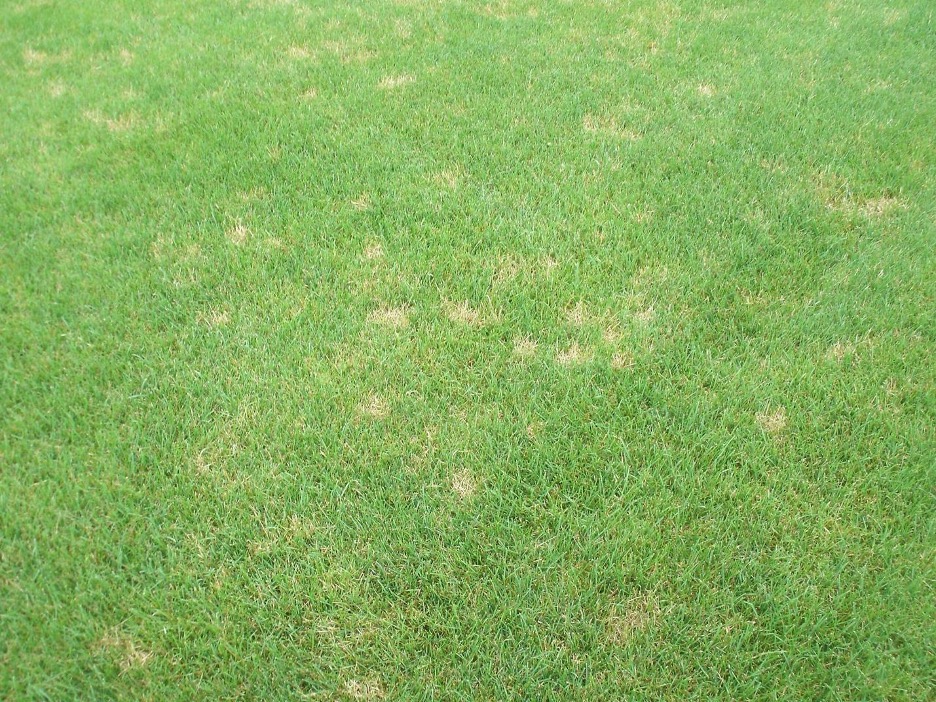
Brown patch creates circular brown areas that can grow to several feet in diameter. It’s most active when nighttime temperatures stay above 68 degrees and humidity is high.
Watering connection: Grass that stays wet overnight is much more likely to develop brown patch. Early morning watering that allows grass to dry by mid morning dramatically reduces infection risk.
Dollar Spot
Dollar spot creates small tan spots roughly the size of a silver dollar that can merge into larger damaged areas. It’s common when lawns are under watered and under fertilized.
Watering connection: Proper deep watering actually helps prevent dollar spot by reducing plant stress. Drought stressed lawns are more susceptible to infection.
Gray Leaf Spot
Gray leaf spot primarily affects St. Augustine grass, causing gray spots on leaf blades that eventually kill affected tissue. It spreads rapidly in warm, wet conditions.
Watering connection: Avoid evening watering on St. Augustine lawns entirely. Even during dry periods, water early enough that blades dry by afternoon.
Important note: If your lawn develops disease despite proper watering, fungicide treatment may be necessary. Lawn Squad’s ELITE program includes disease control treatments in Rounds 2, 4, 6, and 7, timed to prevent and treat common summer fungal problems.
Common Summer Watering Mistakes Myrtle Beach Homeowners Make
After treating lawns across Conway, Little River, Georgetown, and throughout the Grand Strand since 2001, we’ve seen these watering mistakes repeatedly.
Mistake #1: Watering Every Day for Short Periods Daily light watering creates shallow roots and promotes disease. Two or three deep watering sessions per week produce healthier lawns than seven light sessions.
Mistake #2: Watering in the Evening Evening watering leaves grass wet all night, creating ideal conditions for fungal disease. Always water in early morning.
Mistake #3: Ignoring Rainfall Running your irrigation system after an inch of rain wastes water and oversaturates your soil. Adjust your schedule based on actual rainfall.
Mistake #4: Setting It and Forgetting It A watering schedule that works in June may not work in August. Summer conditions change, and your irrigation should change with them.
Mistake #5: Watering the Lawn, Street, and Sidewalk Equally Misaligned sprinkler heads waste water and can leave parts of your lawn under watered while flooding others. Check your system regularly and adjust heads as needed.
Morning Watering vs. Midday Watering: Which Should You Choose?
Morning watering (4 AM to 10 AM) is the best choice for Myrtle Beach lawns. Grass blades dry quickly once the sun rises, reducing disease risk. Cooler morning temperatures mean less evaporation. Wind is typically calmer, allowing for more even coverage. Best for: All Myrtle Beach lawns, all grass types, all summer conditions.
Midday watering (10 AM to 4 PM) loses significant water to evaporation during hot summer days. When temperatures reach 90 degrees and above, up to 30% of applied water can evaporate before reaching roots. However, midday watering is still better than evening watering if morning watering isn’t possible. Best for: Emergency situations only, such as showing obvious drought stress that can’t wait until morning.
Evening watering (4 PM to 10 PM) should be avoided entirely during Myrtle Beach summers. The disease risk simply isn’t worth any convenience gained. If your schedule only allows evening irrigation, consider installing a smart controller that can run early morning cycles without manual intervention.
Your Summer Watering Guide at a Glance
Weekly Watering Targets by Grass Type
| Grass Type | Weekly Water Need | Drought Tolerance | Notes |
|---|---|---|---|
| St. Augustinegrass | 1 to 1.5 inches | Moderate | Reduce during disease pressure |
| Bermudagrass | 1 to 1.25 inches | High | Can tolerate some drought |
| Zoysiagrass | 0.75 to 1 inch | High | Most drought tolerant option |
| Centipedegrass | 1 to 1.25 inches | Moderate | Sensitive to overwatering |
Watering Schedule Recommendations
| Condition | Frequency | Amount per Session | Total Weekly |
|---|---|---|---|
| Normal summer | 2 to 3 times | 0.4 to 0.5 inches | 1 to 1.5 inches |
| Hot and dry spell | 3 times | 0.4 to 0.5 inches | 1.2 to 1.5 inches |
| After significant rain | Skip 1 to 2 sessions | Adjust as needed | Account for rainfall |
| Water restrictions | Follow local guidelines | Prioritize front lawn | Let backyard go dormant if needed |
Signs Your Watering Needs Adjustment
| Symptom | Likely Cause | Solution |
|---|---|---|
| Grass turning blue gray | Under watering | Increase frequency or duration |
| Footprints remain visible | Under watering | Increase water immediately |
| Brown circular patches | Fungal disease from overwatering | Reduce water, improve timing |
| Mushrooms appearing | Overwatering or poor drainage | Reduce water, check drainage |
| Spongy or mushy soil | Overwatering | Reduce water significantly |
The Bottom Line
Proper summer watering in Myrtle Beach means applying 1 to 1.5 inches of water per week in two to three deep sessions, always in the early morning hours. This approach encourages deep root growth, reduces disease pressure, and uses water efficiently.
Key principles to remember:
- Water deeply two to three times per week, not lightly every day
- Always water between 4 AM and 10 AM to allow grass blades to dry
- Sandy soils may need more frequent, shorter watering sessions
- Adjust your schedule based on rainfall; don’t water on autopilot
- Disease prevention starts with proper watering timing
Follow these principles consistently, and your lawn will handle Myrtle Beach summer heat and humidity without turning brown or developing disease.
Let Lawn Squad Handle Your Lawn Care
Watering is just one piece of the puzzle for a healthy summer lawn. Proper fertilization, disease prevention, insect control, and weed management all work together with correct irrigation to keep your grass green and thriving.
Lawn Squad of Myrtle Beach has helped homeowners across Horry, Georgetown, and Williamsburg counties maintain beautiful lawns through hot, humid summers since 2001. We understand how our coastal climate affects lawn health and adjust our treatments accordingly.
Our summer lawn care includes:
- Fertilization timed to support summer growth without promoting disease
- Disease control treatments during peak fungal pressure months
- Surface insect control for chinch bugs, sod webworms, and other summer pests
- Sedge and weed control throughout the growing season
- Expert advice on watering schedules specific to your property
- Unlimited service calls if problems develop between visits
Struggling to keep your lawn green through Myrtle Beach summers? Dealing with brown patches despite regular watering? Not sure if your irrigation schedule is right for your grass type?
Contact Lawn Squad of Myrtle Beach today at (843) 896-0806 or visit lawnsquad.com/contact-us to get a free quote and learn how we can help your lawn thrive through summer and beyond.