The short answer: The best weed control strategy for Myrtle Beach lawns combines pre-emergent herbicides applied before weeds sprout with post-emergent treatments for any weeds that break through. Timing is everything. Apply pre-emergent in late January before soil temperatures reach 55 degrees, then follow up with broadleaf weed control throughout the growing season.
Different weeds require different approaches, and the humid coastal climate along the Grand Strand creates weed pressure that inland areas don’t face.
Quick overview:
- Crabgrass and annual grasses: Prevent with pre-emergent in late winter and early fall
- Broadleaf weeds (clover, dandelions): Treat with post-emergent herbicides year round
- Nutsedge: Requires specialized sedge herbicides during summer months
- Dallisgrass and goosegrass: Difficult to control; may require targeted treatments
Whether you tackle weed control yourself or hire a professional, understanding what weeds you’re fighting and when to treat them will save you time, money, and frustration.
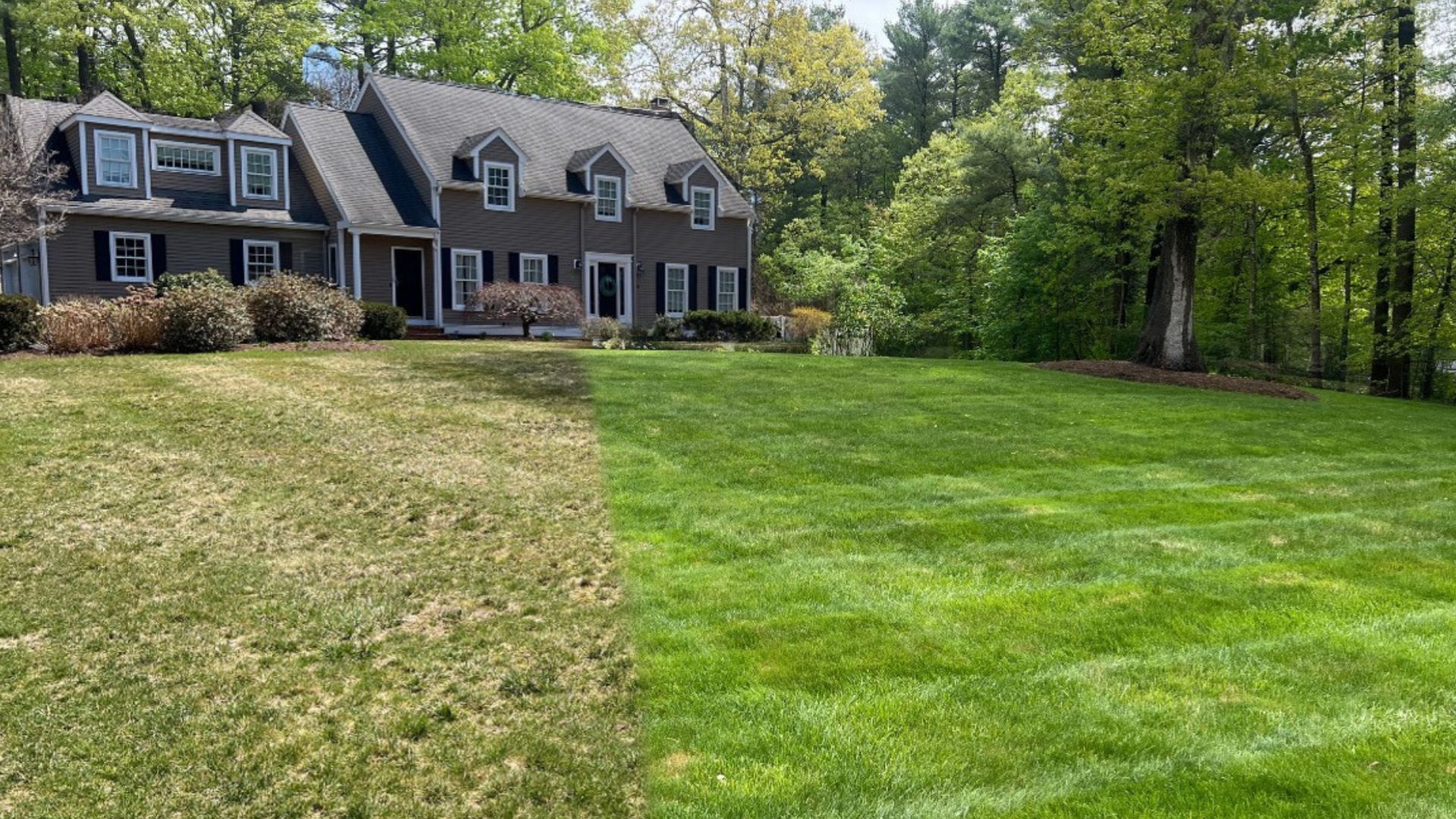
The Complete Weed Control Approach: Our 8 Round Program System
At Lawn Squad of Myrtle Beach, we include broadleaf weed control in every round of our treatment programs. That means your lawn gets weed treatment 6 to 8 times per year depending on which program you choose.
Why so many treatments? Because different weeds emerge at different times, and no single application eliminates everything. Crabgrass germinates in spring. Nutsedge explodes in summer. Winter weeds like henbit and chickweed show up in fall and early spring. A year round approach catches them all.
Our programs also include multiple pre-emergent applications because the sandy soils common in Horry, Georgetown, and Williamsburg counties don’t hold herbicides as long as clay soils do. What works with two applications in the Upstate might need three or four applications here.
Understanding weed biology helps you time treatments correctly, whether you do it yourself or let us handle it.
Why Weed Control Matters More Than Most Myrtle Beach Homeowners Realize
Many homeowners think of weeds as a cosmetic problem. The lawn looks messy, so they spray something from the hardware store and move on. But weeds cause real damage that goes beyond appearance.
Here’s what’s actually happening: Weeds compete with your grass for water, nutrients, and sunlight. A single crabgrass plant can produce 150,000 seeds in one season. Those seeds sit in your soil waiting to germinate next year, making the problem worse over time. What starts as a few weeds becomes a lawn full of weeds within two or three seasons if left unchecked.
Weeds also indicate underlying problems. Thin turf, compacted soil, improper mowing height, and overwatering all encourage weed growth. If you’re constantly fighting weeds despite regular treatments, something else in your lawn care routine needs attention.
The Myrtle Beach climate creates specific challenges. Our mild winters mean many weeds stay active year round instead of dying back. High humidity promotes rapid weed growth. Sandy soils drain quickly, which can wash away herbicides before they finish working.
This is why a one size fits all approach from generic lawn care guides often fails for coastal South Carolina properties. Your Myrtle Beach lawn needs treatments timed for our specific growing conditions.
Pre-Emergent Weed Control Guide for Myrtle Beach Lawns
Pre-emergent herbicides are the foundation of effective weed control. They create a barrier in the top layer of soil that prevents weed seeds from germinating successfully.
Application 1: Late Winter (January through February)
This is the most important pre-emergent application of the year. It targets crabgrass, goosegrass, and other summer annual weeds before they sprout.
What to use: Products containing prodiamine, pendimethalin, or dithiopyr work well for Myrtle Beach lawns. Granular formulations are easier for homeowners to apply; liquid formulations provide more even coverage.
When to apply: Timing depends on soil temperature, not calendar date. Apply when soil temperatures at a 4 inch depth reach 50 degrees and before they hit 55 degrees consistently. In the Myrtle Beach area, this typically happens between mid January and mid February.
Why this matters: Pre-emergent must be in place before weed seeds germinate. Once you see crabgrass plants, pre-emergent won’t help. You’ve missed the window and will need post-emergent treatments instead.
Water in the application: Pre-emergent needs about half an inch of water to activate. If rain isn’t expected within 48 hours, run your irrigation system after applying.
Application 2: Early Spring (March)
A second pre-emergent application extends your protection through spring. The sandy soils along the Grand Strand don’t hold herbicides as long as heavier soils, so this second application prevents gaps in coverage.
This application also catches any late germinating crabgrass and provides control for goosegrass, which germinates slightly later than crabgrass.
Application 3: Late Summer (August)
Fall pre-emergent targets winter annual weeds like poa annua (annual bluegrass), henbit, and chickweed. These weeds germinate when temperatures cool in fall, grow through winter, and become eyesores by early spring.
Apply in August before soil temperatures drop below 70 degrees. This timing catches winter weeds before they sprout while summer weeds are finishing their life cycle.
Application 4: Early Fall (September through October)
A fourth pre-emergent application extends winter weed protection and catches any late germinating cool season weeds.
Critical warning: If you plan to overseed your lawn in fall, do not apply pre-emergent. Pre-emergent prevents all seeds from germinating, including the grass seed you’re trying to establish. You’ll need to skip this application and accept some weed pressure in exchange for thickening your turf.
Lawn Squad’s ELITE and PRO programs include four pre-emergent applications timed specifically for the Myrtle Beach area growing season.
Post-Emergent Weed Control Guide for Myrtle Beach Lawns
Post-emergent herbicides kill weeds that have already sprouted. They’re your second line of defense when pre-emergent doesn’t catch everything.
Broadleaf Weed Control
Broadleaf weeds include clover, dandelions, dollarweed, chickweed, henbit, and dozens of other common lawn invaders. They’re called broadleaf because their leaves are wide and flat, unlike the narrow blades of grass.
What to use: Products containing 2,4-D, dicamba, and MCPP (often sold as “three way” herbicides) control most broadleaf weeds. For tough weeds like dollarweed, products containing triclopyr provide better results.
When to apply: Broadleaf herbicides work best when weeds are actively growing. In the Myrtle Beach area, this means you can treat most of the year except during extreme summer heat. Avoid applications when temperatures exceed 85 degrees, as the herbicide can damage your grass.
How to apply: Spot treating individual weeds uses less product and reduces stress on your lawn. Broadcast applications (treating the entire lawn) make sense when weeds are widespread.
Expect results in 7 to 14 days: Broadleaf herbicides work slowly. Weeds will curl, yellow, and eventually die over one to two weeks. Don’t reapply too quickly thinking the first treatment didn’t work.
Nutsedge Control
Nutsedge (sometimes called nutgrass) is one of the most frustrating weeds in Myrtle Beach lawns. It’s actually a sedge, not a grass, and regular broadleaf herbicides won’t kill it.
What makes it difficult: Nutsedge spreads through underground tubers called nutlets. Even if you kill the visible plant, new shoots emerge from the nutlets below. Complete control requires multiple treatments over multiple seasons.
What to use: Products containing halosulfuron or sulfentrazone target sedges specifically. These are often sold under brand names like Sedgehammer or Dismiss.
When to apply: Treat nutsedge when it’s actively growing in late spring and summer. Multiple applications spaced 6 to 8 weeks apart provide the best results.
Lawn Squad’s ELITE and PRO programs include sedge suppression treatments in Rounds 4, 5, and 6 specifically to address nutsedge during its active growth period.
Grassy Weed Control
Crabgrass, dallisgrass, and goosegrass are the main grassy weeds in Myrtle Beach lawns. They’re harder to control than broadleaf weeds because they’re biologically similar to your lawn grass.
Crabgrass post-emergent: If crabgrass breaks through your pre-emergent barrier, products containing quinclorac can kill young plants. Once crabgrass matures, it becomes much harder to control. Prevention is always easier than cure.
Dallisgrass: This perennial grassy weed is extremely difficult to eliminate. It grows in clumps and returns year after year. Spot treatment with glyphosate (which kills everything) followed by reseeding is often the only effective approach.
Goosegrass: Similar to crabgrass but germinates later in spring. Pre-emergent timing is critical. Post-emergent control is difficult once plants mature.
Important note: Most post-emergent grassy weed herbicides can stress or damage your lawn grass. Careful application and proper timing reduce the risk, but some temporary discoloration is common.
How to Identify Common Myrtle Beach Weeds
Proper identification is essential because different weeds require different treatments. Here’s how to recognize the most common invaders.
Step by step process:
- Look at the leaf shape: Broad and flat (broadleaf weed) or narrow and grass like (grassy weed or sedge)
- Check the growth pattern: Does it spread by runners, grow in clumps, or appear as individual plants?
- Note when it appeared: Spring and summer emergence suggests warm season weeds; fall and winter emergence suggests cool season weeds
- Examine the stem: Sedges have triangular stems; grasses have round stems
For example, nutsedge has triangular stems (roll it between your fingers and you’ll feel the edges), light green leaves, and grows faster than surrounding grass. Crabgrass has wider blades than your lawn grass, grows in a spreading star pattern, and appears in late spring. Dollarweed has round, shiny leaves with a stem attached to the center, and thrives in wet areas.
When in doubt, bring a sample to your local extension office or take a clear photo and show it to a lawn care professional.
What About Weed and Feed Products?
Weed and feed products combine fertilizer with herbicide in a single application. They’re convenient but have significant limitations.
The problem with weed and feed: Fertilizer and herbicide have different timing requirements. Fertilizer should be applied when your grass is actively growing and can use the nutrients. Pre-emergent herbicide should be applied before weeds germinate. Post-emergent herbicide should be applied when weeds are present and actively growing.
Trying to do everything at once means compromising on timing for at least one component. You might fertilize too early, apply herbicide too late, or treat weeds that aren’t there yet.
A better approach: Apply fertilizer and herbicides separately so you can time each one correctly. This takes more effort but delivers better results.
Lawn Squad’s programs separate fertilization and weed control applications, timing each treatment for maximum effectiveness based on the Myrtle Beach growing season.
Common Weed Control Mistakes Myrtle Beach Homeowners Make
After years of treating lawns across Conway, North Myrtle Beach, Georgetown, and throughout the Grand Strand, we’ve seen these mistakes repeatedly.
Mistake #1: Applying Pre-Emergent Too Late Once you see crabgrass, it’s too late for pre-emergent. Many homeowners wait until April or May to think about weed control when they should have applied in January or February.
Mistake #2: Using the Wrong Product for the Weed Broadleaf herbicides won’t kill nutsedge. Sedge herbicides won’t kill crabgrass. Identify your weeds before buying products, or you’ll waste money on treatments that don’t work.
Mistake #3: Spraying in Hot Weather Post-emergent herbicides can damage your lawn grass when temperatures exceed 85 degrees. The herbicide becomes more volatile and your grass is already stressed from heat. Wait for cooler conditions or treat in early morning.
Mistake #4: Expecting Instant Results Herbicides take time to work. Broadleaf weeds may take two weeks to die completely. Nutsedge requires multiple treatments over months. Impatient homeowners often reapply too quickly and damage their lawns.
Mistake #5: Mowing Too Short Scalping your lawn lets sunlight reach the soil surface where weed seeds are waiting. Mowing at the proper height (3 to 4 inches for most Myrtle Beach lawns) shades the soil and reduces weed germination.
Pre-Emergent vs. Post-Emergent: Which Should You Focus On?
Pre-emergent weed control prevents problems before they start. It’s less expensive per weed prevented, less stressful on your lawn, and more reliable than trying to kill established weeds. The downside is strict timing requirements; miss the window and pre-emergent is useless. Best for: Crabgrass, goosegrass, annual bluegrass, and other weeds that spread primarily by seed.
Post-emergent weed control kills weeds that are already growing. It’s more flexible on timing and can address problems you didn’t anticipate. The downside is that it’s more expensive per weed killed, can stress your lawn, and often requires multiple applications for tough weeds. Best for: Perennial broadleaf weeds, sedges, and any weeds that break through pre-emergent barriers.
The best weed control programs use both approaches together. Pre-emergent prevents the majority of weeds, and post-emergent handles whatever gets through.
Your Myrtle Beach Weed Control Calendar at a Glance
Pre-Emergent Application Schedule
| Timing | Target Weeds | Notes |
|---|---|---|
| Late January to mid February | Crabgrass, goosegrass, spring annuals | Apply before soil reaches 55 degrees |
| March | Extended crabgrass control, late goosegrass | Second barrier application |
| August | Poa annua, winter annuals | Apply before soil drops below 70 degrees |
| September to October | Extended winter weed control | Skip if overseeding |
Post-Emergent Treatment Schedule
| Timing | Target Weeds | Temperature Guidelines |
|---|---|---|
| Year round | Broadleaf weeds | Avoid temps above 85 degrees |
| April through September | Nutsedge | Multiple applications needed |
| Spring | Young crabgrass | Easier to control when immature |
| Fall and winter | Henbit, chickweed | Treat while actively growing |
Common Weeds and Control Methods
| Weed | Type | Best Control Method | Timing |
|---|---|---|---|
| Crabgrass | Annual grass | Pre-emergent prevention | January through February |
| Nutsedge | Sedge | Specialized post-emergent | May through August |
| Clover | Broadleaf | Post-emergent herbicide | Spring or fall |
| Dandelion | Broadleaf | Post-emergent herbicide | Spring or fall |
| Dollarweed | Broadleaf | Post-emergent with triclopyr | Spring through fall |
| Goosegrass | Annual grass | Pre-emergent prevention | February through March |
| Dallisgrass | Perennial grass | Spot treatment or removal | Summer |
The Bottom Line
Effective weed control in Myrtle Beach lawns requires a year round approach that combines pre-emergent prevention with targeted post-emergent treatments. No single application eliminates all weeds, and the coastal South Carolina climate creates constant weed pressure from spring through winter.
Key principles to remember:
- Pre-emergent timing is critical; apply in late January before crabgrass germinates
- Different weeds require different herbicides; identify before you treat
- Sandy soils need more frequent pre-emergent applications than clay soils
- Post-emergent herbicides take time to work; don’t reapply too quickly
- A thick, healthy lawn is your best defense against weed invasion
Follow these principles consistently, and you’ll spend less time fighting weeds and more time enjoying your lawn.
Let Lawn Squad Handle It For You
Weed control requires the right products applied at the right time in the right conditions. Miss any of these factors and weeds gain the upper hand. Many homeowners find that the time, knowledge, and equipment required for effective weed control makes professional service a better value.
Lawn Squad of Myrtle Beach has treated lawns across Horry, Georgetown, and Williamsburg counties since 2001. We know which weeds are common in Conway, what grows fastest in North Myrtle Beach, and how the sandy soils in Pawleys Island affect herbicide performance.
Our lawn care programs include:
- Pre-emergent applications timed for Myrtle Beach soil temperatures (3 to 4 per year)
- Broadleaf weed control in every round (6 to 8 treatments per year)
- Nutsedge suppression during peak growth months
- Professional grade herbicides that outperform retail products
- Trained applicators who adjust treatments based on conditions
- Unlimited service calls if weeds break through between visits
Tired of fighting weeds that keep coming back? Frustrated with products that don’t seem to work? Ready for a lawn you can actually enjoy instead of constantly treating?
Contact Lawn Squad of Myrtle Beach today at (843) 896-0806 or visit lawnsquad.com/contact-us to get a free quote and start winning the battle against weeds.