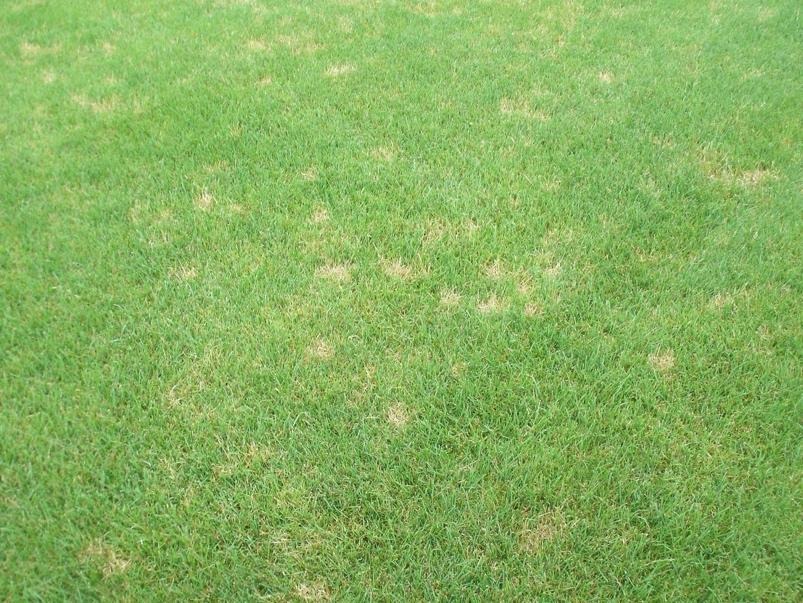
The short answer: Treating lawn fungus in East Tennessee requires identifying the specific disease, applying the right fungicide at the right time, and changing the conditions that allowed the fungus to grow in the first place. Most fungal problems clear up within two to four weeks with proper treatment.
Some fungal diseases need curative fungicide applications to stop active infections. Others respond better to preventative treatments applied before symptoms appear.
Quick overview:
- Active infection: Apply curative fungicide immediately, then address underlying causes
- Recurring problems: Use a preventative fungicide program starting in late spring
- Mild cases: Adjust watering, mowing, and airflow before reaching for chemicals
Keep reading to learn which fungal diseases hit East Tennessee lawns hardest and exactly how to treat each one.
The Complete Fungus Control Approach: Our Disease Control Program
At Lawn Squad of Knoxville, we’ve built fungicide treatments into our lawn care programs because we know how quickly fungal diseases spread in our humid climate.
Our ELITE program includes disease control in Rounds 2, 4, 6, and 7, covering the entire high-risk season from March through October. This preventative approach stops most fungal problems before they damage your lawn.
For lawns with active infections, we offer curative fungicide applications that target the specific disease affecting your grass. Whether you treat fungus yourself or hire professionals, understanding what you’re dealing with makes all the difference.
Why Lawn Fungus Hits East Tennessee Yards So Hard
East Tennessee creates nearly perfect conditions for lawn fungus. Our combination of heat, humidity, and summer rainfall turns lawns into breeding grounds for fungal diseases.
Here’s what makes our region especially challenging. Warm days and cool nights create moisture on grass blades that lasts for hours. Summer storms provide the dampness fungi need to spread. And our transition zone grasses are already stressed from temperature swings, making them more vulnerable to infection.
Knoxville, Maryville, Oak Ridge, and surrounding areas see the same fungal diseases year after year because our climate consistently delivers the conditions these diseases love.
The key principle is this: fungi spread through spores, and spores need moisture and warmth to germinate. East Tennessee provides both in abundance from May through September. That’s why timing your fungicide applications matters so much here.
Lawn Squad has treated fungal outbreaks across Knox, Blount, Anderson, and Jefferson counties for over two decades. We’ve learned that generic advice from national lawn care websites often misses the specific timing our region requires.
Common Lawn Fungus Diseases in East Tennessee
Before you can treat lawn fungus, you need to identify what you’re dealing with. Here are the diseases that cause the most damage to East Tennessee lawns.
Brown Patch (Rhizoctonia)
Brown patch is the most common lawn disease in the Knoxville area. It affects fescue and other cool season grasses during hot, humid weather.
What it looks like:
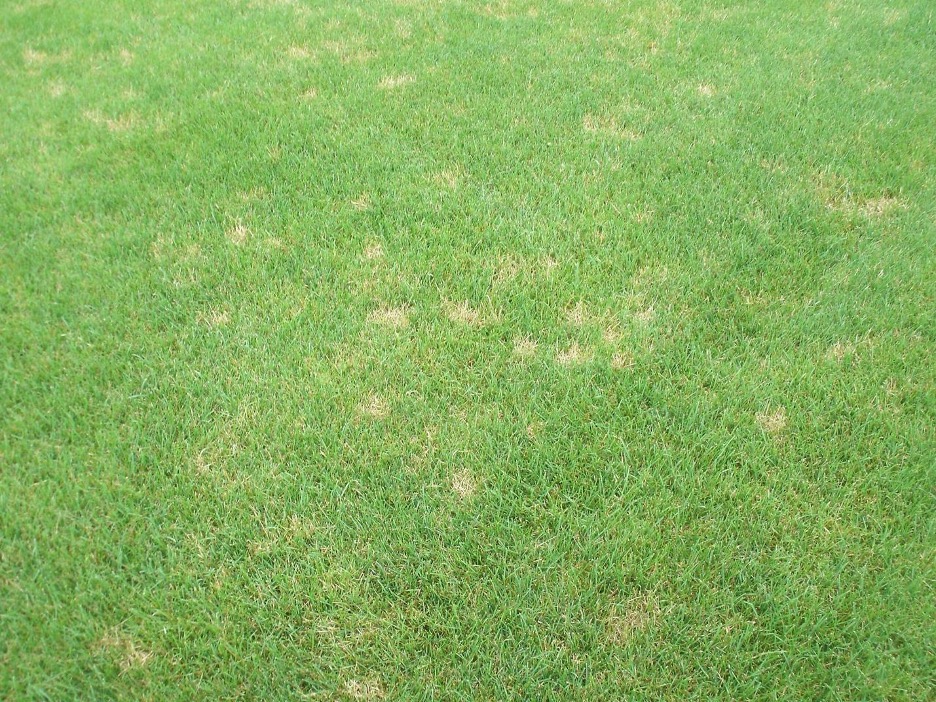
- Circular patches of brown grass ranging from a few inches to several feet wide
- Grass blades have tan lesions with dark brown borders
- Patches may have a “smoke ring” of dark gray at the edges in early morning
When it appears: Late May through September when nighttime temperatures stay above 65 degrees and humidity is high
Why it spreads: Excessive nitrogen fertilizer, overwatering, poor drainage, and thick thatch all encourage brown patch
Dollar Spot
Dollar spot creates small, silver-dollar-sized dead spots that can merge into larger damaged areas.
What it looks like:
- Small tan or straw-colored spots about two to six inches across
- Grass blades have hourglass-shaped lesions with tan centers and reddish-brown edges
- White cobweb-like growth visible in early morning dew
When it appears: Late spring through fall when temperatures are between 60 and 80 degrees with high humidity
Why it spreads: Low nitrogen levels (opposite of brown patch), drought stress, and heavy dew that sits on grass blades
Large Patch (Zoysia Patch)
If you have zoysia grass in your East Tennessee lawn, large patch is your primary fungal threat.
What it looks like:
- Circular patches of orange or brown grass, often several feet across
- Grass at patch edges pulls up easily because the fungus attacks the base of the plant
- Most visible in spring and fall when zoysia is entering or leaving dormancy
When it appears: Spring (March through May) and fall (September through November) when soil temperatures are between 50 and 70 degrees
Why it spreads: Excessive thatch, overwatering, poor drainage, and high nitrogen in fall
Gray Leaf Spot
Gray leaf spot primarily attacks St. Augustine grass but can also damage perennial ryegrass in East Tennessee lawns.
What it looks like:
- Oval or elongated spots on grass blades with gray centers and dark brown or purple margins
- Twisted, distorted grass blades
- Rapid thinning of the lawn during hot, wet weather
When it appears: Mid-summer when temperatures exceed 80 degrees with high humidity and frequent rainfall
Why it spreads: Excessive nitrogen, overwatering, and prolonged leaf wetness
Pythium Blight
Pythium blight is less common but devastating when it strikes. It can kill large areas of grass within 24 to 48 hours.
What it looks like:
- Greasy, water-soaked patches that quickly turn brown
- White, cottony fungal growth visible in early morning
- Streaky patterns following water drainage or mowing paths
When it appears: Hot, humid conditions with daytime temperatures above 85 degrees and nighttime temperatures above 65 degrees
Why it spreads: Poor drainage, compacted soil, overwatering, and overfertilization with nitrogen
Treating Active Fungal Infections in East Tennessee Lawns
If you already see fungal damage in your lawn, here’s how to stop it from spreading.
Step 1: Confirm the Disease
Before applying any fungicide, make sure you’re dealing with fungus and not another problem like drought stress, insect damage, or herbicide burn.
- Look for the patterns and symptoms described above
- Check in early morning when fungal growth is most visible
- Note whether the problem is spreading (fungus spreads; other damage typically doesn’t)
If you’re unsure, Lawn Squad can diagnose the problem during a service call. Treating the wrong issue wastes money and delays real solutions.
Step 2: Apply Curative Fungicide
Curative fungicides stop active infections. For East Tennessee lawns, products containing these active ingredients work well:
- Azoxystrobin for brown patch, dollar spot, and large patch
- Propiconazole for brown patch and dollar spot
- Thiophanate-methyl for brown patch and gray leaf spot
- Mefenoxam for pythium blight specifically
Follow label directions exactly. Apply when rain is not expected for 24 hours. Water lightly after application unless the label says otherwise.
WHY THIS MATTERS: Fungicides work preventatively better than curatively. Once you see severe damage, the fungus has already been active for days or weeks. The fungicide stops further spread but won’t bring back dead grass.
Step 3: Adjust Cultural Practices Immediately
While the fungicide works, change the conditions that caused the outbreak:
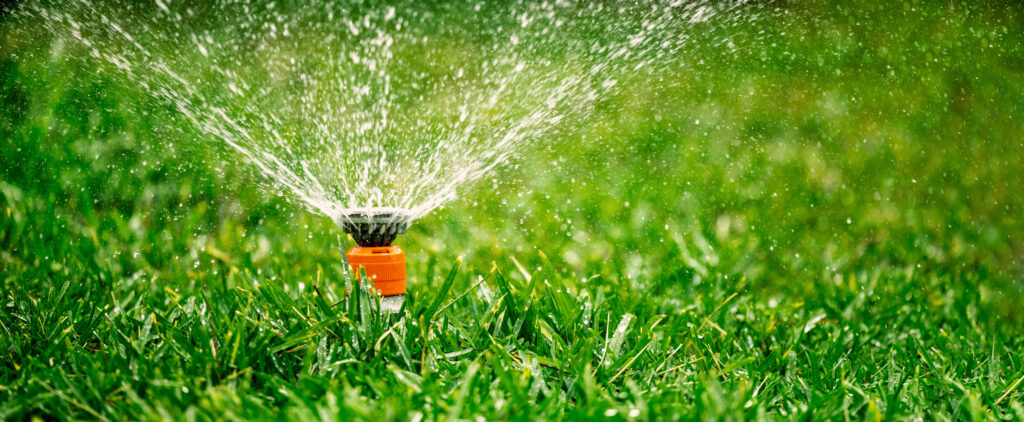
- Stop evening watering. Water only in early morning so grass blades dry before nightfall.
- Reduce watering frequency. Most East Tennessee lawns need about one inch per week, not daily irrigation.
- Raise your mowing height. Taller grass handles stress better. Keep fescue at three to four inches.
- Bag clippings temporarily. This removes fungal spores from the lawn instead of spreading them.
- Improve airflow. Trim shrubs and low tree branches that block air movement across the lawn.
Step 4: Follow Up With a Second Application
Most curative fungicides require a second application seven to fourteen days after the first. This catches any fungus that wasn’t killed by the initial treatment.
Don’t skip this step even if the lawn looks better. Fungal spores survive in the soil and thatch, ready to restart the infection when conditions favor them.
Critical warning: Rotating between fungicides with different active ingredients prevents the fungus from developing resistance. Don’t use the same product for every application.
Lawn Squad’s curative fungicide treatments include proper rotation and timing to ensure complete control of active infections in Knoxville area lawns.
Preventing Lawn Fungus in East Tennessee
Prevention costs less and works better than treating active outbreaks. Here’s how to keep fungus from taking hold in the first place.
Start Preventative Applications in Late Spring
For East Tennessee lawns with a history of fungal problems, begin preventative fungicide applications before symptoms appear.
- Apply first preventative treatment in late May before brown patch season
- Continue applications every 14 to 28 days through September
- Our ELITE program includes disease control in Rounds 2, 4, 6, and 7, covering the entire risk period
Fertilize Correctly for Your Grass Type
Wrong fertilization is the number one cause of preventable fungal outbreaks in East Tennessee:
- Too much nitrogen encourages brown patch and gray leaf spot
- Too little nitrogen encourages dollar spot
- Nitrogen at the wrong time stresses grass and invites disease
Cool season lawns in Knoxville should receive most of their nitrogen in fall, not summer. Fertilizing heavily in June and July pushes growth when grass is already stressed, creating ideal conditions for brown patch.
Water Wisely
Watering mistakes cause more fungal problems than any other factor:
- Water deeply but infrequently (about one inch per week total)
- Water early morning only (before 10 AM) so blades dry quickly
- Never water in the evening when moisture will sit on grass all night
- Reduce irrigation during rainy periods
Maintain Proper Mowing Practices
How you mow affects disease pressure:
- Keep mower blades sharp (dull blades tear grass, creating entry points for fungus)
- Never remove more than one-third of the blade height at once
- Mow when grass is dry to avoid spreading spores
- Alternate mowing patterns to reduce soil compaction
Reduce Thatch Buildup
Thatch is the layer of dead grass stems between the soil and living grass. More than half an inch of thatch traps moisture and harbors fungal spores.
- Core aeration breaks up thatch and improves drainage
- Avoid overfertilizing, which increases thatch production
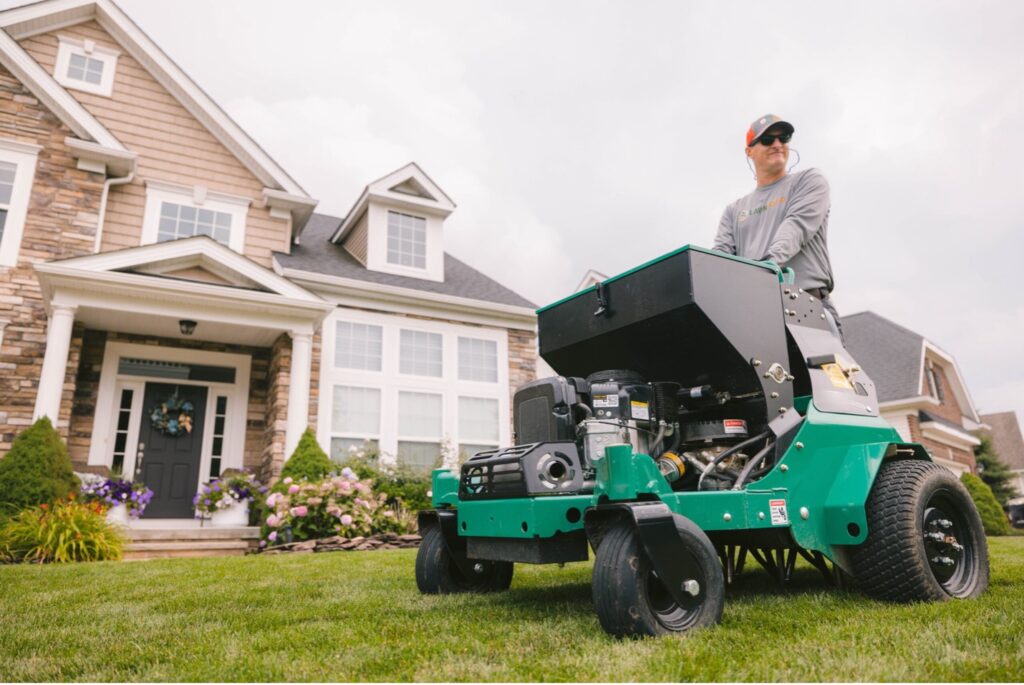
- Lawn Squad’s ELITE program includes aeration in Rounds 4 through 8 to control thatch in Knoxville lawns
Improve Soil Drainage
Standing water and soggy soil guarantee fungal problems:
- Address low spots where water collects
- Consider French drains in chronically wet areas
- Core aeration helps water penetrate heavy clay soils common in Knox County
How to Calculate Fungicide Coverage for Your Lawn
Fungicide labels specify coverage rates in ounces or pounds per 1,000 square feet. You need to know your lawn size to apply the right amount.
Step-by-step process:
- Measure your lawn’s length and width in feet
- Multiply length times width for total square footage
- Subtract house, driveway, and garden bed areas
- Divide by 1,000 to get your coverage multiplier
Example: Your Farragut lawn measures 12,000 square feet. The fungicide label says to apply 2 ounces per 1,000 square feet.
12,000 divided by 1,000 equals 12
12 times 2 ounces equals 24 ounces total
Under-applying fungicide leaves parts of your lawn unprotected. Over-applying wastes product and can damage grass. Getting the calculation right matters.
What About Soil Testing for Fungus Problems?
A soil test won’t detect fungal spores directly, but it reveals conditions that make fungus more likely.
Soil pH affects how well grass absorbs nutrients. East Tennessee soils often run acidic, with pH levels below 6.0. Acidic soil weakens grass and makes it more susceptible to disease.
A soil test also shows nutrient levels, helping you fertilize correctly without over-applying nitrogen.
Lawn Squad includes soil testing in Round 1 of our ELITE program. Based on results, we can recommend lime applications to adjust pH or modify your fertilization plan to reduce disease risk.
We recommend testing soil every two to three years for Knoxville lawns, or immediately if you’re battling recurring fungal problems.
Common Lawn Fungus Mistakes East Tennessee Homeowners Make
After treating fungal outbreaks across Knoxville, Maryville, Oak Ridge, and Alcoa for years, we see the same mistakes repeatedly.
Mistake #1: Waiting Too Long to Treat Homeowners often hope fungal spots will go away on their own. By the time they act, the disease has spread significantly. Early treatment when spots first appear limits damage and reduces recovery time.
Mistake #2: Watering in the Evening Evening irrigation is the single biggest mistake we see. Water sitting on grass blades overnight creates perfect conditions for fungal spores to germinate. Switch to morning watering only.
Mistake #3: Using the Wrong Fungicide Not all fungicides treat all diseases. Applying a product that doesn’t target your specific fungus wastes money and lets the disease continue spreading. Identify the disease first, then choose the right treatment.
Mistake #4: Fertilizing During Active Outbreaks Adding nitrogen to a lawn with active brown patch makes the problem worse. Hold off on fertilizer until the infection is under control.
Mistake #5: Skipping Preventative Treatments After Recovery Once a fungal disease appears in your lawn, the spores remain in the soil. Without preventative treatments the following year, the disease almost always returns when conditions favor it.
Curative vs. Preventative Fungicide: Which Should You Choose?
Curative fungicide is applied after you see symptoms. It stops active infections from spreading but cannot reverse existing damage. Best for: Lawns with visible fungal symptoms that need immediate treatment. Also appropriate when you’re unsure whether fungus will appear and want to treat only if needed.
Preventative fungicide is applied before symptoms appear. It protects grass from infection during high-risk periods. Best for: Lawns with a history of fungal problems, especially brown patch. Also recommended for lawns with conditions that favor fungus (shade, poor drainage, heavy irrigation).
For most East Tennessee lawns with recurring issues, a preventative program costs less than multiple curative treatments and delivers better results.
Your East Tennessee Fungus Control Calendar at a Glance
Cool Season Lawns (Fescue, Bluegrass)
| Month | Risk Level | Action |
|---|---|---|
| January through April | Low | Monitor for early large patch in zoysia; no action needed for fescue |
| May | Rising | Apply first preventative fungicide if you have brown patch history |
| June | High | Continue preventative program; scout for symptoms weekly |
| July through August | Highest | Peak brown patch season; maintain preventative schedule or treat curatively |
| September | Moderate | Continue prevention; reduce watering as temperatures cool |
| October through December | Low | Final fungicide application if needed; focus on fall lawn health |
Warm Season Lawns (Zoysia, Bermuda)
| Month | Risk Level | Action |
|---|---|---|
| March through May | High for Large Patch | Apply preventative fungicide as grass exits dormancy |
| June through August | Moderate | Monitor for disease; most warm season grasses resist summer fungus |
| September through November | High for Large Patch | Apply preventative fungicide as grass enters dormancy |
| December through February | Low | Grass dormant; no fungicide needed |
The Bottom Line
Lawn fungus is one of the most frustrating problems East Tennessee homeowners face because it can destroy a healthy-looking lawn within days. Our humid climate and summer storms create ideal conditions for fungal diseases from May through September.
Key principles to remember:
- Identify the specific disease before choosing a treatment
- Curative fungicides stop spread but don’t revive dead grass
- Preventative programs work better and cost less than repeated curative treatments
- Watering in the morning instead of evening prevents most fungal problems
- Cultural practices like proper mowing, fertilizing, and aeration reduce disease risk
- Recurring fungal problems indicate underlying issues that fungicides alone won’t solve
Address both the disease and the conditions that caused it, and your lawn can recover fully and resist future outbreaks.

Let Lawn Squad Handle It For You
Fungal diseases in East Tennessee lawns require precise timing, correct product selection, and proper application rates. Getting any of these wrong means spending money without solving the problem.
Lawn Squad’s disease control program is built specifically for Knoxville’s climate and the fungal challenges our lawns face.
Our ELITE Program includes:
- Disease control treatments in Rounds 2, 4, 6, and 7 covering the entire high-risk season
- Soil testing to identify conditions that encourage fungal growth
- Core aeration to reduce thatch and improve drainage
- Proper fertilization timing that doesn’t encourage brown patch
- Unlimited service calls if problems appear between scheduled treatments
For active infections, our curative fungicide applications target the specific disease affecting your lawn with professional-grade products applied at correct rates.
Tired of watching brown patches spread across your lawn every summer? Don’t want to guess which fungicide to buy or when to apply it?
Contact Lawn Squad of Knoxville today at 865-876-0065 or visit lawnsquad.com/contact-us to get a free quote and protect your lawn from fungal damage this season.