The short answer: Most Cleveland homeowners water their lawns too often, at the wrong time of day, and without accounting for our unique Great Lakes climate. These mistakes waste water, promote disease, and actually weaken grass over time.
The good news is that Cleveland lawns need less supplemental watering than you might think. Our humid summers and regular rainfall mean your lawn often gets enough moisture naturally.
Quick overview:
- Mistake 1: Watering too frequently with shallow amounts
- Mistake 2: Watering at the wrong time of day
- Mistake 3: Ignoring Cleveland’s natural rainfall patterns
- Mistake 4: Using the same schedule all season long
- Mistake 5: Not understanding your soil type
Keep reading to learn exactly what you should do instead and how proper watering works together with professional lawn care for the best results.

The Complete Lawn Care Approach: Why Watering Is Just One Piece
At Lawn Squad of Cleveland, we have cared for lawns throughout Northeast Ohio since 2001. One thing we have learned is that watering mistakes can undo even the best fertilization and weed control programs.
Your lawn is a system. Proper watering supports the work that fertilizer, aeration, and other treatments do. Poor watering habits stress your grass, making it more vulnerable to weeds, disease, and insect damage.
Whether you handle your own lawn care or work with professionals like us, understanding how to water correctly will help you get better results from every dollar you spend on your lawn.
Why Proper Watering Matters More Than Most Cleveland Homeowners Realize
Watering seems simple. Turn on the sprinkler, let it run, and your grass stays green. But improper watering causes more lawn problems in Greater Cleveland than most people realize.
Overwatering promotes shallow root growth. When water is always available at the surface, grass roots have no reason to grow deep. This makes your lawn dependent on constant watering and vulnerable to drought stress the moment you skip a day.
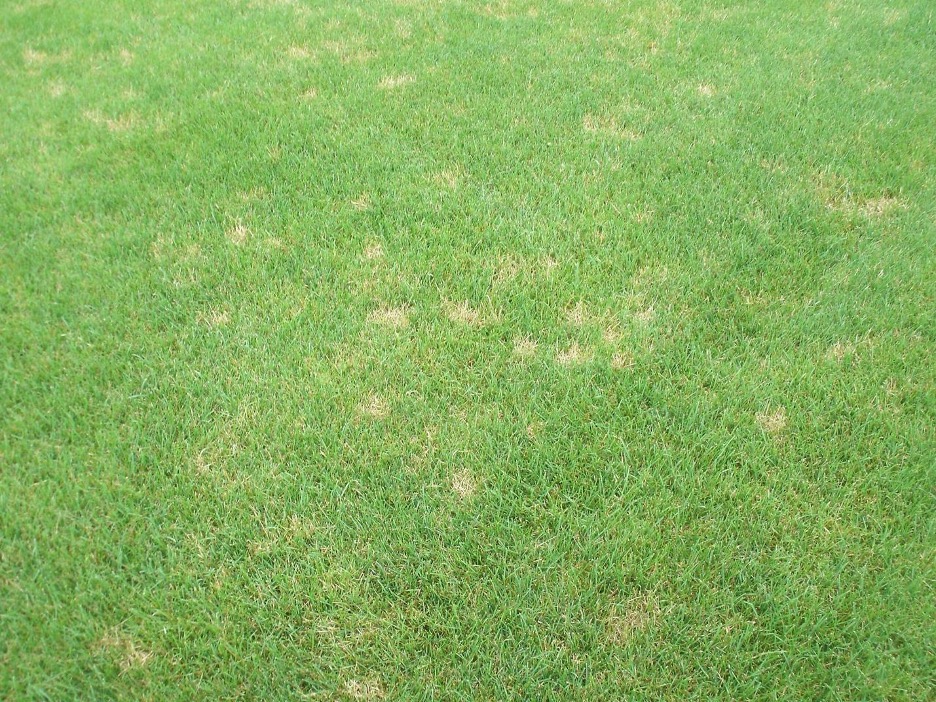
Overwatering also creates perfect conditions for fungal disease. Cleveland’s humid summers already push our lawns toward disease problems. Adding excess moisture through poor watering habits invites brown patch, dollar spot, and other fungal infections that can destroy large sections of your lawn.
On the other hand, underwatering stresses grass and allows weeds to take over. Many weeds have deeper root systems than grass and can survive drought conditions that kill turf.
The challenge for Cleveland homeowners is that our Great Lakes climate is different from other parts of Ohio. Lake Erie creates humidity patterns and rainfall that require a different approach than lawns in Columbus or Cincinnati.
Mistake 1: Watering Too Frequently with Shallow Amounts
This is the most common watering mistake we see across Cuyahoga, Lorain, and Lake counties. Homeowners set their sprinklers to run for 10 or 15 minutes every day, thinking more frequent watering keeps grass healthy.
The opposite is true.
What goes wrong: Daily light watering keeps only the top inch of soil moist. Grass roots stay shallow because they do not need to grow deeper to find water. When summer heat arrives or you go on vacation, your shallow rooted lawn cannot access moisture deeper in the soil.
What you should do instead: Water deeply and infrequently. Your goal is to wet the soil 4 to 6 inches deep, then let it dry out before watering again. For most Cleveland lawns, this means watering once or twice per week at most, applying about 1 inch of water each time.
How to check: Place a few empty tuna cans or coffee mugs around your lawn while the sprinkler runs. When they collect about 1 inch of water, you have watered enough. Time how long this takes so you know your sprinkler’s output for future watering sessions.
Deep watering encourages roots to grow down into the soil where moisture lasts longer. This creates a drought resistant lawn that can go longer between waterings and handle Cleveland’s unpredictable summer weather.
Mistake 2: Watering at the Wrong Time of Day
Many Cleveland homeowners water in the evening after work or set their sprinklers to run overnight. This seems convenient, but it creates serious problems for lawn health.
What goes wrong: When you water in the evening, grass blades stay wet all night. This extended moisture period is exactly what fungal diseases need to infect your lawn. Brown patch, dollar spot, and pythium blight all thrive when grass stays wet for 10 or more hours.
Cleveland’s humid summers already keep grass damp from dew overnight. Adding irrigation water on top of natural humidity dramatically increases disease risk.
What you should do instead: Water early in the morning, ideally between 4 AM and 9 AM. Morning watering allows grass blades to dry quickly as the sun rises and temperatures warm. This minimizes the wet period and reduces disease pressure.
Early morning is also when wind is typically calmest, which means less water loss to evaporation and more even coverage across your lawn.
What about afternoon watering? Watering in the heat of midday wastes water to evaporation, but it is still better than evening watering from a disease standpoint. If morning watering is impossible, afternoon is your second best option.
At Lawn Squad of Cleveland, our ELITE program includes disease control treatments specifically because fungal problems are so common in Northeast Ohio. Proper watering timing works together with these treatments to keep your lawn healthy.
Mistake 3: Ignoring Cleveland’s Natural Rainfall Patterns
Cleveland receives an average of 39 inches of rain per year, with most falling during spring and early summer. Many homeowners set up automatic sprinkler systems and let them run on schedule regardless of recent rainfall.
What goes wrong: Your lawn may receive 2 inches of rain over a weekend, then your sprinkler adds another inch on Monday morning. This overwatering wastes water, increases your utility bill, and creates the soggy conditions that promote disease and shallow roots.
What you should do instead: Treat your irrigation system as a supplement to rainfall, not a replacement for it. Check the weather forecast before watering and skip scheduled irrigation if rain is expected within 24 hours.
Install a rain gauge in your yard to track how much natural rainfall your lawn receives each week. If your lawn gets 1 inch of rain, you probably do not need to water at all that week. If you receive only half an inch, you might add a single deep watering session to make up the difference.
Consider a rain sensor: For around $25 to $50, you can add a rain sensor to most irrigation systems. This device automatically skips scheduled watering when it detects recent rainfall, taking the guesswork out of the equation.
Cleveland homeowners with automatic sprinklers often overwater by 50% or more simply because they never adjust for natural rainfall. This is money down the drain and stress on your lawn.
Mistake 4: Using the Same Watering Schedule All Season Long
Cleveland weather changes dramatically from spring to fall. April might bring cool temperatures and regular rain, while August delivers heat waves and dry spells. Yet many homeowners set their sprinkler timer in May and never touch it again.
What goes wrong: Your lawn’s water needs change throughout the growing season. Cool spring weather means less evaporation and slower grass growth, so your lawn needs less water. Hot July weather increases evaporation and growth rates, increasing water demand. Fall brings cooler temperatures again and usually more rainfall.
A watering schedule that works in July will overwater your lawn in September. A schedule designed for May will underwater during an August heat wave.
What you should do instead: Adjust your watering based on temperature, rainfall, and how your lawn looks. During cool spring and fall periods, your Cleveland lawn may need no supplemental watering at all if rainfall is normal. During hot, dry summer stretches, you might need to water twice per week.
Signs your lawn needs water:
- Grass blades fold in half lengthwise (this is the plant conserving moisture)
- Footprints remain visible after you walk across the lawn
- Grass color shifts from bright green to a blue gray tone
- A screwdriver is difficult to push into the soil
Signs you are overwatering:
- Spongy or mushy feeling when you walk on the lawn
- Fungal disease patches appearing
- Increased weed growth, especially crabgrass
- Runoff occurring before the lawn is adequately watered
Learning to read your lawn’s signals is more effective than following any set schedule.
Mistake 5: Not Understanding Your Soil Type
Cleveland area soils vary significantly from neighborhood to neighborhood. Parts of Lorain County have heavy clay soil that holds water for days. Areas closer to Lake Erie may have sandier soil that drains quickly. Your watering approach needs to match your specific soil type.
What goes wrong with clay soil: Clay holds water tightly and drains slowly. If you apply 1 inch of water all at once, much of it may run off before soaking in. Homeowners with clay soil often see puddles and runoff while their lawn still is not getting enough deep moisture.
What you should do with clay soil: Use “cycle and soak” watering. Instead of running your sprinkler for 45 minutes straight, run it for 15 minutes, wait an hour for water to soak in, then run another 15 minutes. This allows water to penetrate clay soil instead of running off.
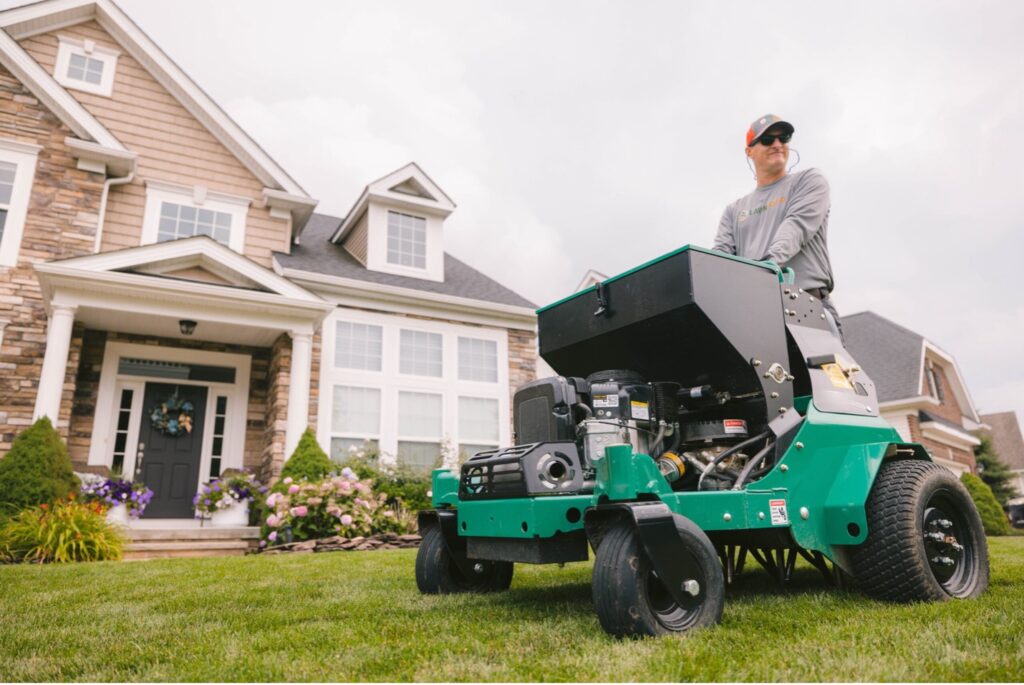
Aeration also helps clay soil absorb water. This is one reason our ELITE program includes aeration. Those small holes in your lawn allow water to reach root zones more effectively.
What goes wrong with sandy soil: Sandy soil drains quickly and does not hold moisture well. A single weekly watering may not be enough because water moves past the root zone before grass can absorb it.
What you should do with sandy soil: Water more frequently but with less volume each time. You might water every 3 to 4 days with a half inch of water instead of weekly with a full inch.
How to check your soil type: Dig a small hole about 6 inches deep and grab a handful of soil. Squeeze it into a ball. If it holds its shape and feels sticky, you have clay soil. If it crumbles apart immediately, you have sandy soil. Most Cleveland lawns fall somewhere in between, with clay being more common.
Our ELITE program includes a soil test that tells you exactly what you are working with, including soil composition, pH levels, and nutrient content.
How to Calculate Your Lawn’s Water Needs
Understanding how much water your lawn needs helps you avoid both over and under watering.
Step by step process:
- Cleveland lawns generally need 1 to 1.5 inches of water per week during the growing season
- Check weekly rainfall totals using a rain gauge or weather app
- Subtract rainfall from 1 inch to determine supplemental irrigation needed
- If rainfall exceeds 1 inch, skip irrigation entirely that week
Example: Your rain gauge shows 0.4 inches fell this week. Your lawn needs roughly 0.6 inches of supplemental irrigation. If your sprinklers deliver 1 inch per hour, you would run them for about 35 to 40 minutes total, split between two morning sessions if you have clay soil.
During cooler spring and fall months, reduce your target to 0.5 to 0.75 inches per week, as evaporation is lower and grass grows more slowly.
What About Drought Stress Treatment?
Even with perfect watering practices, Cleveland summers occasionally bring extended dry periods that stress lawns. When water restrictions limit irrigation or rainfall stays below normal for weeks, grass can suffer.
Lawn Squad offers a waterless treatment designed for drought stress situations. This treatment helps grass retain moisture and survive dry conditions better than untreated lawns.
We recommend this service during extended dry spells, especially for lawns that cannot receive adequate irrigation due to water restrictions or system limitations. It is one more tool for keeping Cleveland lawns healthy through our unpredictable summers.
Common Questions About Lawn Watering in Cleveland
Should I water new grass seed differently? Yes. New grass seed needs consistent moisture to germinate. Water lightly twice daily until seeds sprout, usually 7 to 14 days. Once grass is established at about 2 inches tall, transition to the deep and infrequent watering schedule.
What about newly installed sod? Sod needs daily watering for the first two weeks while roots establish. Gradually reduce frequency over the following month until you reach normal watering practices.
Does my lawn need water in fall? Usually less than you think. Cleveland typically receives adequate fall rainfall. However, if autumn is unusually dry, continue watering until the ground freezes to help grass store moisture for winter.
Should I water dormant summer grass? When grass goes dormant and turns brown during extreme heat, it is protecting itself. You can let it stay dormant or provide about half an inch of water every two weeks to keep roots alive without forcing the grass out of dormancy.
DIY Watering vs. Irrigation Systems: Which Should You Choose?
Manual watering with hose and sprinkler gives you complete control over timing and volume. It costs less upfront and forces you to pay attention to your lawn’s actual needs. However, it requires your time and presence. Best for: Homeowners with smaller lawns who are home regularly and willing to monitor conditions.
Automatic irrigation systems provide convenience and consistency. Modern smart controllers can adjust watering based on weather data. However, they cost more to install and can lead to overwatering if not properly programmed and monitored. Best for: Homeowners with larger lawns, busy schedules, or difficulty watering early in the morning.
Whichever method you choose, the principles remain the same: water deeply, water infrequently, water in the morning, and adjust for rainfall and temperature.
Your Cleveland Lawn Watering Guide at a Glance
Seasonal Watering Guidelines
| Season | Weekly Need | Frequency | Notes |
|---|---|---|---|
| Spring (April to May) | 0.5 to 0.75 inches | Once weekly max | Rainfall usually sufficient |
| Early Summer (June) | 1 inch | Once to twice weekly | Monitor for dry spells |
| Peak Summer (July to August) | 1 to 1.5 inches | Twice weekly max | Adjust for heat waves |
| Fall (September to October) | 0.5 to 0.75 inches | Once weekly max | Rainfall usually sufficient |
Watering Best Practices
| Do This | Avoid This |
|---|---|
| Water early morning (4 to 9 AM) | Watering in evening or overnight |
| Apply 1 inch per session | Light daily watering |
| Adjust for rainfall | Running sprinklers on auto regardless of weather |
| Let soil dry between waterings | Keeping soil constantly moist |
| Check soil moisture before watering | Following a rigid schedule |
The Bottom Line
Proper watering is one of the most important things Cleveland homeowners can do for their lawns, yet it is also where the most mistakes happen.
Key principles to remember:
- Water deeply (1 inch) and infrequently (once or twice per week maximum)
- Always water in early morning to reduce disease risk
- Subtract natural rainfall from your irrigation schedule
- Adjust watering based on season and temperature, not a fixed timer
- Understand your soil type and water accordingly
Cleveland lawns that receive proper watering develop deeper roots, resist drought better, fight off disease more effectively, and look healthier all season long.
Let Lawn Squad Handle the Rest
While watering is primarily your responsibility as a homeowner, professional lawn care treatments work best when combined with proper watering practices. Fertilizer needs water to reach roots. Herbicides need time to dry on leaves. Disease control works better when you are not overwatering.
Our ELITE program provides everything else your Cleveland lawn needs to thrive.
ELITE Program includes:
- Six fertilizer applications timed for Northeast Ohio’s growing season
- Five broadleaf weed control treatments
- Disease control to fight fungal problems common in our humid climate
- Grub prevention to protect roots
- Aeration to help water and nutrients reach the root zone
- Soil testing to identify your lawn’s specific needs
- Unlimited service calls if problems arise
You handle the watering. We handle the feeding, weed control, disease prevention, and everything else.
Contact Lawn Squad of Cleveland today at 440-949-9333 to schedule your free lawn evaluation and learn how professional care combined with smart watering creates the healthiest lawn on your street.