The short answer: Bermuda grass and Zoysia grass are the best heat-tolerant options for most Central The short answer: Protecting your Central Georgia lawn from insect damage requires identifying the specific pest, treating at the right time of year, and maintaining a healthy lawn that can withstand and recover from insect pressure.
Grubs, armyworms, and chinch bugs cause the most damage to Central Georgia lawns. Each pest requires different treatment timing and products.
Quick overview:
- Grubs: Treat preventively in late spring or curatively in late summer when grubs are young
- Armyworms: Monitor in late summer and fall; treat immediately when detected
- Chinch bugs: Watch for damage in hot, dry areas; treat when populations are active
- Mole crickets: Apply preventive treatment in early summer when nymphs are small
Keep reading to learn how to identify these pests, when they threaten Central Georgia lawns, and how to stop them before they destroy your grass.
The Complete Lawn Protection Approach: Our 4-Step Program
Insect damage in Central Georgia lawns is often misdiagnosed as drought stress, disease, or poor soil. By the time homeowners realize insects are the problem, significant damage has already occurred.
Our lawn protection program targets the specific insects that plague Central Georgia yards based on our climate, soil type, and the warm-season grasses most homeowners grow. We time applications to interrupt pest life cycles when treatments are most effective.
Whether you handle pest control yourself or bring in professionals, understanding which insects threaten your lawn and when they are active helps you respond quickly and effectively.
Why Insect Protection Matters More Than Most Central Georgia Homeowners Realize
A healthy lawn can tolerate some insect activity. But when pest populations explode, they can destroy months or years of lawn care investment in just a few weeks.
Central Georgia’s warm, humid climate creates ideal conditions for lawn-damaging insects. Our mild winters allow many pests to survive year-round, building populations that emerge hungry each spring. Our long summers give insects multiple generations to multiply.
The key principle is this: by the time you see obvious damage, the insects have been feeding for weeks. Brown patches, thinning turf, and dead spots are the end result of a problem that started much earlier. Prevention and early detection save lawns.
Central Georgia’s most common lawn grasses, Bermuda and Zoysia, are susceptible to several destructive insects. Understanding which pests target your grass type helps you focus your protection efforts where they matter most.
Grub Prevention and Treatment Guide for Central Georgia Lawns
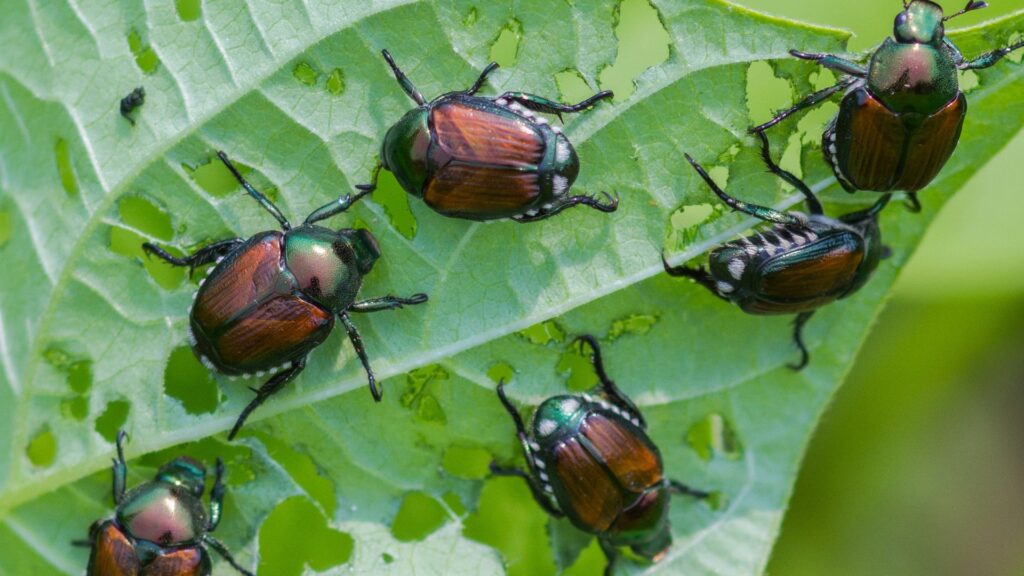
White grubs are the larvae of various beetles, including Japanese beetles, June bugs, and masked chafers. They live underground and feed on grass roots, causing patches of dead turf that pull up like loose carpet.
Understanding the Grub Life Cycle
Adult beetles emerge in late spring and early summer in Central Georgia. They mate, and females burrow into the soil to lay eggs in your lawn. Eggs hatch in mid to late summer, and the young grubs immediately begin feeding on roots.
Grubs feed heavily through fall, then burrow deeper as temperatures drop. They return to the root zone in spring for a brief feeding period before pupating into adult beetles.
The critical window for damage in Central Georgia is late summer through fall when grubs are actively feeding and growing.
Signs of Grub Damage
Look for these indicators of grub infestation in Central Georgia lawns:
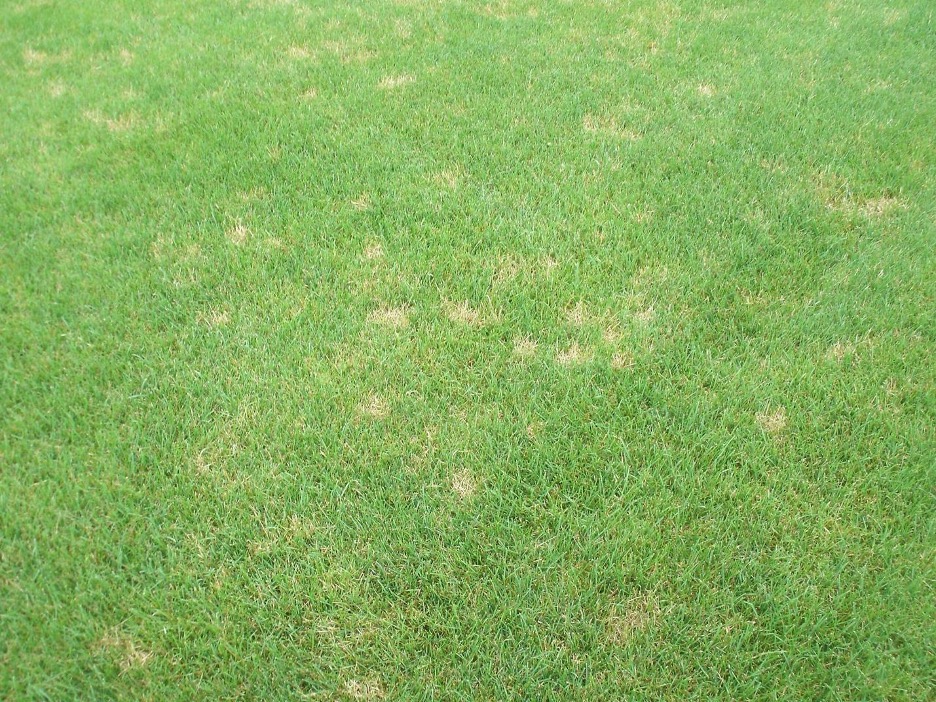
Irregular brown patches that do not respond to watering. Turf that feels spongy underfoot. Grass that pulls up easily with no roots attached. Increased activity from birds, armadillos, or raccoons digging in your lawn for grubs.
To confirm grubs, cut a one-foot square of turf about 3 inches deep and peel it back. Count the white, C-shaped grubs you find. More than 5 grubs per square foot in Central Georgia lawns typically requires treatment.
Preventive vs. Curative Treatment
Preventive grub control works best when applied in late spring to early summer (May to June in Central Georgia) before eggs hatch. Products containing imidacloprid, clothianidin, or chlorantraniliprole provide season-long protection when applied during this window.
Curative treatments kill grubs already present in your lawn. Apply products containing trichlorfon or carbaryl in late summer when grubs are young and feeding near the surface. These products work fast but do not provide lasting prevention.
Critical warning: Curative products become less effective as grubs grow larger. Treating in October or November often fails because grubs have grown too big and moved deeper into the soil.
Our lawn protection program includes properly timed grub prevention designed specifically for Central Georgia’s beetle emergence patterns.
Armyworm Detection and Treatment Guide for Central Georgia Lawns
Fall armyworms are one of the most destructive lawn pests in Central Georgia. These caterpillars can destroy an entire lawn in just a few days when populations are high.
Why Armyworms Are So Destructive
Armyworms get their name from how they feed. They march across lawns in large groups, consuming everything in their path. A heavy infestation can strip a Bermuda lawn down to bare stems overnight.
Central Georgia typically sees armyworm outbreaks in late summer and fall, usually August through October. Moths migrate into our area from the south, laying eggs that hatch into hungry caterpillars.
Identifying Armyworms
Armyworms are caterpillars ranging from light green to dark brown with distinctive stripes running the length of their bodies. They have an inverted Y-shape on their heads.
During the day, armyworms hide in the thatch layer and soil surface. They feed primarily in early morning and late evening. To find them, part the grass near the edge of damaged areas and look at the soil surface.
Another detection method is the soap flush test. Mix 2 tablespoons of dish soap in a gallon of water and pour it over a 2-foot square area. Armyworms will crawl to the surface within a few minutes if present.
Immediate Treatment Required
Unlike grubs, armyworms do not give you time to wait. When you confirm an armyworm infestation, treat immediately. Every day of delay means more damage.
Products containing bifenthrin, cyfluthrin, or spinosad provide fast knockdown of armyworm populations. Apply in late afternoon or early evening when armyworms are preparing to feed.
Water lightly after application to move the product into the thatch layer where armyworms hide during the day.
Recovery After Armyworm Damage
Here is the good news: Central Georgia lawns can recover from armyworm damage if the grass crowns and roots survive. Bermuda grass is especially resilient and often regrows within a few weeks after treatment.
Water and fertilize lightly to encourage recovery. Avoid heavy nitrogen applications, which can attract another round of egg-laying moths.
Chinch Bug Control Guide for Central Georgia Lawns
Chinch bugs are tiny insects that cause big problems in Central Georgia lawns, especially St. Augustine grass. They suck plant juices from grass blades, injecting a toxin that causes yellowing and death.
Where Chinch Bugs Attack
Chinch bugs prefer hot, sunny areas of the lawn. They thrive in drought-stressed turf and are most active during the hottest part of Central Georgia summers.
Look for chinch bug damage along driveways, sidewalks, and south-facing slopes where heat reflects and grass dries out fastest. Damage starts as yellow patches that turn brown and spread outward.
Identifying Chinch Bugs
Adult chinch bugs are about the size of a pencil eraser tip, black with white wings folded across their backs. Nymphs are smaller and reddish-orange.
Use the coffee can method to detect chinch bugs. Remove both ends from a large metal can and push it 2 inches into the soil at the edge of a damaged area. Fill with water and keep it filled for 5 minutes. Chinch bugs will float to the surface if present.
Treatment Timing
Treat chinch bugs when you confirm their presence and populations are building. In Central Georgia, this is typically June through August.
Products containing bifenthrin, imidacloprid, or clothianidin control chinch bugs effectively. Apply to affected areas and a buffer zone of healthy grass around the damage.
Water your lawn deeply before treating to bring chinch bugs closer to the surface where the insecticide can reach them.
How to Calculate Insecticide Application Rates
Applying the correct amount of insecticide protects your lawn without wasting product or harming the environment.
Step by step process:
- Measure your lawn area or the area you need to treat
- Check the product label for the rate per 1,000 square feet
- Calculate the total product needed (area divided by 1,000, multiplied by rate)
- Calibrate your spreader or sprayer to deliver the correct amount
- Apply evenly, avoiding overlaps that could cause double-dosing
For example, if your lawn is 8,000 square feet and the product calls for 2 pounds per 1,000 square feet, you need 16 pounds total.
For liquid applications, calibrate your sprayer by measuring how much area one gallon covers, then adjust your walking speed or nozzle setting accordingly.
What About Mole Cricket Control?
Mole crickets are a serious problem for Central Georgia lawns, especially Bermuda and Bahia grass. These underground insects tunnel through soil and feed on roots and grass blades.
Mole cricket damage appears as raised tunnels and dying grass. The tunnels dry out roots and create an uneven surface.
In Central Georgia, mole cricket eggs hatch in late spring through early summer. The tiny nymphs are much easier to kill than adults. This makes June and July the ideal treatment window.
Our lawn protection program targets mole crickets during this vulnerable nymph stage for maximum effectiveness.
Apply mole cricket baits or insecticides in late afternoon when mole crickets become active. Water lightly before application to bring mole crickets closer to the surface, but do not water for 24 hours after applying baits.
Common Insect Control Mistakes Central Georgia Homeowners Make
After treating countless Central Georgia lawns for insect damage, we see the same mistakes repeatedly.
Mistake #1: Treating Without Identifying the Pest Different insects require different products and timing. Treating for grubs when you have armyworms wastes money and fails to solve the problem. Always identify the pest before treating.
Mistake #2: Waiting Until Damage Is Severe By the time brown patches are obvious, insects have been feeding for weeks. Learn to spot early signs and treat before damage spreads. Regular lawn inspections catch problems early.
Mistake #3: Applying at the Wrong Time of Day Many lawn insects are most active in early morning or evening. Applying insecticides during midday heat reduces effectiveness and can stress your lawn. Treat in late afternoon or early evening for best results.
Mistake #4: Skipping the Watering Step Most granular insecticides need water to activate and move into the soil or thatch where insects live. Failing to water after application leaves the product sitting on grass blades where it cannot reach the target pests.
Mistake #5: Not Following Up Many insect infestations require a second treatment 2 to 4 weeks after the first to catch hatching eggs and growing nymphs. One application rarely solves the problem completely.
Preventive Treatment vs. Curative Treatment: Which Should You Choose?
Preventive treatments are applied before insects become a problem, creating a barrier that kills pests as they hatch or enter your lawn. They require proper timing based on insect life cycles. Best for: Grubs, mole crickets, and lawns with a history of insect problems
Curative treatments kill insects already present and actively damaging your lawn. They work faster but only address existing infestations, not future ones. Best for: Armyworms, chinch bugs, and confirmed active infestations
For most Central Georgia lawns, a combination approach works best. Preventive grub and mole cricket treatments in early summer, combined with careful monitoring and quick curative response for armyworms and chinch bugs.
Your Central Georgia Insect Control Calendar at a Glance
Preventive Treatment Schedule
| When | Target Pest | Product Type | Notes |
|---|---|---|---|
| May to June | Grubs | Preventive insecticide | Apply before beetle eggs hatch |
| June to July | Mole crickets | Insecticide or bait | Target young nymphs |
| Year-round | All pests | Healthy lawn practices | Proper mowing, watering, fertilizing |
Monitoring and Curative Treatment Schedule
| When | What to Watch For | Action If Found |
|---|---|---|
| Late Summer | Armyworms (August to October) | Treat immediately upon detection |
| Summer | Chinch bugs (June to August) | Treat when populations confirmed |
| Late Summer | Grub damage (August to September) | Curative treatment if threshold exceeded |
| Spring and Fall | Mole cricket tunnels | Treat if damage is active |
The Bottom Line
Protecting your Central Georgia lawn from insect damage comes down to knowing your enemy, timing your defense, and maintaining a healthy lawn that can withstand some pest pressure.
Key principles to remember:
- Identify the specific pest before choosing a treatment
- Preventive treatments for grubs and mole crickets work best in early summer
- Armyworms require immediate treatment when detected
- Water most granular products into the soil after application
- A healthy, properly maintained lawn resists insect damage better than a stressed lawn
- Follow up treatments are often necessary to break pest life cycles
Follow this approach and your Central Georgia lawn will stay thick and green while your neighbors wonder why their grass keeps dying in mysterious patches.
Let Us Handle It For You
Every Central Georgia lawn faces different insect pressures based on grass type, soil conditions, surrounding landscape, and history. A one-size-fits-all approach cannot address these variables.
Our lawn protection program is designed specifically for Central Georgia conditions and adjusts throughout the year based on actual pest activity and weather patterns.
Our Central Georgia Lawn Protection Program includes:
- Properly timed preventive treatments for grubs and mole crickets
- Regular monitoring for armyworms and other surface-feeding pests
- Fast response curative treatments when problems are detected
- Products selected specifically for your grass type and pest pressures
Stop discovering insect damage after it is too late. Stop watching brown patches spread while you try to figure out what is wrong.
Contact us today for a free lawn evaluation and discover how a professional insect control program can protect your Central Georgia investment.