The short answer is that spring lawn prep in Bucks and Montgomery Counties starts with cleaning up debris, then moves to soil testing, overseeding bare spots, and applying the right fertilizer at the right time. However, our region’s unique soil conditions and unpredictable spring weather mean timing is everything.
For most lawns in our area, you’ll want to start your prep work when soil temperatures hit about 55 degrees, which usually happens in late March or early April around here.
Quick overview:
Cleanup and assessment: Remove leaves, sticks, and winter debris to let your grass breathe and grow.
Soil testing and treatment: Test your soil pH and nutrient levels to know exactly what your lawn needs.
Overseeding and fertilizing: Fill in bare patches and feed your lawn with the right products for our Pennsylvania soil.
Keep reading to learn exactly how to prepare your Bucks or Montgomery County lawn for a healthy, green growing season.

The Complete Spring Lawn Care Approach: Our 6 Step Program
At our company, we’ve developed a signature lawn care program designed specifically for homeowners in Bucks and Montgomery Counties. This program takes the guesswork out of spring prep and sets your lawn up for success all year long.
What makes this approach work is that it’s built around the specific challenges we face in southeastern Pennsylvania. Our clay heavy soils, variable spring temperatures, and mix of grass types all require a tailored approach that generic advice just can’t provide.
Whether you choose to tackle spring lawn prep yourself or hire us to handle it, understanding these fundamentals will help you make smarter decisions about your lawn care.
Why Spring Lawn Prep Matters More Than Most Homeowners Realize
Getting spring lawn prep wrong can set your lawn up for a summer of problems. A lawn that doesn’t get proper spring care is more likely to develop weeds, disease, and brown patches when the hot weather arrives.
For example, if you fertilize too early when the soil is still cold, your grass can’t absorb the nutrients. That fertilizer either washes away or feeds the weeds instead. If you skip soil testing, you might apply products your lawn doesn’t need while ignoring problems it actually has.
The key principle is this: your lawn is waking up from winter dormancy in spring. What you do in these first few weeks determines whether it comes back strong or struggles all season.
Here in Bucks and Montgomery Counties, we deal with specific challenges like heavy clay soil that compacts easily and holds water. Generic lawn care advice written for sandy soils or different climates just doesn’t work the same way for our local lawns.
Spring Cleanup Guide for Bucks and Montgomery County Lawns
Before you do anything else, your lawn needs a thorough spring cleanup. This is the foundation everything else builds on.
Step 1: Remove Winter Debris (Late February to Mid March)
Start by raking up leaves, sticks, and any other debris that accumulated over winter. Pay special attention to areas under trees and along fence lines where debris tends to pile up.
Use a leaf rake rather than a heavy garden rake at this stage. You want to remove debris without tearing up grass that’s still dormant.
This matters because debris that sits on your lawn blocks sunlight and traps moisture. That creates perfect conditions for fungal diseases like snow mold, which is common in our area after wet winters.
Step 2: Assess Winter Damage (Mid March)
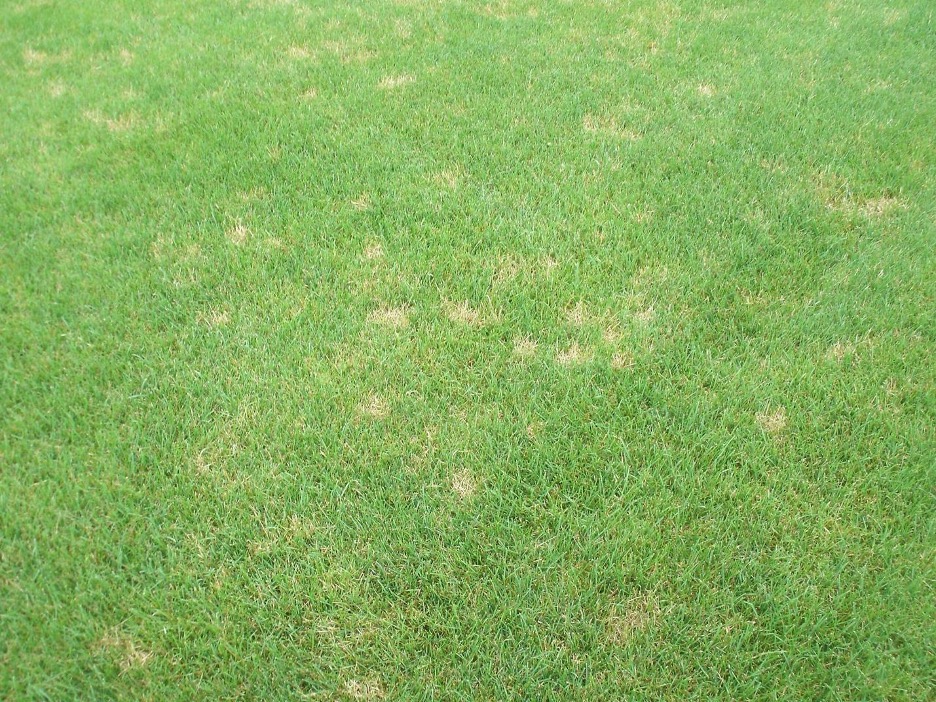
Walk your lawn and look for problem areas. Check for bare spots, areas where the grass looks thin, and any spots with a grayish or pinkish coating, which could indicate disease.
Make notes or take photos of problem areas. This helps you plan what products you’ll need and where to focus your efforts.
Skipping this step means you might miss problems until they get worse. Catching issues early in spring is much easier than trying to fix them in summer.
Step 3: Light Dethatching (Late March to Early April)
If your lawn has a thick layer of thatch, which is that spongy layer of dead grass between the soil and the green blades, you may need to dethatch. In Bucks and Montgomery Counties, thatch buildup is common because our clay soils don’t break down organic matter as quickly.
Use a dethatching rake for small areas or rent a power dethatcher for larger lawns. Work when the soil is slightly moist but not wet.
Only dethatch if the layer is more than half an inch thick. Light thatch actually protects your lawn, so you don’t want to remove it all.
Step 4: First Mowing (When Grass Reaches 3 to 4 Inches)
Your first mow of the season should happen when your grass reaches about 3 to 4 inches tall. Set your mower blade high and only remove about one third of the grass height.
Make sure your mower blade is sharp. Dull blades tear the grass instead of cutting it cleanly, which stresses the lawn and invites disease.
Critical warning: Never mow wet grass or mow when the ground is soft and muddy. This is a common mistake in our area because spring weather can be unpredictable. Mowing too early damages the grass crowns and compacts the soil.
Our lawn care program handles the timing of these early season tasks based on actual conditions in your neighborhood, not just calendar dates.
Soil Testing and Treatment Guide for Southeastern Pennsylvania
Soil testing is the step most homeowners skip, but it’s one of the most important things you can do for your Bucks or Montgomery County lawn.
Step 1: Collect Soil Samples (Early to Mid April)
Use a clean trowel or soil probe to collect samples from 4 to 6 inches deep. Take samples from several spots around your lawn and mix them together in a clean bucket.
Avoid sampling near sidewalks, driveways, or areas where you’ve recently applied fertilizer or lime. These spots won’t give you accurate results.
Step 2: Send Samples for Testing
The Penn State Extension office offers affordable soil testing for homeowners in Bucks and Montgomery Counties. You can also use a home testing kit for basic pH information.
A professional soil test will tell you your soil pH, nutrient levels, and organic matter content. This information is worth its weight in gold for planning your lawn care.
Important Consideration: Lime Application
Most lawns in Bucks and Montgomery Counties need lime because our soil tends to be acidic. However, you should only apply lime if your soil test shows you need it.
If your pH is below 6.0, apply pelletized lime according to your soil test recommendations. Spring is a good time because rain helps work the lime into the soil.
Never apply lime and fertilizer at the same time. Wait at least two weeks between applications.
Step 3: Address Soil Compaction
Clay soils in our area compact easily, especially after wet winters. If water puddles on your lawn or the ground feels hard, you likely have compaction issues.
Core aeration is the best solution for compacted soil. While fall is the ideal time for aeration in our area, spring aeration can help lawns with severe compaction problems.
How to Calculate Fertilizer Application Rates
You’ve probably heard recommendations like “apply 1 pound of nitrogen per 1,000 square feet.” Here’s what that actually means and how to figure it out for your lawn.
Step by step process:
First, measure your lawn to find the square footage. Multiply length times width for rectangular areas. For irregular shapes, break your lawn into sections and add them together.
Second, look at your fertilizer bag for the N P K numbers. The first number is the percentage of nitrogen. For example, a bag labeled 24 8 16 contains 24 percent nitrogen.
Third, divide the amount of nitrogen you want to apply by the percentage in your fertilizer. If you want to apply 1 pound of nitrogen per 1,000 square feet and your fertilizer is 24 percent nitrogen, divide 1 by 0.24 to get about 4.2 pounds of fertilizer per 1,000 square feet.
Practical example: If your Bucks County lawn is 5,000 square feet and you’re using a 24 8 16 fertilizer, you would need about 21 pounds of fertilizer for the entire lawn (4.2 pounds times 5).
What About Professional Lawn Aeration?
Aeration is a service that pairs perfectly with spring lawn prep, especially for the clay soils common throughout Bucks and Montgomery Counties.
Core aeration removes small plugs of soil from your lawn, which relieves compaction and allows air, water, and nutrients to reach grass roots. This makes all your other lawn care efforts more effective.
We recommend professional aeration because the timing and technique matter. Aerating at the wrong time or in the wrong conditions can actually stress your lawn instead of helping it.
For most lawns in our area, aeration every one to two years keeps soil compaction under control and promotes deeper root growth.
Common Spring Lawn Prep Mistakes Bucks and Montgomery Homeowners Make
After years of caring for lawns in our area, we’ve seen the same mistakes come up again and again.
Mistake #1: Fertilizing Too Early
Homeowners get excited when the first warm day hits and rush to fertilize. But if soil temperatures are still below 55 degrees, your grass can’t use those nutrients. You end up feeding weeds and wasting money.
Mistake #2: Cutting Grass Too Short
Scalping your lawn in spring weakens the grass and exposes soil to weed seeds. Always follow the one third rule: never remove more than one third of the grass blade at once.
Mistake #3: Ignoring Soil pH
Applying fertilizer to soil with the wrong pH is like pouring water into a bucket with holes. Your grass simply can’t absorb nutrients efficiently in acidic or alkaline conditions. Soil testing solves this problem.
Mistake #4: Overseeding at the Wrong Time
Spring overseeding can work in Bucks and Montgomery Counties, but you’re fighting an uphill battle against crabgrass and other weeds. Fall is actually the best time to overseed in our area. If you must overseed in spring, skip the crabgrass preventer in those areas.
Mistake #5: Watering on a Set Schedule
New grass seed needs consistent moisture, but established lawns don’t need daily watering. Overwatering promotes shallow roots and fungal disease, especially in our clay soils that already hold moisture.
DIY Spring Lawn Care vs. Professional Lawn Programs: Which Should You Choose?
DIY lawn care gives you control over timing and products. It typically costs less upfront and works well for homeowners who enjoy yard work and have time to learn proper techniques.
Best for: Homeowners with smaller lawns, flexible schedules, and interest in learning about lawn care.
Professional lawn programs take the guesswork out of timing and product selection. You get expert knowledge of local conditions, commercial grade products, and consistent results without the time investment.
Best for: Busy homeowners, those with larger properties, or anyone who wants reliable results without becoming a lawn care expert.
Your Spring Lawn Prep Calendar at a Glance
Bucks and Montgomery County Timeline
| When | What to Do | Details |
|---|---|---|
| Late February to Mid March | Spring cleanup | Remove debris, rake leaves, clear beds |
| Mid March | Assess damage | Note bare spots, thin areas, disease signs |
| Late March to Early April | Soil test and dethatch | Send samples to Penn State Extension, dethatch if needed |
| Early April | Apply lime if needed | Only if soil test shows low pH |
| Mid to Late April | First fertilizer application | When soil reaches 55 degrees |
| April to May | First mowings | When grass reaches 3 to 4 inches, mow high |
Ongoing Spring Tasks
| Task | Frequency | Notes |
|---|---|---|
| Mowing | Weekly or as needed | Keep blade sharp, follow one third rule |
| Watering | As needed | Deep and infrequent beats shallow and often |
| Weed monitoring | Weekly | Pull weeds before they seed |
The Bottom Line
Spring lawn prep in Bucks and Montgomery Counties comes down to timing, soil health, and following the right steps in the right order.
Key principles to remember:
Wait until soil temperatures reach 55 degrees before fertilizing.
Always soil test before adding lime or other amendments.
Clean up debris early to prevent disease and let your lawn breathe.
Mow high and often rather than short and infrequent.
Address compaction issues, especially in our local clay soils.
Following these guidelines will help your lawn come out of winter strong and stay healthy through the hot Pennsylvania summer.

Let Us Handle It For You
Every lawn in Bucks and Montgomery Counties is a little different. Soil conditions vary from neighborhood to neighborhood. Sun exposure, grass types, and drainage all play a role in what your specific lawn needs.
Our lawn care program accounts for all these variables. We test, observe, and adjust our approach based on what your lawn actually needs, not a one size fits all calendar.
Our Spring Lawn Care Program includes:
Professional soil testing and customized treatment plans for your property.
Properly timed fertilizer applications using commercial grade products.
Expert monitoring for disease, pests, and weed pressure throughout the season.
Ongoing adjustments based on weather conditions and how your lawn responds.
Stop stressing about whether you’re doing the right thing at the right time. Let the local experts handle your spring lawn prep so you can enjoy a beautiful yard without the guesswork.
Contact us today to schedule your spring lawn assessment and get your Bucks or Montgomery County lawn on track for its best season yet.