The short answer: Keeping your Aurora lawn green through summer comes down to watering deeply but less often, mowing at the right height, and feeding your grass at the right times. Most Aurora lawns need about 1 to 1.5 inches of water per week during hot months.
Cool season grasses like Kentucky bluegrass do best when you water two to three times per week instead of every day. Warm season grasses need slightly less water but still require consistent moisture during heat waves.
Quick overview:
Kentucky Bluegrass Lawns: Water 1 to 1.5 inches weekly, mow at 3 to 3.5 inches tall
Tall Fescue Lawns: Water 1 inch weekly, mow at 3 to 4 inches tall
Mixed Grass Lawns: Water 1.25 inches weekly, mow at 3 inches tall
Keep reading to learn the exact steps that work for Aurora’s unique climate and soil conditions.
The Complete Summer Lawn Care Approach: Our 5 Step Green Lawn Program
Our Green Lawn Program gives Aurora homeowners a proven system designed for Colorado’s challenging summer conditions. This program takes the guesswork out of lawn care by combining proper watering schedules, strategic fertilization, correct mowing practices, soil health management, and ongoing monitoring.
What makes this approach work is that it accounts for Aurora’s specific challenges. These include clay heavy soil, water restrictions, afternoon thunderstorms, and temperature swings that can stress grass quickly.
Whether you choose to care for your lawn yourself or hire professionals, understanding these fundamentals will help you make smarter decisions and get better results.
Why Summer Lawn Care Matters More Than Most Aurora Homeowners Realize
Many Aurora homeowners think brown grass in summer is just normal. The truth is that a lawn that goes dormant or dies back every summer gets weaker year after year. Each stressful summer makes the grass more vulnerable to weeds, disease, and permanent bare spots.
Here’s what happens when summer lawn care goes wrong. Shallow watering creates shallow roots that can’t survive heat. Mowing too short burns the grass and lets weeds take over. Fertilizing at the wrong time can actually damage stressed grass. Ignoring soil compaction means water never reaches the roots no matter how much you apply.
The key principle Aurora homeowners need to understand is this: healthy summer lawns are built in spring and maintained through consistent practices all season long. You can’t fix a struggling lawn in July with extra water alone.
Aurora’s combination of intense sun, low humidity, clay soil, and unpredictable water restrictions creates challenges that generic lawn advice from other parts of the country simply doesn’t address.
Cool Season Grass Guide for Aurora Lawns
Most Aurora lawns contain cool season grasses like Kentucky bluegrass, tall fescue, or perennial ryegrass. These grasses grow best in spring and fall but need extra care to survive summer.
Step 1: Set Up Your Watering Schedule (Late May)
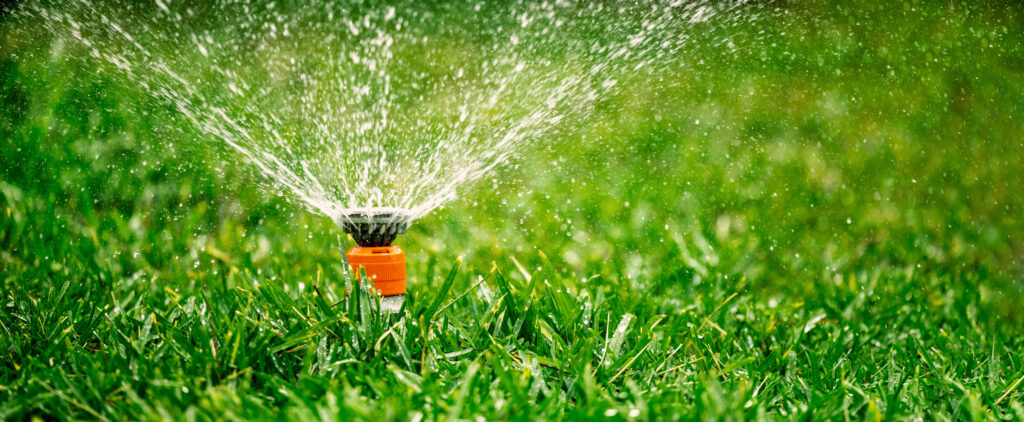
Water your Aurora lawn early in the morning between 5 AM and 9 AM. This timing reduces evaporation and gives grass blades time to dry before evening, which prevents fungal disease.
Apply 0.5 inches of water per session, two to three times per week. Use a rain gauge or empty tuna can to measure output. Most sprinkler systems need to run 20 to 30 minutes per zone to deliver this amount.
This matters because shallow daily watering trains roots to stay near the surface where they dry out fast. Deep watering encourages roots to grow down where soil stays cool and moist.
Step 2: Adjust Your Mowing Height (June Through August)
Raise your mower blade to 3 to 3.5 inches for summer. Never remove more than one third of the grass blade in a single mowing.
Use a sharp blade and mow when grass is dry. Leave clippings on the lawn to return nutrients to the soil.
Taller grass shades its own roots, keeping soil cooler and reducing water needs by up to 25 percent. Short grass exposes soil to sun, causing moisture to evaporate quickly and stressing the plant.
Step 3: Apply Summer Fertilizer (Early June)
Use a slow release nitrogen fertilizer at half the normal rate. Look for products with at least 50 percent slow release nitrogen on the label.
Apply in early morning or evening when temperatures are below 85 degrees. Water lightly after application to move nutrients into the soil.
Summer fertilization keeps grass healthy without pushing excessive growth that requires more water. Skipping this step leaves grass without the nutrients it needs to fight stress.
Step 4: Monitor and Adjust (All Summer)
Check your lawn weekly for signs of stress. Look for footprints that stay visible, a bluish gray color, or curled leaf blades. These signal your lawn needs water within 24 hours.
Adjust your watering schedule based on rainfall. Reduce irrigation after storms but don’t skip entirely since afternoon thunderstorms often deliver less water than they appear to.
Critical warning: Do not fertilize during heat waves when temperatures exceed 90 degrees for multiple days. This can burn already stressed grass and cause permanent damage.
Our Green Lawn Program includes ongoing monitoring and adjustments throughout summer so your lawn gets exactly what it needs when conditions change.
Warm Season Grass Guide for Aurora Lawns
Some Aurora homeowners have warm season grasses like buffalograss or blue grama. These grasses handle heat better but have different care requirements.
Step 1: Reduce Watering Frequency (June)
Warm season grasses need only 0.5 to 0.75 inches of water per week once established. Water once or twice weekly rather than more frequently.
Apply water in the early morning to maximize absorption and reduce disease risk.
Warm season grasses evolved in dry climates and develop deeper root systems naturally. Overwatering actually weakens these grasses and invites weeds that prefer moist soil.
Step 2: Mow at Proper Height
Keep buffalograss at 2 to 3 inches tall. Keep blue grama at 2 to 2.5 inches tall. Mow less frequently since these grasses grow slower than cool season varieties.
Fertilization Guidance: Go Easy
If fertilizing, do so sparingly. Warm season grasses need much less nitrogen than cool season types.
Apply a light application of slow release fertilizer in late June at half the rate recommended on the package.
Avoid high nitrogen fertilizers entirely. They cause excessive growth that weakens warm season grasses and increases water needs.
Step 3: Embrace Natural Dormancy
Warm season grasses may turn tan during the hottest weeks. This is normal and not a sign of death. They will green up when temperatures moderate.
Continue light watering during dormancy to keep roots alive, but don’t try to force green growth with extra water or fertilizer.
How to Calculate Your Lawn’s Water Needs
Understanding water measurement helps you give your Aurora lawn exactly what it needs without wasting resources.
Step by step process:
- Place five to six empty tuna cans or similar containers across your lawn while sprinklers run
- Run your sprinklers for 15 minutes
- Measure the water depth in each can with a ruler
- Average the measurements together
- Multiply by 4 to find your hourly output
For example, if your cans average 0.25 inches after 15 minutes, your system delivers 1 inch per hour. To apply 0.5 inches, run sprinklers for 30 minutes.
This calculation also reveals coverage problems. If some cans have much more or less water than others, you have gaps or overlaps that waste water and create brown spots.
What About Soil Aeration?
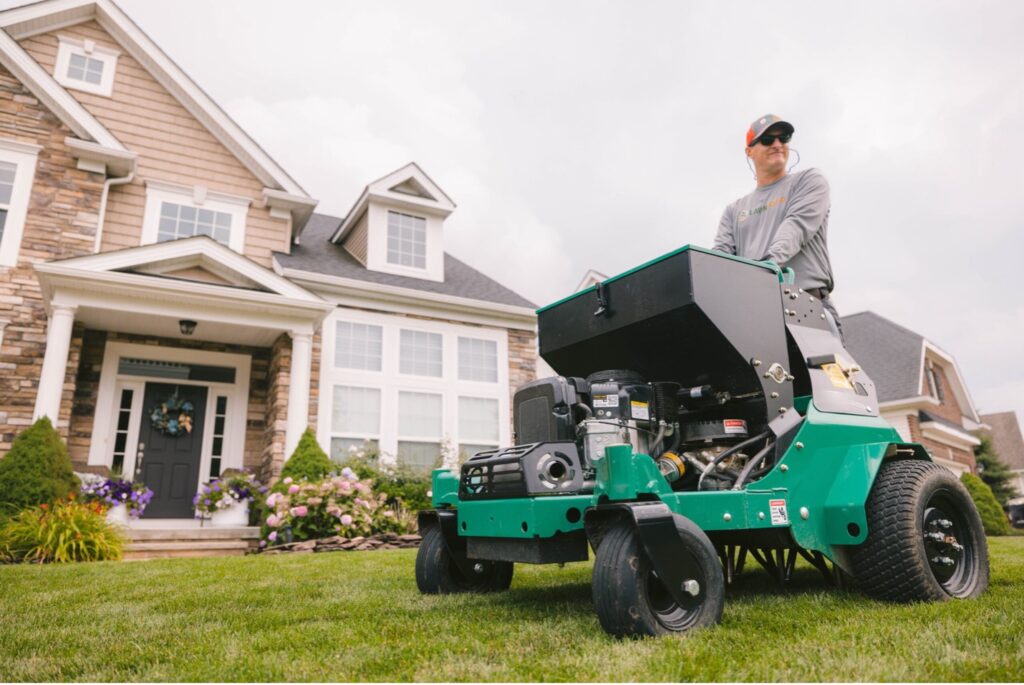
Aeration removes small plugs of soil to reduce compaction and help water, air, and nutrients reach grass roots. This service makes a huge difference for Aurora lawns growing in clay soil.
Compacted soil prevents water from soaking in. You might see water pooling or running off even though your lawn looks thirsty. Aeration solves this problem.
We recommend core aeration at least once per year for Aurora lawns. The best times are early fall for cool season grasses or late spring for warm season grasses.
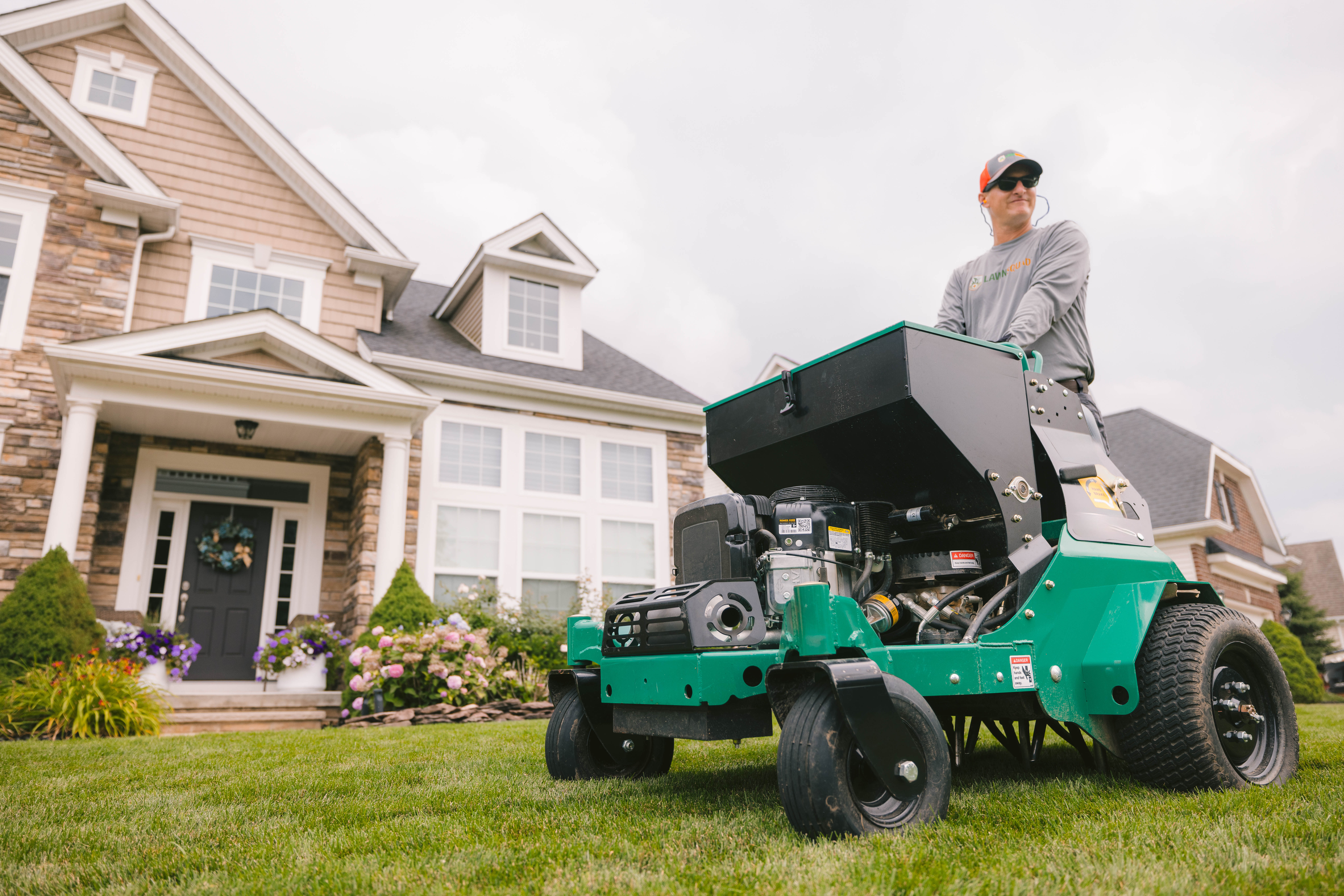
Our aeration service removes plugs every 2 to 3 inches across your entire lawn. We leave the plugs on the surface where they break down and return nutrients to the soil.
Common Summer Lawn Mistakes Aurora Homeowners Make
After caring for Aurora lawns for years, we see the same problems again and again.
Mistake #1: Watering Every Day for Short Periods People think frequent watering helps grass during heat. Actually, this creates shallow roots that can’t survive drought. Water deeply and less often instead.
Mistake #2: Mowing Too Short Homeowners cut grass short hoping to mow less often. This scalps the lawn, exposes soil to sun, and lets weeds take over. Keep grass 3 to 3.5 inches tall in summer.
Mistake #3: Watering in the Evening Evening watering leaves grass wet overnight, creating perfect conditions for fungal diseases. Always water in the early morning.
Mistake #4: Fertilizing During Heat Waves Adding fertilizer when grass is already stressed causes fertilizer burn. Wait for cooler weather or skip summer feeding entirely if temperatures stay extreme.
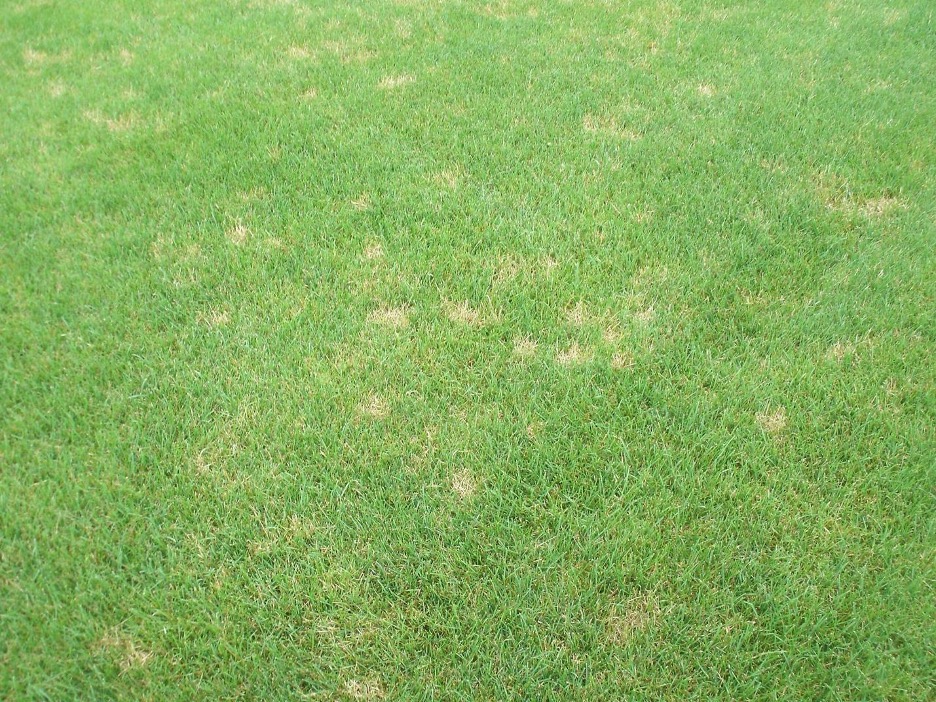
Mistake #5: Ignoring Soil Problems Many Aurora homeowners blame grass variety or weather when the real issue is compacted clay soil that won’t absorb water. Aeration often solves mysterious brown spots.
Kentucky Bluegrass vs. Tall Fescue: Which Should You Choose?
Kentucky Bluegrass spreads through underground stems called rhizomes, allowing it to fill in bare spots and create a dense lawn. It requires more water and goes dormant faster during drought. Best for: Homeowners who want a classic lawn appearance and can water consistently
Tall Fescue develops deep roots that help it survive drought better than bluegrass. It doesn’t spread to fill gaps but handles heat and shade better. Best for: Homeowners dealing with water restrictions, shady areas, or who want lower maintenance
Your Summer Lawn Care Calendar at a Glance
Cool Season Grass Schedule
| When | What to Do | Details |
|---|---|---|
| Late May | Set summer watering schedule | 1 to 1.5 inches weekly, early morning |
| Early June | Apply slow release fertilizer | Half rate, below 85 degrees |
| All Summer | Mow at 3 to 3.5 inches | Never remove more than one third |
| Weekly | Monitor for stress signs | Footprints, blue color, curled blades |
Warm Season Grass Schedule
| When | What to Do | Details |
|---|---|---|
| June | Reduce watering frequency | 0.5 to 0.75 inches weekly |
| Late June | Light fertilizer if needed | Half rate or less |
| All Summer | Mow at 2 to 3 inches | Less frequent than cool season |
The Bottom Line
Keeping your Aurora lawn green through summer is absolutely possible when you follow the right practices for our local conditions.
Key principles to remember:
Water deeply but less frequently to encourage deep root growth
Mow high at 3 to 3.5 inches to shade soil and reduce water needs
Fertilize early in summer and skip feeding during heat waves
Water in early morning to reduce evaporation and prevent disease
Address soil compaction through annual aeration
Following these guidelines consistently will give you a healthier, greener lawn that handles Aurora’s hot summers much better than your neighbors’ lawns.
Let Us Handle It For You
Every Aurora lawn is different. Your specific grass type, soil conditions, sun exposure, irrigation system, and local water restrictions all affect what your lawn needs.
Our Green Lawn Program accounts for all these variables with customized care designed for your property.
Green Lawn Program includes:
Customized watering schedule based on your grass type and irrigation system
Properly timed fertilizer applications using professional grade products
Ongoing monitoring and adjustments throughout summer
Core aeration to address Aurora’s clay soil challenges
We know Aurora homeowners are busy. Between work, family, and everything else, lawn care often falls to the bottom of the list. That’s exactly when problems develop that cost more to fix later.
Contact us today to schedule your lawn evaluation and start your Green Lawn Program before summer heat arrives.